Last checked: October 2026. Visa, tax and property rules in Vietnam change often, and several changed in 2025. This guide is a starting point, not legal advice: confirm anything that matters for you with the official source linked or with a licensed lawyer.
Da Nang is the easiest big city in Vietnam to actually live in. It has the beach, an international airport, a walkable expat quarter, hospitals, international schools, fast internet and prices that are still well below Hanoi and Ho Chi Minh City. It is also changing fast: the province of Quang Nam (including Hoi An) merged into Da Nang on 1 July 2025, the old districts were abolished, and the new Vietnam International Financial Centre opened its Da Nang campus in January 2026. Here is how a move works in practice, from the visa to the apartment to the question everyone eventually asks: can I buy a place?
In this guide: Quick facts · Visas · Working legally · Neighbourhoods (with local tips on An Thượng, Sơn Trà, Thuận Phước, Liên Chiểu, Hòa Cường and Hòa Xuân) · Renting · Cost of living · Bank, SIM, driving, healthcare, schools · Tax · Buying property · Daily life · Four honest realities · First 30 days · FAQ
Quick facts for anyone moving to Da Nang
- Visa to arrive on: 90-day e-visa for every nationality (US$25 single / US$50 multiple entry), or visa-free entry for citizens of about 25 countries.
- Long-term stay: there is no retirement visa and no digital-nomad visa. People stay on repeated e-visas, a sponsored business visa, a work permit plus temporary residence card, or a family visa.
- Rent: a one-bedroom near the beach is roughly 11.5–16 million VND a month (about US$450–630); outside the beach area from about 9 million.
- Monthly costs without rent: about US$450 for one person, US$1,600 for a family of four (Numbeo averages, October 2026).
- Buying property: foreigners can buy apartments (and some houses) in approved commercial projects on a 50-year term, but never land. Details below.
- Expat hub: An Thượng and Mỹ An, the blocks between My Khe Beach and the Han River.
1. Which visa gets you in, and which lets you stay
Vietnam makes it easy to arrive and harder to stay long. Start with the entry options, then plan how you will remain beyond the first three months.
The e-visa (most people start here)
Since August 2023 every nationality can apply for an e-visa online at evisa.gov.vn, the only official site. It is valid for up to 90 days, single entry (US$25) or multiple entry (US$50). The catch: it cannot be extended inside Vietnam. When it runs out you leave the country and come back on a new one. A lot of long-term residents do exactly that, with a trip to Bangkok, Kuala Lumpur or Singapore every three months. Our Da Nang visa guide walks through the application step by step.
Visa-free entry
Citizens of Germany, France, Italy, Spain, the UK, Russia, Japan, South Korea, Denmark, Sweden, Norway and Finland get 45 days visa-free for any purpose (this runs until 14 March 2028). Since 15 August 2025, citizens of Belgium, Bulgaria, Croatia, Czechia, Hungary, Luxembourg, the Netherlands, Poland, Romania, Slovakia, Slovenia and Switzerland also get 45 days, but for tourism only. Most ASEAN passports get 30 days. Americans, Canadians and Australians need the e-visa. Always check the current list on the immigration department site before you fly, because this list has changed three times in two years.
Staying longer than 90 days
- Business visa (DN): needs a Vietnamese company to sponsor you. Legally up to 12 months; in practice most are issued for 3 months.
- Work permit + temporary residence card (TRC): the stable route if you have a job here. A labour TRC runs up to 2 years and cannot outlast your work permit; investor cards run 3, 5 or 10 years depending on the investment. Your passport usually needs 13+ months of validity left when you apply.
- Family (TT) visa: for spouses and children of Vietnamese citizens or of foreigners with a TRC; up to 3 years.
- What does not exist (yet): a retirement visa or a digital-nomad visa. Working remotely for a foreign employer while on an e-visa is a grey area that many people live in, but it is not a permit to work. The much-discussed 10-year “golden visa” had not been passed as of October 2026; the new long-term visa-exemption card (Decree 221/2025) is only for people formally invited by the government.
2. Working legally in Da Nang
The short version: if you work for an employer in Vietnam, paid in Vietnam, you need a work permit, or a confirmed exemption. An e-visa or visa-free stamp never lets you take a local job. Working online for a company back home sits in a grey area: Vietnam has no digital-nomad visa and no rule that covers it either way.
The rules change on 5 December 2026. Work permits are currently governed by Decree 219/2025 (in force since 7 August 2025). From 5 December 2026 it is replaced by Decree 393/2026/ND-CP (issued 20 October 2026). Permits and exemption certificates already issued stay valid until they expire. You may have seen headlines saying “Vietnam drops work permits”: that is not what happened. The new decree keeps the permit system and updates the list of people who are exempt (see below).
Who can get a work permit
| Category | What you need (Decree 393, from 5 Dec 2026) |
|---|---|
| Manager | A company manager or head of an organisation |
| Executive director | Head of a branch, representative office or department, with at least 2 years’ relevant experience |
| Expert | A university degree + 2 years’ relevant experience; or a degree from a world top-500 university + 1 year; or a degree in a “strategic technology” field; or 5+ years’ experience without a degree |
| Technical worker | At least 1 year of training + 2 years’ experience, or 3+ years’ experience |
How it works in Da Nang
- Your employer applies, not you. The application goes in 10 to 60 days before your start date.
- Where: the Da Nang Department of Home Affairs (Sở Nội vụ) handles most permits. Companies inside the Hi-Tech Park and industrial zones apply to their management board, and those in the Chu Lai economic zone to the Chu Lai board.
- Processing: about 10 working days for a new permit, 5 working days for an extension or an exemption certificate.
- Documents: a health certificate (issued within 12 months), a criminal record certificate (within 6 months), your degree and letters proving your experience, a passport copy and two 4×6 cm photos. Foreign documents must be consularly legalised and translated into Vietnamese, so start this at home: it is the step that takes longest.
- Validity: up to 2 years, matched to your contract. It can be extended once, for up to 2 more years; after that your employer applies for a new permit.
- Fee: around 600,000 VND (about US$23) for a new permit; the city has been waiving fees for many online applications, so ask your employer.
From work permit to visa and residence card
With a work permit you get a labour visa (LĐ2; LĐ1 if you are exempt), then a temporary residence card (TRC) of up to 2 years, which cannot outlast the permit. If you entered on an e-visa, you can usually switch to a labour visa inside Vietnam once the permit is issued, as long as your current stay is still valid. People who came in visa-free generally cannot, so check with immigration before you plan around it.
Who does not need a work permit (from 5 December 2026)
Decree 393 lists 18 exempt groups. The ones most likely to matter to people moving to Da Nang:
- Spouses of Vietnamese citizens living in Vietnam
- Investors: owners or members of a limited liability company, or chair/board members of a joint-stock company, with at least 3 billion VND (about US$114,000) of contributed capital
- University-level teachers and researchers: master’s degree or higher in STEM, science, technology, digital transformation, finance, economics or business administration, working at an educational institution; PhD holders, professors and associate professors at universities and vocational schools; and staff of approved international education programmes
- Students and trainees with internship agreements, and volunteers under international agreements
- Internal transferees in the 11 service sectors Vietnam committed to at the WTO
- Experts in strategic technologies (and their family members), people recruited under the national AI talent programme, and holders of Vietnam’s special visa-exemption card
- Plus journalists, diplomats’ family members, ODA project advisers, people setting up a commercial presence, and workers certified by ministries or provincial authorities
Exempt does not mean “no paperwork”. Most exempt people still need a certificate of exemption from the same office (about 5 working days). A few groups, such as qualifying investors and board members, only need their employer to notify the authority at least 3 working days before they start. Short assignments are not automatically exempt either: if you are hired and paid locally, you need a permit even for a few weeks.
English teachers, remote workers and retirees
- English teachers at language centres are not exempt. You need a work permit, which means a bachelor’s degree, a 120-hour TEFL/TESOL/CELTA certificate, a clean criminal record and legalised documents. A reputable school handles the application for you.
- Remote workers and digital nomads working for overseas clients are not covered by the new decree. There is still no digital-nomad visa, so most people stay on the 90-day e-visa. It is a grey area, not a legal status.
- Retirees do not need a work permit, but there is also no retirement visa (see the visa section above). Our guide to retiring in Da Nang covers budgets, healthcare and Social Security.
What happens if you work without one
Since 10 September 2026 (Decree 283/2026), a foreigner working without a valid permit or exemption can be fined 15 to 25 million VND (about US$570–950) and deported. The employer faces fines of 30 to 75 million VND or more. Working in a different job from the one on your permit is also fined.
Work permit rules as of 2 November 2026. They change often, so confirm the details with your employer or a licensed law firm before you sign a contract.
English teaching is still the most common job for new arrivals. Pay at language centres is usually around 28–38 million VND a month, and 40–50 million at international schools, based on 2026 job listings rather than official figures.
The new Vietnam International Financial Centre has a Da Nang campus (launched January 2026, headquartered at Software Park No. 2) focused on fintech, digital assets, green finance and payments. The decree behind it includes personal income tax incentives for foreign experts working inside the centre, reported as an exemption running to 2030. If you work in finance or tech, this is the development to watch.
3. Where to live: the neighbourhoods

Da Nang is split by the Han River. The beach side (east) is where almost every foreigner lives; the city side (west) is older, cheaper and more local. Since the 2025 merger the districts no longer exist officially, but everyone still uses the old names. Our where to stay guide covers the areas from a visitor’s angle; here is the resident’s version.
- An Thượng and Mỹ An: the expat quarter, five minutes’ walk from My Khe Beach. Western cafés, coworking spaces, gyms, yoga, the most English spoken. One-bedroom apartments mostly rent for 11.5–16 million VND (median around 13.6 million in 2026 listings). Busiest and most expensive, but the easiest landing.
- Mỹ Khê and the beachfront towers: newer high-rises along Võ Nguyên Giáp with sea views. One-bedrooms from about 12.5 million up to 20 million for a good sea view.
- Sơn Trà side (Mân Thái, Thọ Quang): quieter, closer to the peninsula and the fishing harbour, more Vietnamese neighbours, noticeably cheaper.
- Hải Châu (city centre): the old downtown on the west bank: Han Market, the cathedral, the best local food, offices. Convenient if you work in the centre; 20 minutes to the beach by motorbike.
- Hội An (now part of Da Nang): 30–45 minutes south. Slower, greener, more families and long-term expats; day trips into the city when needed.
A local tip: An Thượng, the “Western quarter” by the beach
An Thượng is a small grid of streets right behind My Khe Beach, south of the Dragon Bridge. Locals call it Phố Tây, the Western quarter, Da Nang’s answer to Bùi Viện in Saigon or Tạ Hiện in Hanoi, with a beach vibe instead of a backpacker one.
Why most newcomers start here
- An international, modern lifestyle: the densest mix of expats, travellers and remote workers in the city. Step outside and you have specialty coffee, European and Asian restaurants, bars, pubs, proper bakeries and pizza.
- The beach is a short walk: the small grid of blocks puts the best stretch of My Khe 2–5 minutes away on foot.
- Never boring: it runs almost around the clock and has been designated a night-time walking street, ideal if you like meeting people, live music and a festival feel.
What you pay for it
- The highest prices in Da Nang: studios, serviced apartments and whole houses here are the most expensive in the city, and food and drink inside the quarter is sold at tourist prices.
- Noise and crowds: music from the bars, late-night conversations under your window, and in high season it is hard to find a place to park a car.
- Constant construction: this is prime tourist land, so there is almost always a hotel or restaurant being built or renovated nearby, with the noise and dust that go with it.
Our take: the easiest first landing in Da Nang, especially for your first month or two. Many people then move a few blocks inland, or to one of the areas below, once they know the city and want quieter nights and lower rent.
A local tip: Sơn Trà, a holiday that doesn’t end
Sơn Trà is the whole eastern side of the city beyond the bridges, from the beach road back to the peninsula. Living here feels like being on holiday every day, without being cut off from the city. It suits people who want a healthy, outdoor, balanced life.
Nature on both sides
- The city’s green lung: the wild Sơn Trà Peninsula behind you, a long run of beaches in front (My Khe, Mân Thái, Thọ Quang). The air is cleaner and cooler than across the river in Hải Châu.
- Built for an active life: residents here are sporty. Morning runs along Võ Nguyên Giáp, a swim before work, stand-up paddleboarding, cycling or hiking up the mountain are all part of the routine.
Costs and housing
- Gentler rents than An Thượng: apart from the strip of beachfront hotels, serviced apartments, studios and whole houses deeper inside the district (Phước Mỹ, An Hải Bắc) are good value. From about 5–8 million VND a month you can have a lovely, spacious place.
- Fresh, cheap seafood: old fishing villages like Mân Thái are still working. Get up early and buy the catch straight off the basket boats at source prices, or eat at the local places along the coast without tourist mark-ups.
The trade-offs
- The bridges: offices, banks and big shopping are in Hải Châu, 10–15 minutes away across the Han River, Dragon or Thuận Phước bridges. On days of heavy rain and wind, crossing them on a motorbike is hard work.
- First in line for storms: the district sticks out into the sea, so in typhoon season (October to December) it takes the first wind and rain.
- Few big entertainment venues: mostly eateries, traditional markets and small convenience stores. For a cinema or a big mall (Lotte Mart, Vincom) you cross to Hải Châu or the edge of the district.
Who it suits: small families, remote workers who like quiet, and anyone who wants outdoor sport on the doorstep and the sea in view when they wake up.
A local tip: Thuận Phước, the other seaside
Not every address near the water costs My Khe money. Thuận Phước sits where the Han River meets Da Nang Bay, right under the Thuận Phước Bridge, and it is a completely different place to live from the busy tourist beach to the south: open, quiet and windswept. If you are looking at apartments or houses there, along Như Nguyệt street on the Hải Châu bank or in Nại Hiên Đông on the Sơn Trà bank, here is what you need to know.
Why people love it
- Closer to the centre than it looks: from Như Nguyệt it is a straight 3–5 minute ride along the river into the heart of Hải Châu.
- Space and quiet: no tour buses, no beach-club crowds. In the evening locals walk the embankment to watch the sun set over the bay and the bridge.
- Cheaper to rent and to buy: on the east bank especially (Nại Hiên Đông), apartments and whole houses are noticeably cheaper than An Thượng or the Võ Nguyên Giáp beachfront. Large land-reclamation projects are under way in the bay, so the infrastructure here will change a lot in the coming years.
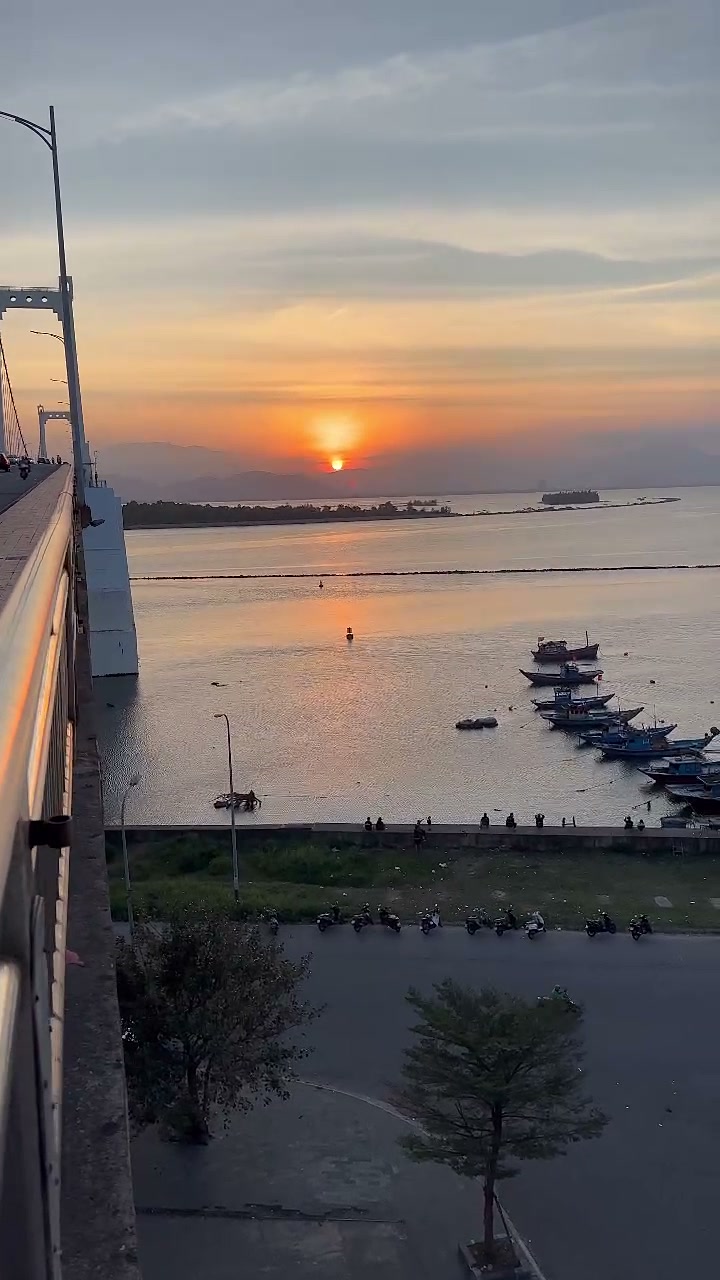

The payoff: this is the evening view from the Thuận Phước Bridge and the embankment, with the fishing fleet below and the sun dropping behind the mountains across the bay.
Why it is cheaper
- It takes the weather first: this is the mouth of the bay. When a tropical depression or typhoon comes in (usually October to December), Thuận Phước gets the first and strongest wind in the city, and it howls through the gaps of the high-rises.
- Storm surge on Như Nguyệt: during storms, waves of more than 3 m regularly break over the embankment under the bridge, flood the road and tear up the pavement.
- Salt air: electronics, motorbikes, steel doors and balcony railings rust and wear out much faster here than a few blocks inland.
- Cold winters: from November to January the north-east monsoon blows straight in off the bay, and it feels colder here than anywhere else in Da Nang.
Who it suits: if you like quiet, work remotely, want to watch the river meet the sea every day and do not mind storm-proofing your home properly each autumn, Thuận Phước is well worth trying. If you do choose it:
- Rent in a mid- to high-end apartment building, where the tempered glass, sound insulation and wind sealing are up to the job. Cheap buildings here are miserable in a storm.
- Avoid whole houses right at the water’s edge or on the low-lying streets, which take the brunt of the storm-surge flooding. A few blocks back makes a real difference.
And whatever you rent, keep the motorbike under cover and see the area once during storm season before you sign a long lease.
A local tip: Liên Chiểu, the cheapest part of the city
Liên Chiểu is the north of the city, stretching out under the Hải Vân Pass, and it feels nothing like Hải Châu or the beach. It is urbanising fast and it is Da Nang’s student and factory-worker district: young, loud at night, and by far the cheapest place to live.
The upside
- The lowest costs in Da Nang: rent, apartments, land, markets and services run roughly 30–50% below Hải Châu or Sơn Trà. A good private room or even a whole small house can be found from about 3–5 million VND a month.
- Street food heaven: the big universities (Bách Khoa, Sư Phạm, Kinh Tế and others) are here, so the evenings are lively and the markets, Chợ Nam Ô and Chợ Hòa Khánh especially, are full of cheap, good student food.
- A calm beach of its own: the Liên Chiểu shore faces Da Nang Bay, so the water is gentle and shallow rather than My Khe’s surf. Morning swims at Xuân Thiều or along Nguyễn Tất Thành suit a slow lifestyle.
- New investment: the Da Nang Mikazuki Japanese Resorts & Spa on Nguyễn Tất Thành (indoor water park, onsen, Japanese-standard services) is the headline project, and the roads in the north-west are being widened.
The downside
- Distance: from the centre of the district (around Bách Khoa University) it is 10–15 km and 15–25 minutes by motorbike to the Han River Bridge or the airport, and the main roads (Tôn Đức Thắng, Điện Biên Phủ) are busy with heavy traffic.
- Industrial neighbours: Hòa Khánh, the city’s biggest industrial park, is here. Some roads, especially the national highway, carry a lot of containers and trucks, with the noise and dust that come with them.
- Serious flash flooding: the biggest weakness in recent years. Water runs off the mountains into older residential areas with outdated drainage (the Mẹ Suốt and Hoàng Văn Thái areas are the known trouble spots), and in a peak downpour this is the first and deepest part of Da Nang to flood. If you look for a home here, rule those low-lying pockets out completely.
Where to look in Liên Chiểu: the Nguyễn Tất Thành seafront. Open, clean, breezy, rarely floods, and a calm bay view for a fraction of a My Khe rent.
A local tip: Hòa Cường or Hòa Xuân? City buzz versus river calm
These two neighbourhoods, a few minutes apart across the Cẩm Lệ River, are opposite ways of living in Da Nang. Hòa Cường is the busy, convenient southern end of the city centre; Hòa Xuân is a new, master-planned “eco” district on a river island. Neither is on the beach, which is exactly why both are worth knowing about.
Hòa Cường (southern Hải Châu): everything within reach
Hòa Cường Bắc and Hòa Cường Nam make up an established, well-off, very lively part of the centre.
- Plus: top amenities on your doorstep. Big universities (Foreign Languages, Đông Á, Architecture), major hospitals (Vinmec, the Eye Hospital), Lotte Mart and Mega Market.
- Plus: short trips everywhere. 5–10 minutes to the international airport, the Dragon Bridge or the Nguyễn Văn Linh business street.
- Plus: food at every price. A dense network of street stalls, cafés and restaurants from cheap to upscale, busy from early morning until late.
- Minus: expensive. Whole houses, serviced apartments and land here are among the priciest in the city, only a little below the old core around the Han River Bridge.
- Minus: crowded. High density of people and traffic; at rush hour Núi Thành, 2 Tháng 9 and the streets around the universities jam up.
- Minus: some flooding. A few older, low-lying streets still flood in a peak downpour.
Hòa Xuân (Cẩm Lệ): space, greenery and a whole house for the price of a flat
Hòa Xuân is a peninsula wrapped by the Cẩm Lệ, Hàn and Đô Tỏa rivers, built from scratch as a planned eco-district.
- Plus: room to breathe. A wide grid of streets, lots of trees and parks, and river air that keeps it cooler and cleaner than the centre all year.
- Plus: your money goes further. The rent that gets you a small apartment in Hòa Cường gets you a spacious two- or three-storey house in Hòa Xuân.
- Plus: a young, settled community. Mostly young families and professionals who like running, fishing and quiet evenings.
- Minus: the commute. It sits at the southern edge of the city; count on 15–20 minutes into Hải Châu over the Hòa Xuân, Nguyễn Tri Phương or Khuê Đông bridges.
- Minus: quiet at night. Big shopping, premium hospitals and entertainment are still mostly across the river in Hòa Cường or the centre.
- Minus: river water in the back of your mind. The grid drainage works well, so it rarely floods from rain the way Liên Chiểu does, but with rivers on every side, residents watch the water levels closely in a big storm.
Our take: pick Hòa Cường if you want to walk to everything and do not mind paying for it; pick Hòa Xuân if you work from home or drive to work and would rather have a garden, a quiet street and change left over.
One thing to know about rents: foreigners are often quoted more than locals for the same apartment. Listings aimed at foreigners for a one-bedroom tend to sit around 14–19 million VND, while locals rent similar flats for 6–9 million. A Vietnamese friend or a trusted agent making the first call can save you a lot, and so can looking slightly away from An Thượng.
4. Renting an apartment: how it works
- Deposit and lease: typically one to two months’ deposit, with six- or twelve-month contracts. Short leases exist but cost more.
- Registration: your landlord must register your temporary residence with the local police, by law within 12 hours of your arrival. Since December 2025 (Decree 282/2025) the fines for not doing this are 3–5 million VND and can reach 20 million, so insist on it: you will need the confirmation for a bank account, a driving licence and any visa paperwork.
- Electricity: Vietnam uses tiered pricing (roughly 1,984–3,967 VND per kWh plus VAT across five tiers since May 2025). Many landlords charge a flat 3,500–4,000 VND per kWh instead. Ask which, because air-conditioning in summer is your biggest bill.
- Utilities overall: around 2 million VND a month for an 85 m² apartment on Numbeo’s average, with home internet about 211,000 VND.
- Furnished is normal: most rentals for foreigners come furnished, with weekly cleaning sometimes included in serviced buildings.
5. What it costs to live here

Numbeo’s October 2026 estimate is about US$452 a month for a single person and US$1,633 for a family of four, both before rent. Real numbers from people living here, for context:
| Item | Typical price (2026) |
|---|---|
| Local lunch (cơm, bún, mì Quảng) | 40,000–60,000 VND |
| Iced coffee at a local café | 15,000–35,000 VND |
| Cappuccino at a Western café | about 43,000 VND |
| GrabBike, 5 km | 20,000–35,000 VND |
| Mobile plan | about 163,000 VND / month |
| Gym membership | about 690,000 VND / month |
| Coworking | US$6–12 a day; about US$80–120 a month at Toong |
| Private clinic consultation | 600,000–1,200,000 VND depending on the hospital |
Eating out is where Da Nang spoils you. A full day of local food costs less than one Western dinner, and the city has Michelin-listed restaurants that are still affordable. Supermarkets (Lotte, Go!, the big new AEON Mall) carry imported goods at a premium; the markets are for everything fresh.

6. Setting up: bank, SIM, driving, healthcare, schools
Bank account
Bring your passport and your visa or TRC; many banks want at least 12 months of validity left, which rules out e-visa holders at some branches. Face-ID registration is now mandatory for all accounts. TPBank is the one most expats mention for its English app, but policies vary branch by branch, so ask around locally.
SIM card
Buy it in person with your passport; since April 2026 the shop also takes a facial-biometric check. Viettel has the best coverage: roughly 60,000 VND for a 7-day tourist pack and 150,000–180,000 VND for 30 days of data.
Driving
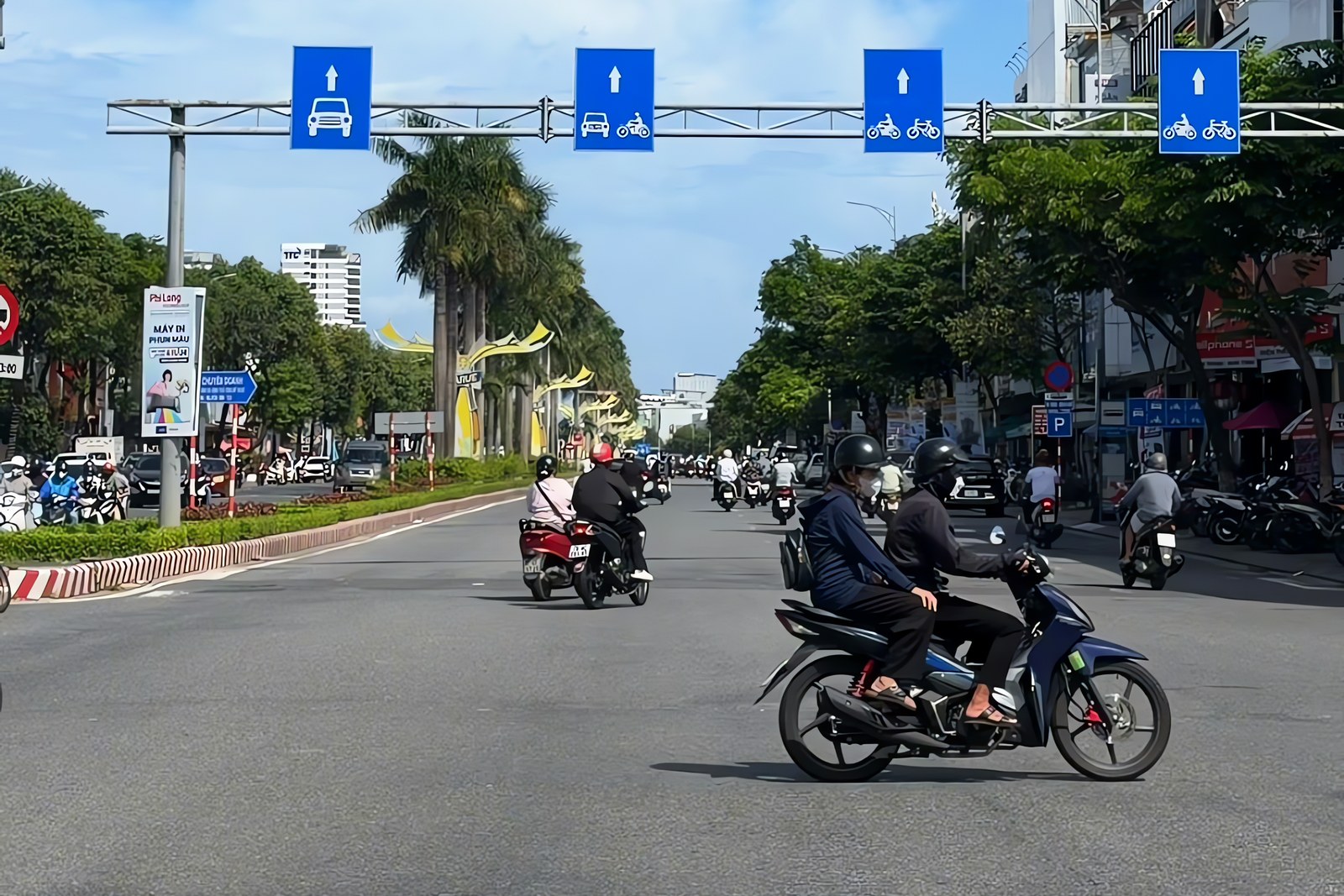
Only a 1968-Convention International Driving Permit together with a home licence of the right class (A/A1 for motorbikes) is accepted. The 1949-Convention IDPs that the US and Canada issue are not valid here. Anyone staying long term should convert to a Vietnamese licence. Until then, the buses and Grab are cheap and the city is small.
Healthcare
Da Nang has solid private options. Family Medical Practice (FMP) charges in the region of US$90–110 for a consultation, Vinmec about 1.2 million VND, and Hoàn Mỹ 600,000–800,000 VND. Most long-term residents carry international health insurance, because serious cases are often moved to Ho Chi Minh City or Bangkok.
International schools
Singapore International School @ Danang (about 498–626 million VND a year depending on grade), APU American International School, Odyssey (roughly 198–570 million VND), Da Nang International School (IB, roughly US$12,000–20,000) and, for families south of the city, Hoi An International School. Fees are published per grade on each school’s website, so confirm the current year before budgeting.
7. Tax: when Vietnam starts counting your income
You become a tax resident after 183 days in Vietnam in a 12-month period, and residents are taxed on worldwide income. The 2026 rules (Law 109/2025, salary brackets from 1 January 2026) use five bands: 5% up to 10 million VND a month, then 10%, 20%, 30% and 35% above 100 million, with a personal deduction of 15.5 million VND a month plus 6.2 million per dependant. Non-residents pay a flat 20% on Vietnam-sourced income. If you are paid abroad while living here, talk to an accountant before the 183-day mark, not after.
8. Can a foreigner buy property in Da Nang?
Yes, with limits. The Housing Law 2023 and Land Law 2024 (both in force since 1 August 2024) set the current rules:
- What you can buy: apartments, and houses inside commercial housing projects that are approved for foreign ownership. Never land, and never a house in an ordinary residential street.
- From whom: directly from the developer, or from another foreign owner. You cannot buy a resale from a Vietnamese individual.
- How long: a 50-year term, extendable once for up to another 50 years. You can live in it, rent it out, sell it, give it away or leave it to heirs.
- Quotas: foreigners may hold at most 30% of the apartments in one building and 250 houses in one ward-level area, so popular projects sell out their foreign quota.
- Requirements: a legal entry stamp in your passport (some sources say a work visa or TRC in practice; the law itself only requires lawful entry), and payment through a licensed Vietnamese bank.
- Costs on top of the price: 10% VAT and a 2% maintenance fund on new builds, a 0.5% registration fee, notary fees of roughly 0.1–0.3%, and 2% personal income tax when you later sell.
- Do not do this: buy land or a house through a Vietnamese friend’s name. Nominee arrangements are not enforceable, and people have lost everything that way.
- Married to a Vietnamese citizen? You can own jointly, and most sources say you then have the same ownership rights as your spouse; get a lawyer to confirm how the title is written.
Prices in 2026 listings: around 79 million VND per m² for new condos on the Sơn Trà side, 80–150 million near My Khe Beach, and 180–380 million for the luxury riverside and beachfront towers. Projects that have been marketed to foreign buyers in Da Nang include River Tower, Da Nang Landmark and Olalani Riverside Towers; always ask the developer for written confirmation that the specific unit is within the foreign quota before paying a deposit.
9. Daily life and community
An Thượng has the densest concentration of foreigners, cafés and events, but the community is spread along the whole coast and into Hội An. Expect a mix of remote workers, teachers, retirees who rotate on e-visas, and a growing number of Korean, Russian and Indian families. The weather is the thing nobody warns you about: a hot dry season from roughly March to August and a rainy season from September to December, with typhoon risk in October and November. Our month-by-month weather guide is worth reading before you sign a long lease on a ground floor.
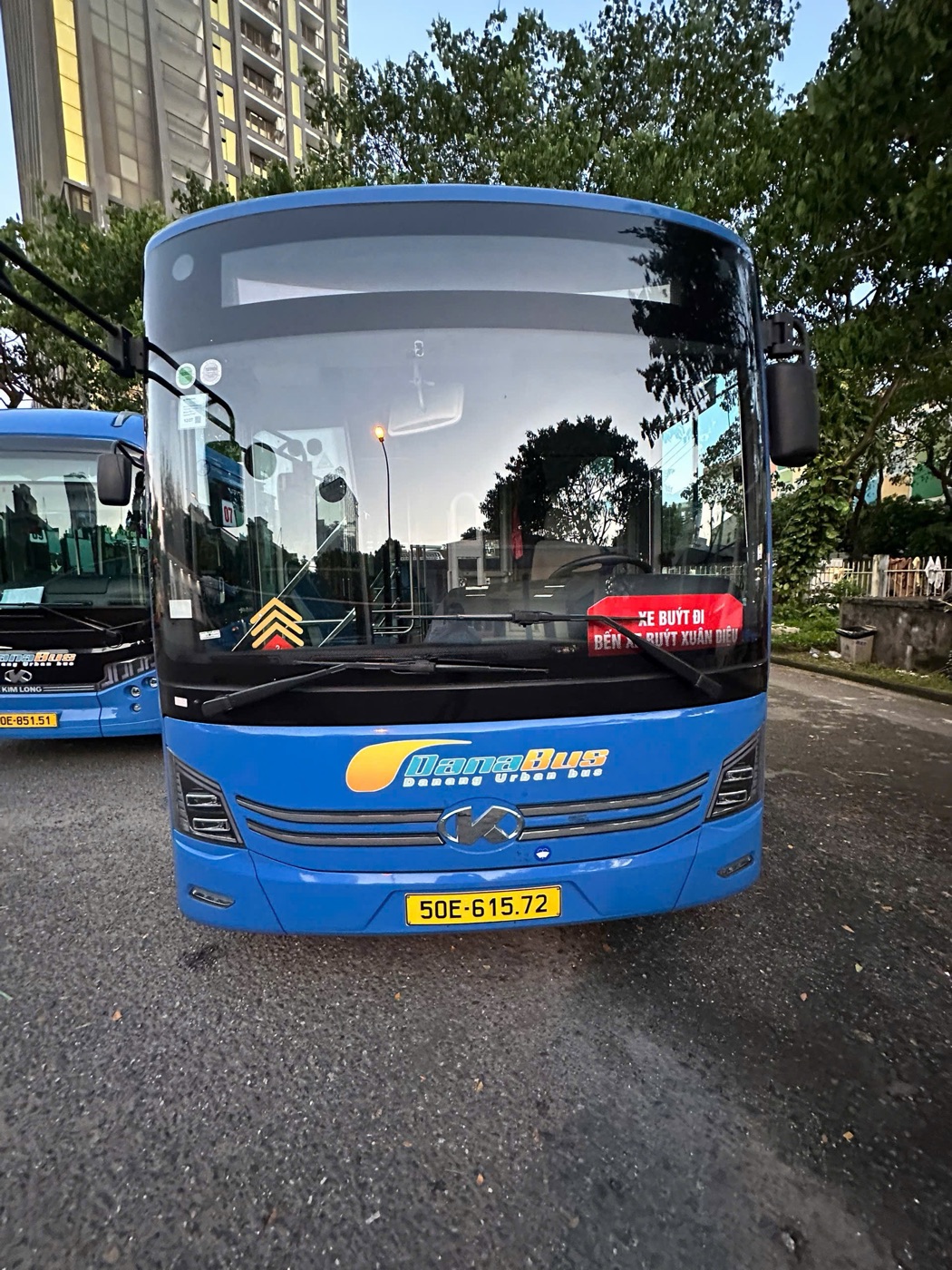
Getting around: a motorbike is the default, Grab is everywhere, and the electric DanaBus network now reaches the beach. For weekends you have Hội An, Bà Nà Hills (stay the night to skip the crowds), Mỹ Sơn, the Hải Vân Pass and Huế all within two hours.
Before you decide: four honest realities
Everything above is the practical side. This is the part we tell friends who ask whether they should move here.
1. The money
Da Nang is cheaper than Hanoi or Ho Chi Minh City, but it is no longer dirt cheap. Living the way locals do, a single person is comfortable on roughly 7–10 million VND a month plus rent, and a family with children should budget at least 15–25 million for decent housing, schooling and a normal lifestyle. If you shop at Western supermarkets and eat in An Thượng, expect to land closer to the international estimates higher up this page. Where you live is the biggest lever: a central Hòa Cường rental or a beachside studio in An Thượng costs a premium, while Hòa Xuân and Liên Chiểu give you far more space for the same money.
2. Jobs and the “Da Nang discount”
Unless you bring a remote job or an online business, finding well-paid local work is hard. Salaries for corporate, IT and marketing roles are often 30–50% below Hanoi and Saigon, and the local economy leans on tourism, hospitality, food and drink, real estate and logistics. Plan your income before you plan your move.
3. The weather is extreme
Summer is fierce: humid heat that keeps locals indoors until late afternoon. From around October the rainy and storm season takes over. Thuận Phước gets lashed by coastal wind, and parts of Liên Chiểu and the old centre flood suddenly and deeply in a heavy downpour. Before you sign any lease, ask the neighbours how high the water came on that street last year.
4. The pace
People here are warm and straightforward, and generally more careful with money than the fast-spending crowd in Saigon. The city winds down early, traffic is calmer and the pressure is lower. That is the whole point for most people who move here. But if you thrive on the adrenaline of a huge metropolis, Da Nang can start to feel quiet, even a little dull, once the honeymoon phase wears off. Know which type you are.
Your first 30 days: a checklist
- Week 1: arrive on an e-visa or visa-free, book a serviced apartment for a month, buy a Viettel SIM, download Grab.
- Week 1–2: walk An Thượng, Mỹ An and the Sơn Trà side at different times of day; view apartments with a local friend or agent; check electricity pricing and insist on police registration.
- Week 2–3: open a bank account if your visa allows it (otherwise use Wise or a home card for now); register with a clinic; if you drive, start the licence conversion.
- Week 3–4: decide your long-term visa route (sponsor, work permit or regular visa runs) before day 60; talk to an accountant if you will pass 183 days.
- Before buying anything: rent for at least a year first. Da Nang’s neighbourhoods feel very different in the rainy season.
Frequently asked questions
Is there a retirement visa for Vietnam?
No. As of October 2026 Vietnam has no retirement visa and no digital-nomad visa. Retirees usually stay on repeated 90-day e-visas, a sponsored business visa, or a family visa if married to a Vietnamese citizen.
How much does it cost to live in Da Nang as a foreigner?
Roughly US$450 a month for one person before rent and US$1,600 for a family of four (Numbeo, October 2026). Add 9–16 million VND (about US$350–630) for a one-bedroom apartment, more for a sea view.
Can foreigners buy property in Da Nang?
Yes: apartments and houses in approved commercial projects, on a 50-year term that can be extended once, bought from the developer or another foreigner. Foreigners cannot own land, and a building’s foreign quota is capped at 30% of its apartments.
Which area of Da Nang is best for expats?
An Thượng and Mỹ An, next to My Khe Beach, are the expat hub with the most English-speaking services. The Sơn Trà side and Hải Châu are cheaper and more local; Hội An suits families who want a slower pace.
Do I need a work permit to work in Da Nang?
Yes, if you work for an employer in Vietnam. Your employer applies for it (about 10 working days), and it lasts up to 2 years, extendable once. From 5 December 2026, Decree 393/2026 exempts 18 groups, including spouses of Vietnamese citizens, investors with at least 3 billion VND in a company, and university-level teachers with a STEM or finance master’s, but most exempt people still need a certificate of exemption. Working without one can mean a 15–25 million VND fine and deportation.
Can I work remotely from Da Nang on an e-visa?
Many people do, but an e-visa is not a work permit and Vietnam has no digital-nomad visa. If you stay more than 183 days in a year you also become a tax resident on worldwide income. Get local advice before you cross that line.
Have you moved to Da Nang? Tell us in the comments what you wish you had known: we update this guide as the rules change.
👉 Scouting trip first? The hotels, tours and tickets I recommend in Da Nang and Hoi An, with prices and direct booking links, are on my Book your trip page.