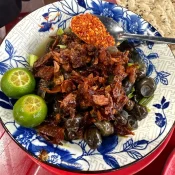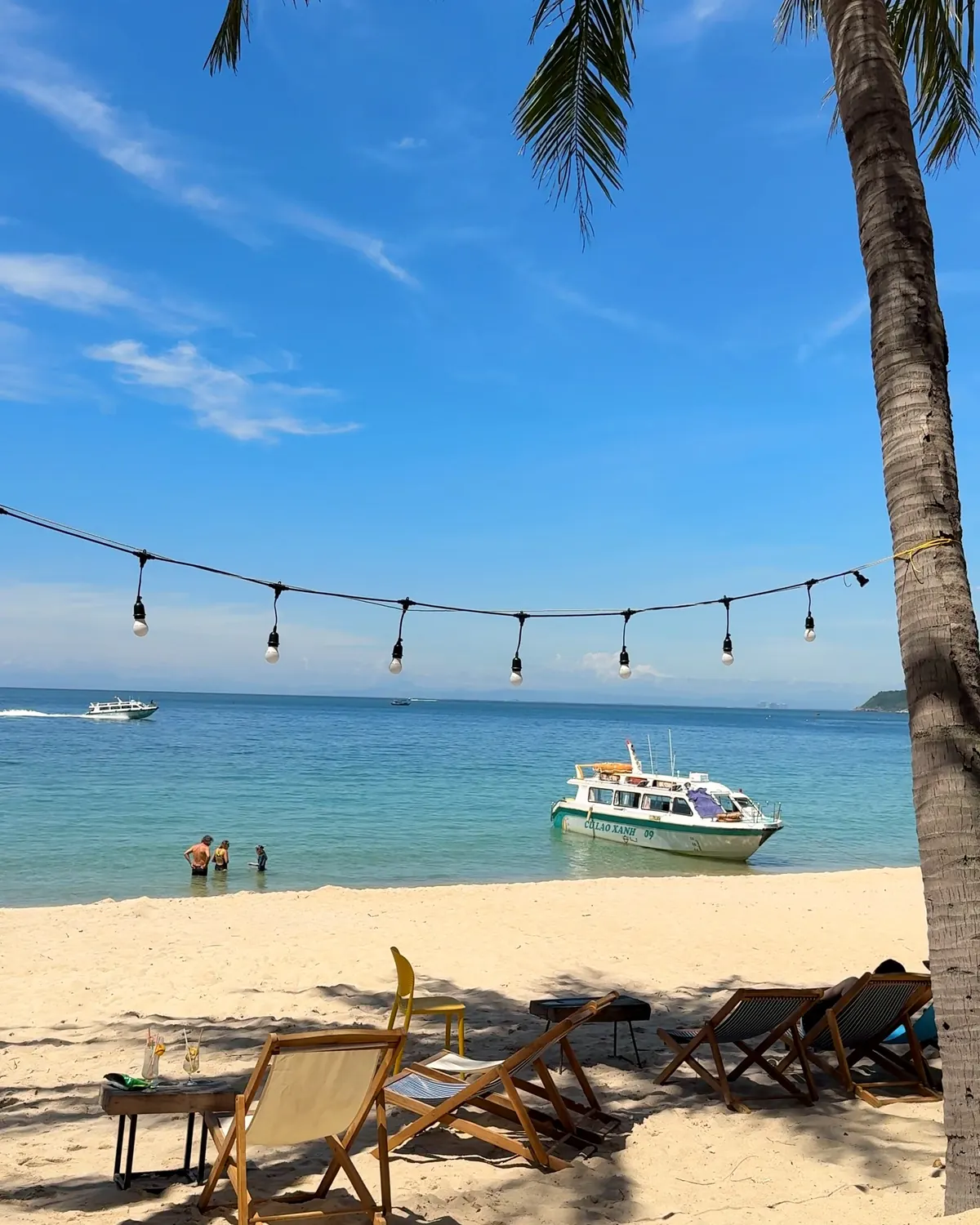
Last updated: 15 October 2026. Prices and boat times change every season, so check before you go.
Some links in this post are affiliate links. If you book through them I earn a small commission at no extra cost to you.
Quick answer: Cham Island (Cù Lao Chàm) is a cluster of 8 small islands about 18 km off Hội An, part of a UNESCO World Biosphere Reserve since 2009. Speedboats from Cửa Đại pier take 15–20 minutes. Go between March and August, when the sea is calm. Our advice: don’t rush it as a day trip. Go fishing with local fishermen, snorkel the coral at Bãi Xếp or Hòn Dài, and stay one night.
October to February: boats are often cancelled because of storms and rough seas. If you’re reading this in autumn, plan for spring.
Cham Island is one of our favourite places near Da Nang. It always has a special place in our hearts. The water is clear, the villages are slow, and the fish on your plate was often caught that morning. Most visitors see it on a rushed day tour: boat out, one beach, lunch, boat back. That’s fine, but it misses the best part. If you ask us, do three things: go fishing, go snorkeling, and stay for one night. This guide is built around exactly that.

Cham Island quick facts
| Vietnamese name | Cù Lao Chàm (main island: Hòn Lao) |
| Where | About 18 km off Cửa Đại beach, Hội An; about 45 km from Da Nang city by road and boat. Since July 2025 it is Tân Hiệp commune, Da Nang city. |
| Size | 8 islands, about 15 km²; roughly 2,500–3,000 people live there |
| Status | Part of the Cù Lao Chàm – Hội An World Biosphere Reserve (UNESCO, May 2009) and a marine protected area |
| Getting there | Speedboat from Cửa Đại pier, 15–20 minutes |
| Island entry fee | 70,000 VND per person (from 10 June 2026). Free for children under 16 and people aged 60+. A separate environment fee of about 20,000 VND is also collected. |
| Best time | March to August (calmest: May to August) |
| Avoid | October to February: storms, rough seas, frequent boat cancellations |
| Rule to know | No plastic bags on the island (a ban in place since 2009) |
| Money | Bring cash in VND; don’t count on cards or ATMs |
What is Cham Island and why is it special?
Cham Island is a small, protected island group off the coast of Hội An, known for coral reefs, clean beaches and fishing villages. UNESCO recognised the Cù Lao Chàm – Hội An area as a World Biosphere Reserve in May 2009, and the sea around the islands is a marine protected area with limits on fishing and anchoring.
The island also took a stand on plastic early. Plastic bags have been banned on Cù Lao Chàm since 2009, years before most places in Vietnam. You will notice the difference the moment you step off the boat at Bãi Làng. Since the 2025 merger of Quảng Nam and Da Nang, the island is officially part of Da Nang city (Tân Hiệp commune), so it’s now one of Da Nang’s own islands.
When is the best time to visit Cham Island?
The best time to visit Cham Island is March to August, when the sea is calm, the water is clear and boats run every day. May to August is the sweet spot for snorkeling. From September, and especially October to December, storms and big waves often stop boats. The authorities can close the sea at short notice, and services may pause for weeks.
- March–April: pleasant, fewer crowds, water still a little cool.
- May–August: peak season. Hot, calm and clear. Book boats and homestays early for weekends and Vietnamese summer holidays.
- September: possible, but watch the forecast.
- October–February: not recommended. If you’re visiting Da Nang now, see our Da Nang weather forecast for September–December 2026 and save Cham Island for spring.
For month-by-month weather, read our best time to visit Da Nang guide.
How to get to Cham Island from Da Nang and Hội An
Take a speedboat from Cửa Đại pier, about 5 km east of Hội An’s Old Town. The crossing takes about 15–20 minutes, a little longer in choppy water. From central Da Nang, Cửa Đại is roughly 35 km away, about 45–60 minutes by Grab or taxi, so leave early to catch a morning boat.
- Speedboat (cano): the usual way. Morning departures from Cửa Đại start around 8:00, and boats back from the island usually leave in the early afternoon (around 13:00–14:30). Times change by season and operator. In 2026, expect around 350,000–550,000 VND return (plus 70,000 VND entry + ~20,000 VND environment fee if not included); prices vary by operator.
- Organised day tour: about 500,000–700,000 VND per person, usually with hotel pick-up, boat, island fees, snorkeling gear and lunch.
- Slow wooden boat: a local boat that mainly carries islanders and cargo. It takes 60–90 minutes and the schedule is limited. Only for travellers who don’t get seasick.
Prefer it sorted? Book a Cham Island day trip with speedboat, entry fee, snorkel gear and lunch included (from about US$31, free cancellation up to 48 hours before). (Affiliate link: I earn a small commission at no extra cost to you.)
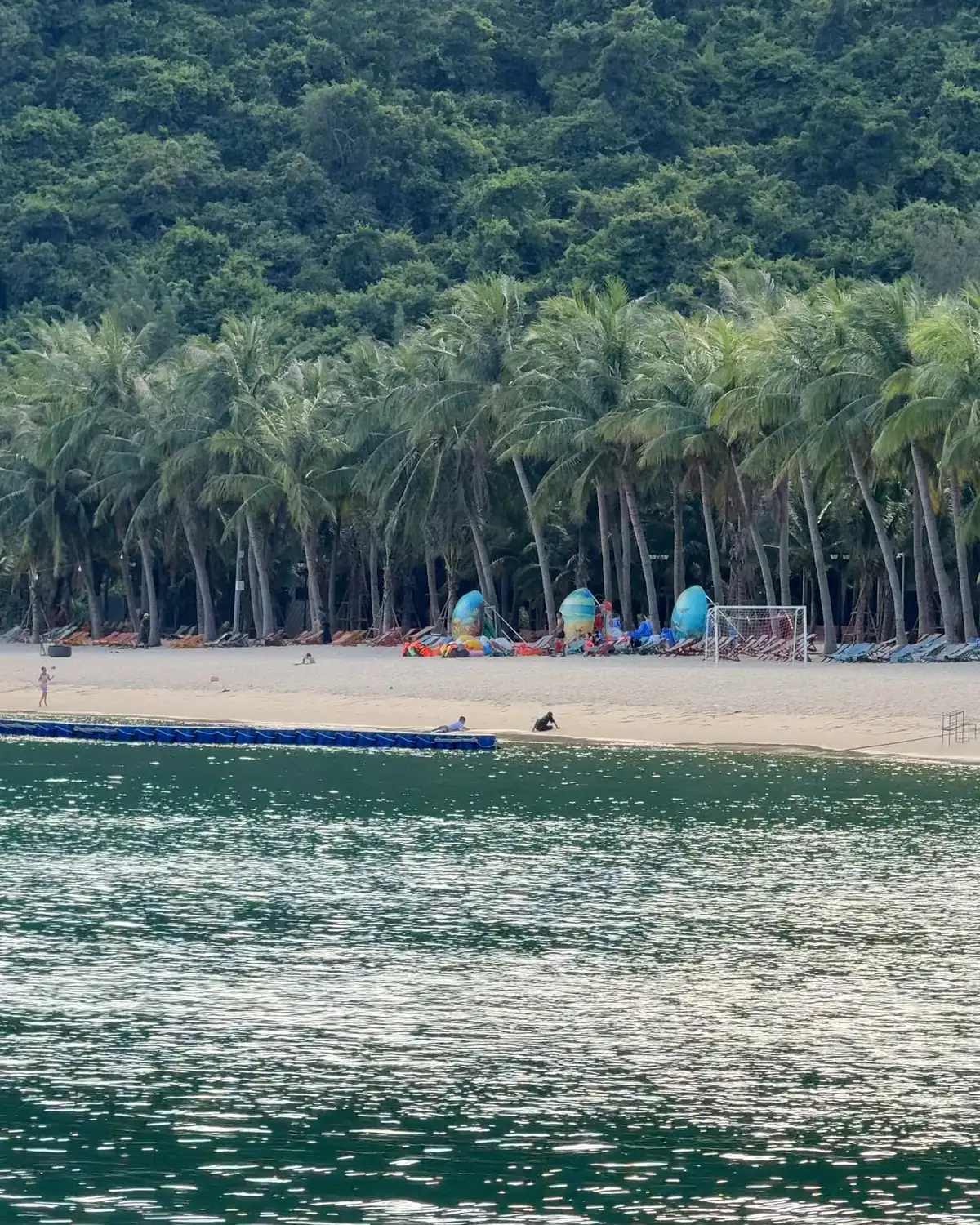
Safety first: wear the life jacket for the whole crossing, don’t board an overloaded boat, and never push to go when the boat operator or harbour authority says the sea is closed. When booking online, only use real companies or well-known platforms. Our guide to spotting booking scams applies to tours too.
Our 3 favourite things to do on Cham Island
1. Go fishing with local fishermen
Fishing is how island life works here, and joining a local family on a small boat is the best way to understand Cù Lao Chàm. You head out with simple lines, learn to feel for a bite, and bring your catch back to be grilled or cooked into a sour fish soup. It’s relaxed, fun for families, and the freshest meal you’ll have in Vietnam.
Our trip: on one of our visits, we went fishing from Bãi Hương, the fishing village on the south side of the island, on a local wooden boat. We caught squid and fish, then grilled our catch, squid and crab, over charcoal with just chili and salt.
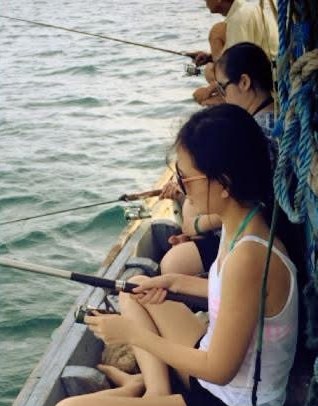
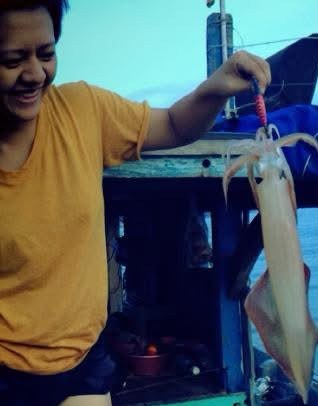
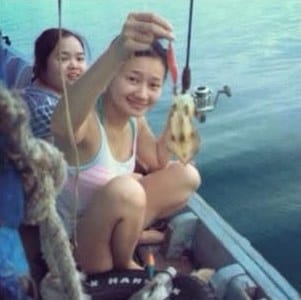
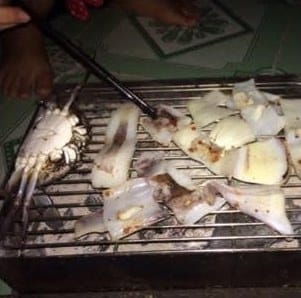
To do the same, ask your homestay to arrange a trip with a fisherman they know; Bãi Hương and Bãi Làng are the easiest places to start. Trips, boats and prices vary by operator and season, so agree on the price, the length of the trip and what’s included (gear, life jackets, cooking your catch) before you set off.
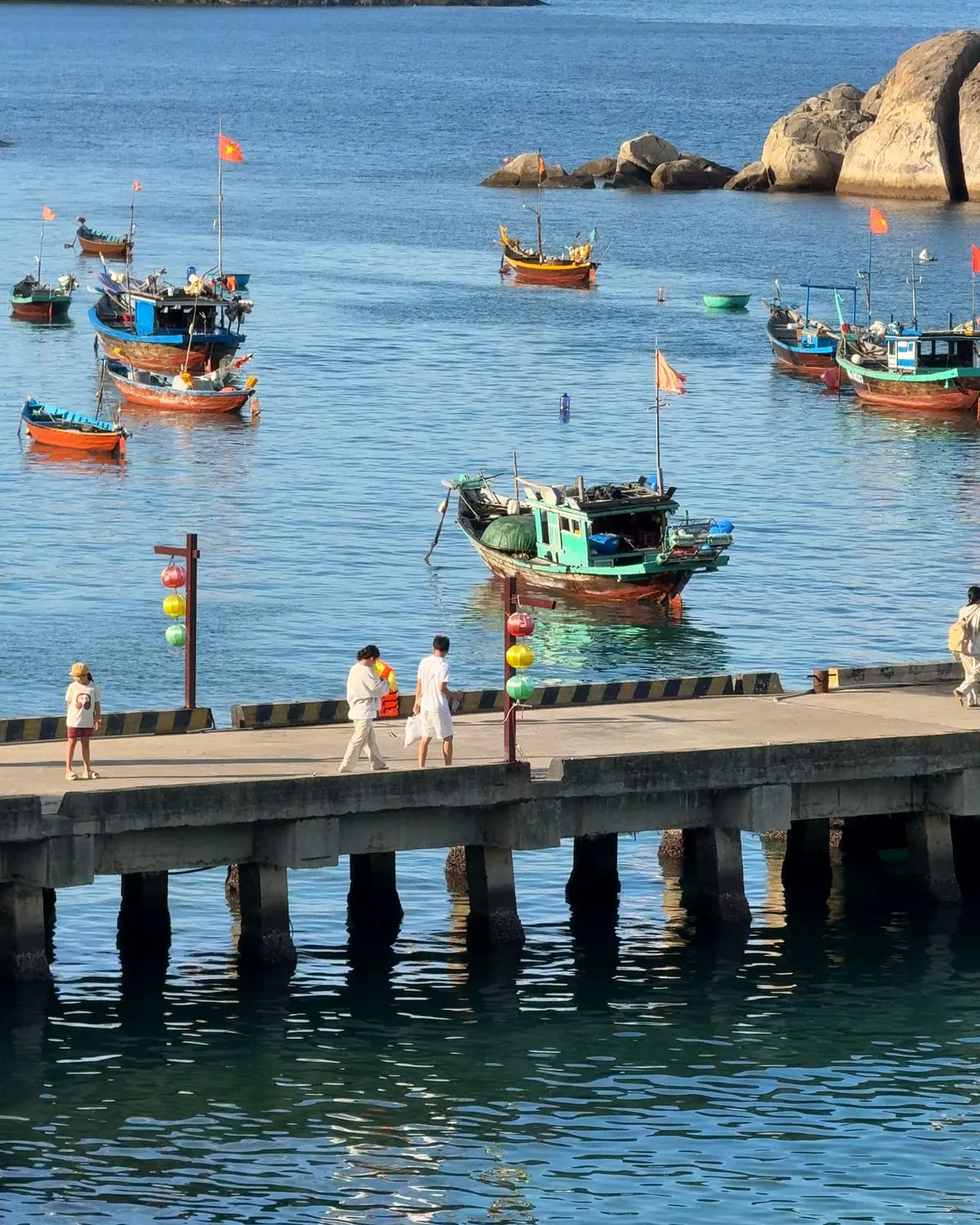
2. Snorkel the coral reefs
Cham Island has some of central Vietnam’s best snorkeling. The protected reefs are shallow, about 2–5 metres at popular spots like Bãi Xếp, Bãi Chồng and Hòn Dài, with visibility of roughly 4–10 metres on calm days. The water is clearest from late morning, when the sun is high. Guided snorkel trips with mask, snorkel and life jacket start from about 150,000–200,000 VND; diving costs more.
- Never stand on, touch or break coral, and don’t take shells or coral home.
- Use reef-friendly sunscreen, or a rash guard instead.
- If you have heart problems or high blood pressure, ask a doctor before diving.
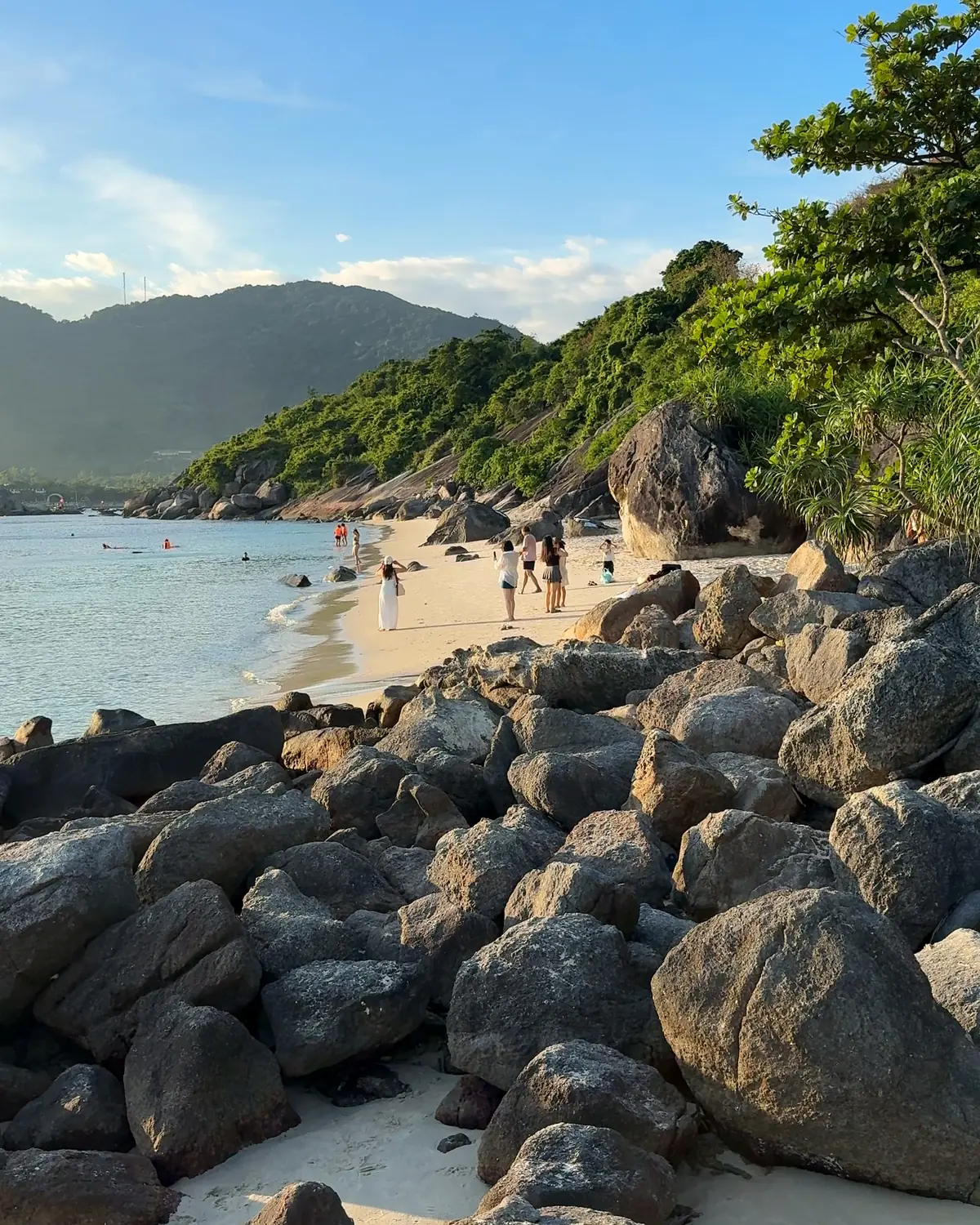
3. Stay one night (trust us on this)
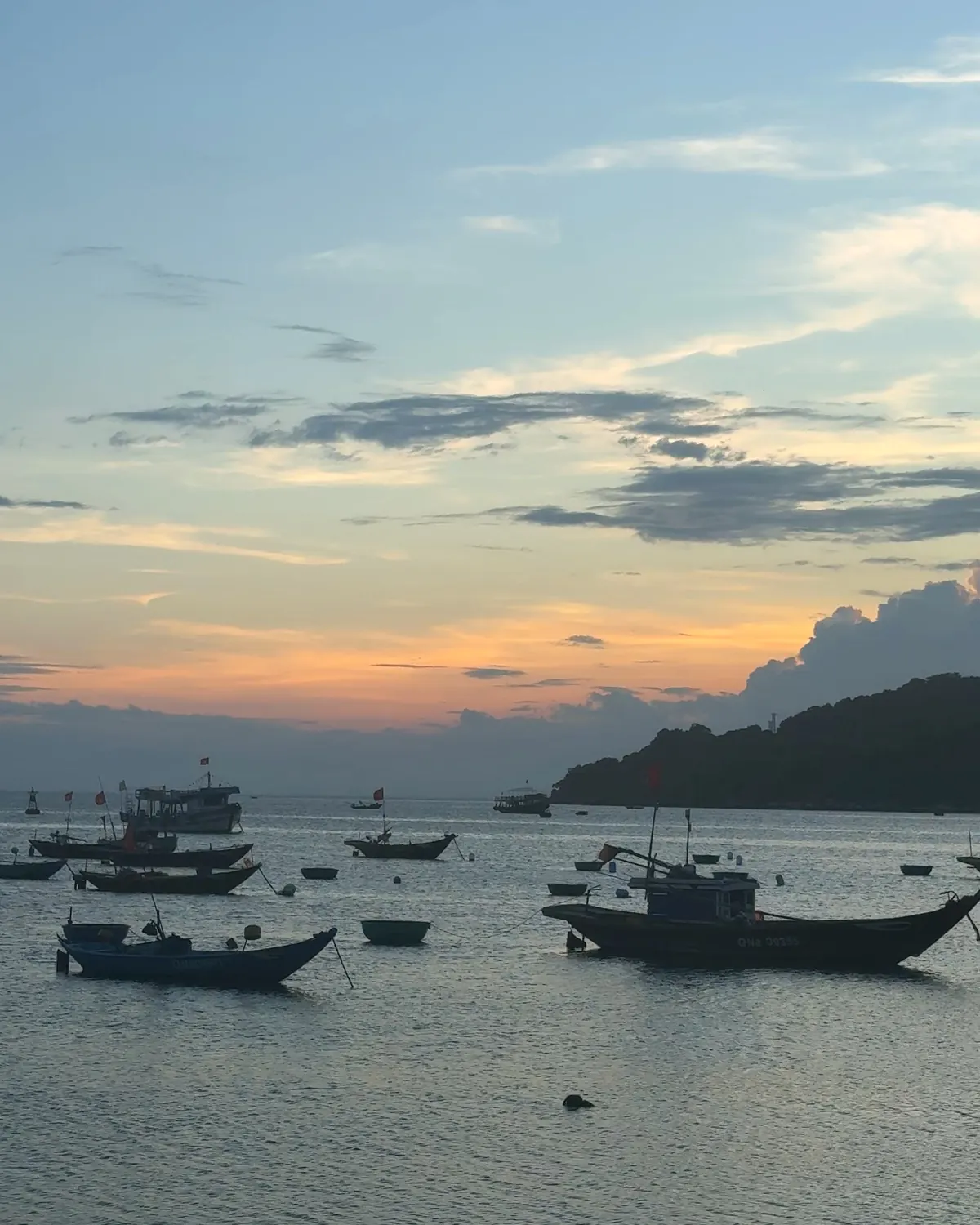
Staying overnight is the best way to see Cham Island. By about 2 pm the day-tour boats leave, and the island goes quiet. You get the beaches almost to yourself, a slow sunset, a seafood dinner with the locals, a dark sky full of stars, and an early morning when the fishing boats come home. A day trip only shows you the busy hours.
Cham Island day trip vs overnight: which is better?
A day trip is fine if you only have one free day and want a beach and a swim. An overnight stay is better if you want to fish, snorkel without the crowds and see real island life. Here’s how they compare:
| Day trip | 1 night | |
|---|---|---|
| Time on the island | About 4–5 hours | About 30 hours |
| Crowds | Busy late morning to early afternoon | Quiet evenings and early mornings |
| Fishing with locals | Rarely | Easy to arrange |
| Sunset and stars | No | Yes |
| Weather risk | Low (you leave the same day) | Check the forecast: a sea closure can keep you there an extra day |
| Best for | Short trips, first-timers | Couples, friends, families, anyone who loves the sea |
Where to stay overnight on Cham Island
Stay in a family homestay at Bãi Làng or Bãi Hương. There are no big hotels on Cù Lao Chàm. Homestays and guesthouses cost roughly 200,000–600,000 VND per night, and rooms with air-conditioning about 700,000–1,000,000 VND. Bãi Làng is the main village, with the pier, market and most places to eat. Bãi Hương, about 5 km south, is a quieter fishing village. On our trip, we stayed in a simple village homestay, and that is the experience we recommend: simple rooms, local hosts and the sea on your doorstep.
- Bring your passport. Foreign guests must be registered with the local police, and your homestay normally does this for you.
- Camping: in the summer months you can rent a tent and sleep on the sand at beaches such as Bãi Chồng, Bãi Ông or the quieter Bãi Bìm, and some groups hold campfire evenings. Arrange it through your homestay or a local operator, check the current rules when you book, and take every bit of rubbish back with you.
- Power and water: the island has had mainland grid power since 2016, so there is electricity at night, but rooms are simple. Use water carefully, because fresh water is precious on the island.
Prefer a comfortable bed before or after the island? See our where to stay in Da Nang guide, or stay near the Cửa Đại pier in Hội An (see our Hội An guide).
Cham Island beaches: which one to pick?
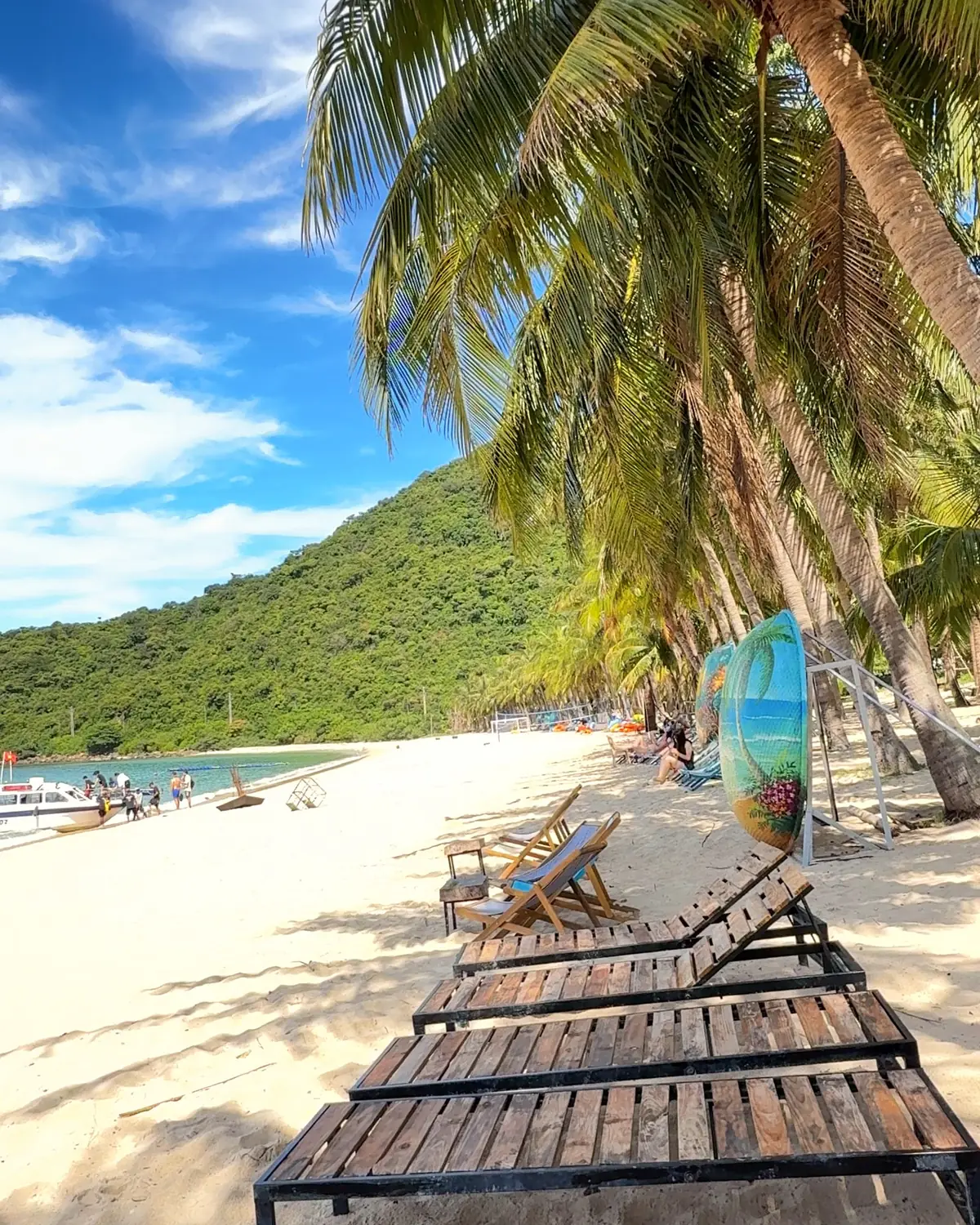
- Bãi Ông: the most developed beach, with white sand, restaurants, toilets and water sports such as parasailing. Easiest for families. Fishermen traditionally bury whales (“Ông”) that wash ashore here, which is where the name comes from.
- Bãi Chồng: soft sand and big boulders stacked on top of each other, which give the beach its name. Good for swimming and summer camping.
- Bãi Xếp: wild and quiet, with some of the best coral close to shore. Bring your own water and snacks.
- Bãi Bìm: small and secluded, good for a quiet swim.
- Bãi Làng: the main village and pier. It’s not a swimming beach, but it’s where life happens.
- Bãi Hương: a fishing village in the south with homestays and seafood.
More things to see on the island
- Hải Tạng Pagoda: built in 1758 at the foot of the hill on the west side of Hòn Lao, near Bãi Làng. It’s a peaceful, much-loved temple and a national heritage site (2006).
- The old Cham well (Giếng Xóm Cấm): a Cham-style well said to be more than 200 years old. It’s a national heritage site, and locals say its water never turns salty.
- Lăng Ông Ngư: a small temple in Bãi Làng where fishermen honour whales, the “Lord of the Fish” who protects people at sea.
- Swiftlet nest ancestor shrine (Miếu Tổ nghề Yến): at Bãi Hương. It honours the island’s famous bird’s-nest harvesters and is also a 2006 national heritage site.
- Tân Hiệp market: next to the pier at Bãi Làng. Come for dried squid, seaweed and snacks, and bring your own bag.
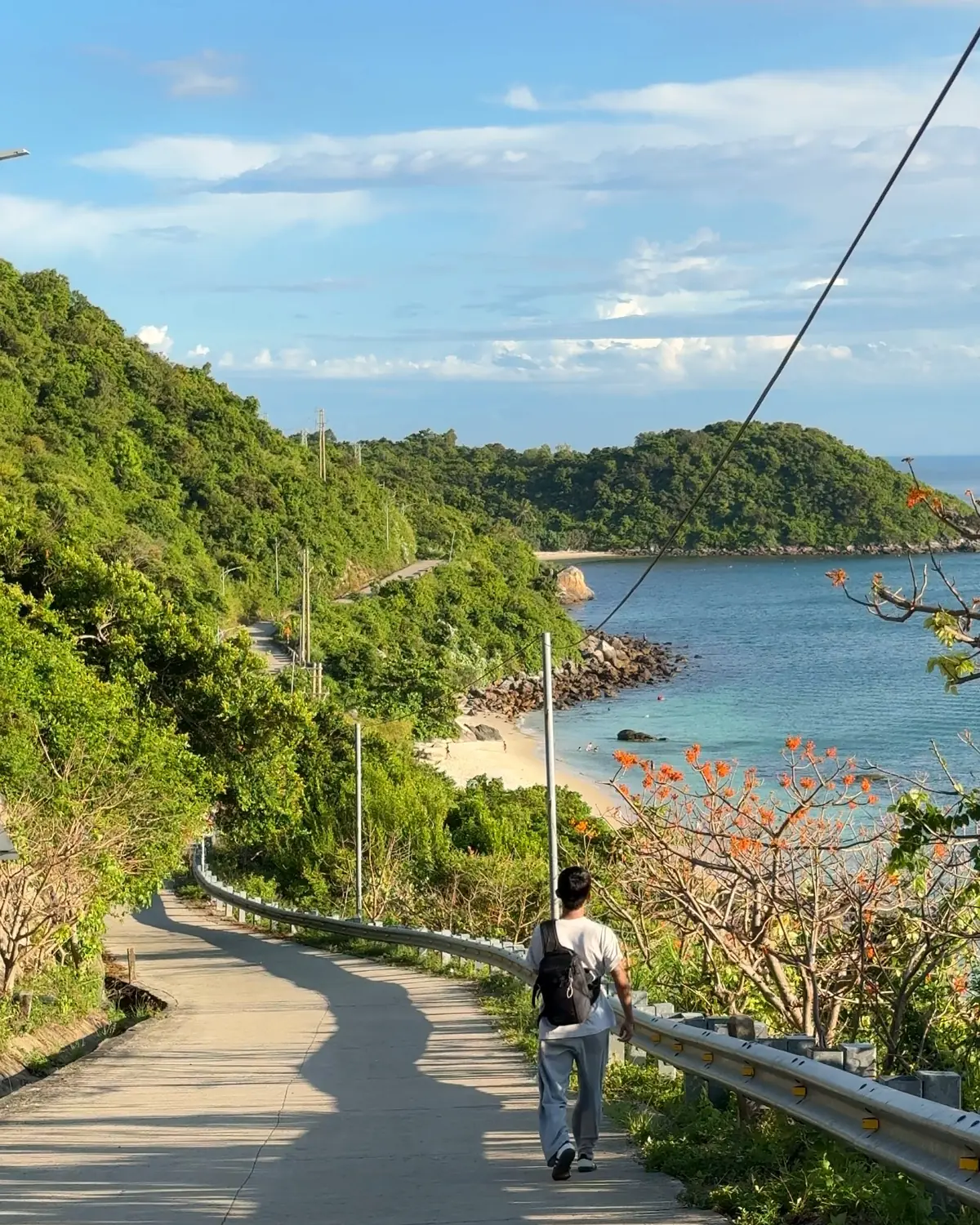
- Hiking and viewpoints: forest trails and the coastal road lead to quiet coves. Eo Gió on the east side is a lovely spot for sunrise. In July and August, red flame trees bloom along the roads.
Cham Island seafood: why it’s so good
The seafood on Cham Island is especially good because three things come together: unique natural conditions, a strictly protected ecosystem, and locals who catch and cook everything on the spot. It’s one of our favourite parts of a trip here. Order whatever came in that morning.
Why it tastes better here
- A protected sea: the island sits inside a UNESCO World Biosphere Reserve. Hundreds of coral species and rich marine plant life make an ideal habitat, so seafood grows naturally here, with firmer, sweeter meat than in other waters.
- Straight off the boat: it isn’t frozen or trucked in from the mainland. Early each morning, small fishing boats land the shrimp, fish, squid and snails caught the night before, or pulled from the fish cages, and sell them at the seafood market by the pier in Tân Hiệp or to the beachside eateries. Cooked fresh, it keeps its natural brininess and its chewy-sweet texture.
Island specialties to try
- Rock crab (cua đá): unlike sea crabs that scavenge, rock crabs live in crevices in the island’s mountain rocks and, as locals say, feed on mountain plants and morning dew. The meat is fragrant, firm and lightly sweet with a herbal note, and has no fishy smell. It’s the island’s most famous dish and the priciest, at around 1,000,000 VND per kg in season.
- Precious shellfish: ốc vú nàng (a local limpet), abalone (bào ngư) and sea urchin (nhum biển) cling to coral rocks where the waves are big and the water is very salty, so their flesh is thick, crunchy and full of ocean flavour. Try the sea urchin grilled with spring onion oil (nhum nướng).
- Mực một nắng: squid dried in the sun for one day, then grilled.
- Rau rừng: wild forest greens dipped in fish sauce with chilli and garlic.
- Bánh ít lá gai: a sticky rice cake made with ramie leaf, a sweet island specialty to take home.
Want to catch your own dinner? On our trip, we went out with friends from Bãi Hương and grilled our own squid and crab over charcoal. See go fishing with local fishermen above.
Eat rock crab responsibly
Rock crab is protected inside the Cù Lao Chàm reserve. Under Da Nang’s 2026 rules (Decision 63/2026/QĐ-UBND), crabs may only be caught from 1 March to 31 July, and the shell must be at least 7 cm across. From 1 August to the end of February, catching, buying and selling rock crab in the reserve is paused so the crabs can breed (source: Znews, August 2026). Order rock crab only in season, check that it’s legal size, and skip small or egg-carrying crabs. Locals follow these seasonal limits, and you should too.
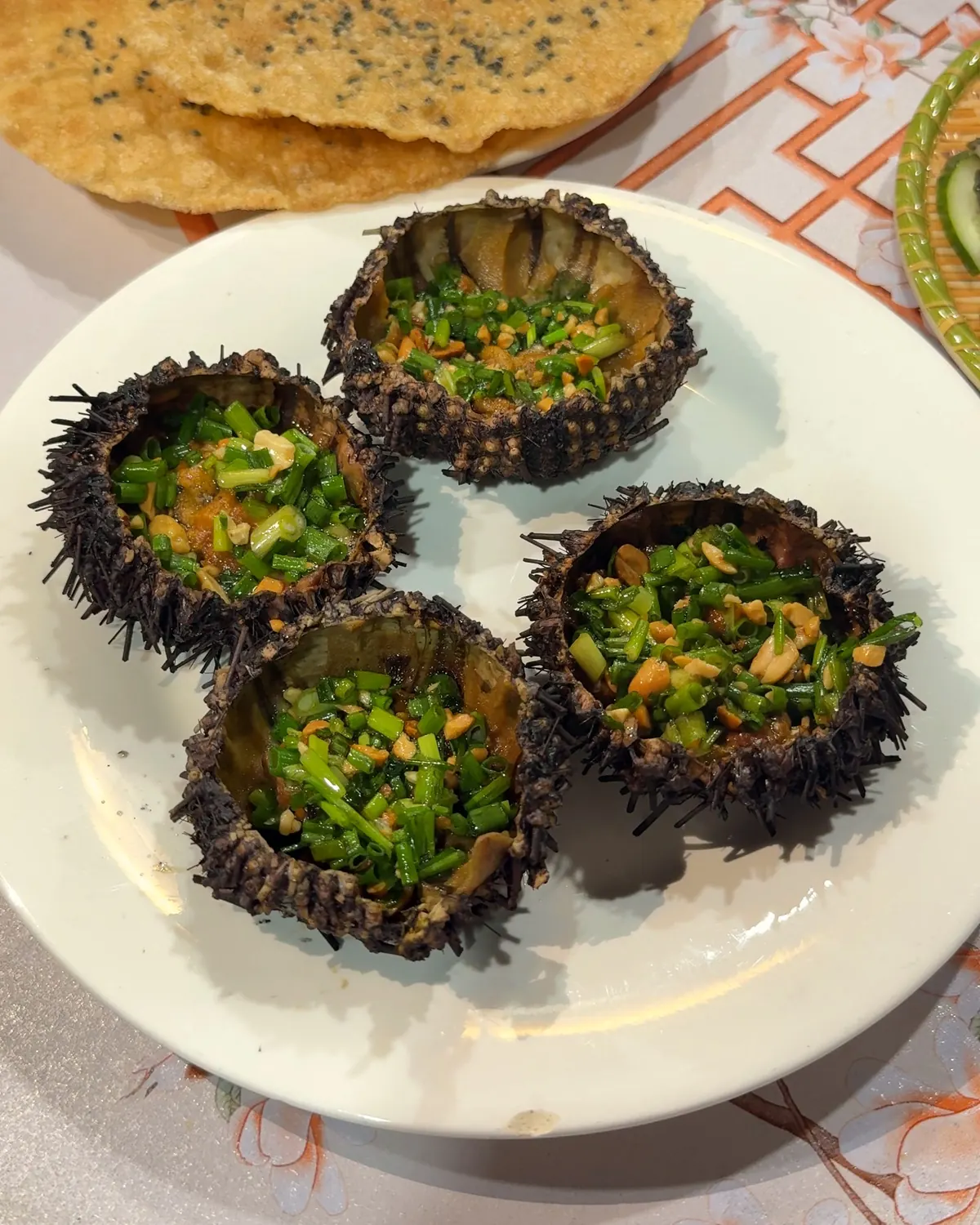
Always ask the price per kilo before seafood is cooked. If you love Vietnamese seafood and noodles, our Michelin restaurants in Da Nang guide is the next step.
Sample 2-day, 1-night Cham Island itinerary
Day 1
- 7:00: leave Da Nang for Cửa Đại pier (about 45–60 minutes).
- 8:00–9:00: speedboat to Bãi Làng; check in at your homestay.
- Late morning: snorkeling trip to Bãi Xếp or Hòn Dài, when the sun lights up the coral.
- Lunch: seafood at Bãi Ông, then a swim and a rest.
- Afternoon: when the day boats leave, visit Hải Tạng Pagoda, the old well and Tân Hiệp market.
- Sunset: go fishing with a local fisherman, then have your catch cooked for dinner.
- Night: stars, sea breeze and an early night.
Day 2
- 5:30: sunrise, and watch the fishing boats come home.
- Morning: motorbike or walk the coastal road to Bãi Hương; a second swim at Bãi Chồng.
- Early afternoon: boat back to Cửa Đại, then spend the evening in Hội An’s Old Town.
Short on time? Book the Cham Island day tour on Klook: speedboat, island fees, snorkeling and lunch in one booking.
Note: October–February trips are often cancelled for rough seas, so check the tour’s cancellation and rebooking terms before you book. (Price checked 15 Oct 2026.)
What to pack for Cham Island
- Swimwear, a rash guard, a hat and sunglasses
- Reef-friendly sunscreen and insect repellent
- A reusable bag and water bottle (no plastic bags allowed)
- Cash in VND for boats, food and homestays
- Your passport if you’re staying overnight
- Seasickness tablets, a power bank and a dry bag for your phone
- Sandals you can wear in the water
How to be a good guest on Cham Island
- Don’t bring plastic bags, and take your rubbish back with you.
- Don’t touch, stand on or take coral, shells or starfish.
- Dress modestly at the pagoda and temples (cover shoulders and knees).
- Ask before photographing people, especially in the fishing villages.
- Save fresh water, and keep the noise down at night.
Cham Island FAQ
Is Cham Island worth visiting?
Yes, between March and August. It’s the easiest place near Da Nang and Hội An for clear water, coral and real fishing-village life. We think it’s worth staying one night rather than doing a rushed day trip.
How do I get to Cham Island from Da Nang?
Take a Grab or taxi about 35 km (45–60 minutes) to Cửa Đại pier near Hội An, then a 15–20 minute speedboat to Bãi Làng. Many day tours include pick-up from Da Nang hotels.
How much is the Cham Island entrance fee?
From 10 June 2026 the sightseeing fee is 70,000 VND per person. Children under 16 and people aged 60 and over go free. A small environment fee (about 20,000 VND) is also collected, and both are often included in tour and boat prices.
Can I visit Cham Island in October?
It’s risky. October to February is storm season, and boats are often cancelled when the sea is closed. If you go, keep your plans flexible and avoid an overnight stay. The best months are March to August.
Can you stay overnight on Cham Island?
Yes. Family homestays at Bãi Làng and Bãi Hương cost roughly 200,000–600,000 VND per night. Bring your passport so your host can register your stay with the local police.
Is the seafood on Cham Island fresh?
Yes. It isn’t frozen or brought in from the mainland. Small fishing boats land their night’s catch early each morning and sell it at the seafood market by the pier or straight to the beachside eateries. Rock crab can only be caught from 1 March to 31 July, so order it in season.
Is snorkeling at Cham Island good?
Yes, it’s some of the best around Da Nang. Shallow, protected reefs at Bãi Xếp, Bãi Chồng and Hòn Dài are 2–5 metres deep, with the best visibility on calm days from May to August.
Are plastic bags allowed on Cham Island?
No. The island has banned plastic bags since 2009. Bring a reusable bag and bottle, and take your rubbish back to the mainland.
👉 Planning the rest of your trip? See the tours, hotels and tickets we personally recommend on our Book your Da Nang & Hội An trip page.
Sources
Checked 15 October 2026: Tuổi Trẻ (Cù Lao Chàm fee from 10 June 2026), VnExpress Cù Lao Chàm travel guide (updated July 2026), Hội An Heritage Conservation Centre (relic records), UNESCO Man and the Biosphere programme, and Vietnam National Authority of Tourism. Prices for boats, tours, homestays and food are typical 2026 ranges and change by season.