Updated October 2026. Prices are approximate, from local news and guides dated 2025–2026. Always ask the price before you order.
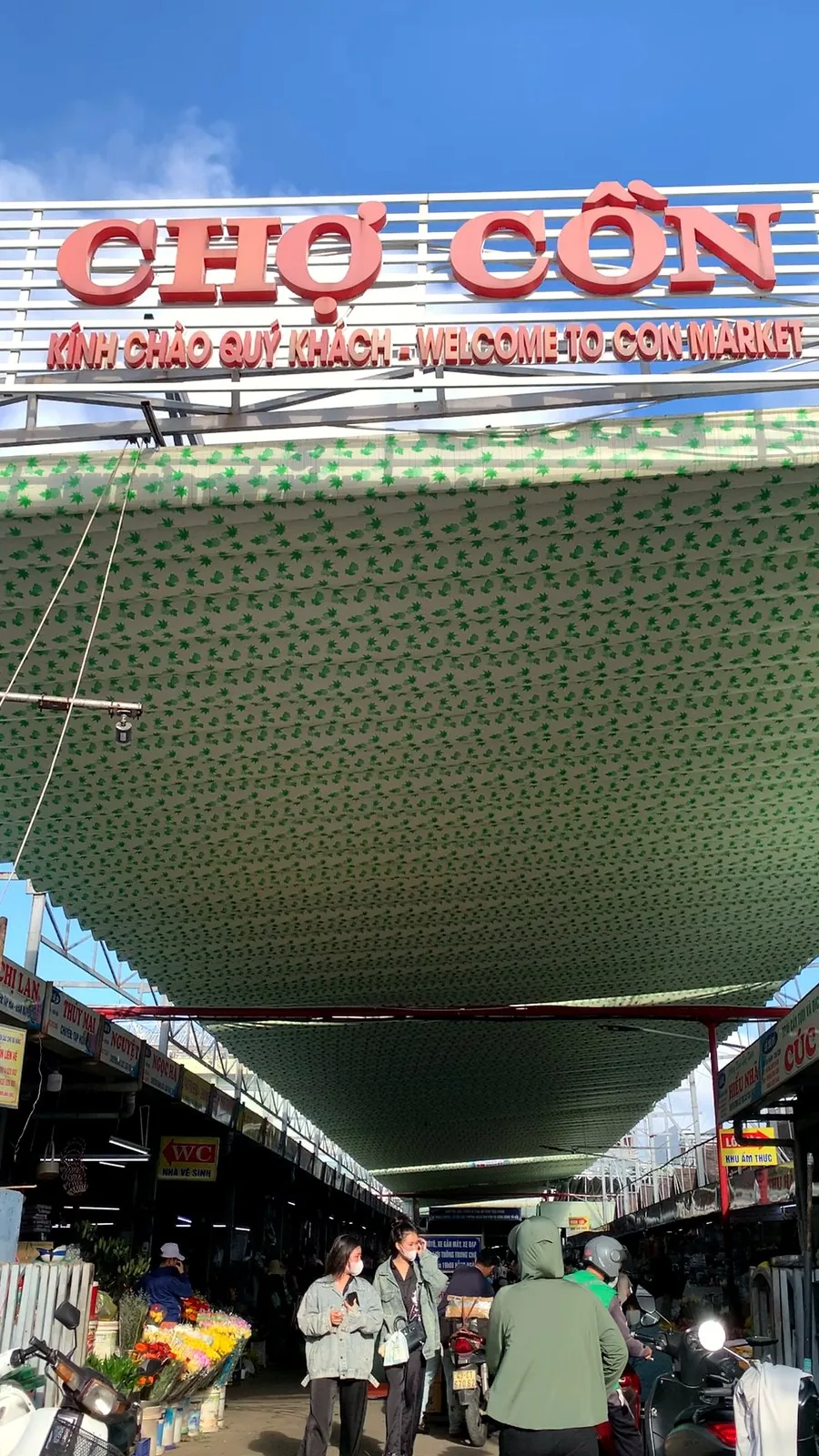
If you want to see how Da Nang really shops and eats, skip the mall and go to Con Market. Con Market is the city’s biggest traditional market and its busiest food court: a maze of dried squid and shrimp, mountains of clothes, spice stalls and rows of plastic stools where locals sit down for bún mắm, mì Quảng and bánh xèo. It’s loud, a bit chaotic and very cheap, and it’s the place I always recommend to anyone who wants to see “real Da Nang”. We filmed here in November 2025, and this guide covers everything you need: address and hours, what’s where, what to eat and buy, how it compares to Han Market, and the tips that make a first visit easy.
Quick answer: Con Market (Chợ Cồn) is Da Nang’s largest local market, at 290 Hùng Vương, Hải Châu, on the corner of Ông Ích Khiêm, about 1 km west of Han Market. It opens daily from 6 am to about 7:30 pm. Go for the huge food court, where most dishes cost about 30,000–50,000₫ (US$1.20–2), and for dried seafood, spices and cheap clothes. My personal favourites are the bánh tráng thịt heo (pork rice paper rolls) at Bi Mỹ and Da Nang-style phá lấu trộn. It’s more local and food-focused than Han Market. Bring cash (lots of vendors now take bank QR too), go in the morning, and ask the price before you order.
What is Con Market (Chợ Cồn)?
Con Market is Da Nang’s oldest and biggest everyday market, built in 1940. Its name comes from the “cồn”, the sandbar or sand dune it was first built on. Today it is a whole block of market halls in central Hải Châu, with more than 2,000 stalls selling food, dried goods, clothes, fabric, household goods and local specialities, plus the city’s most famous market food court.
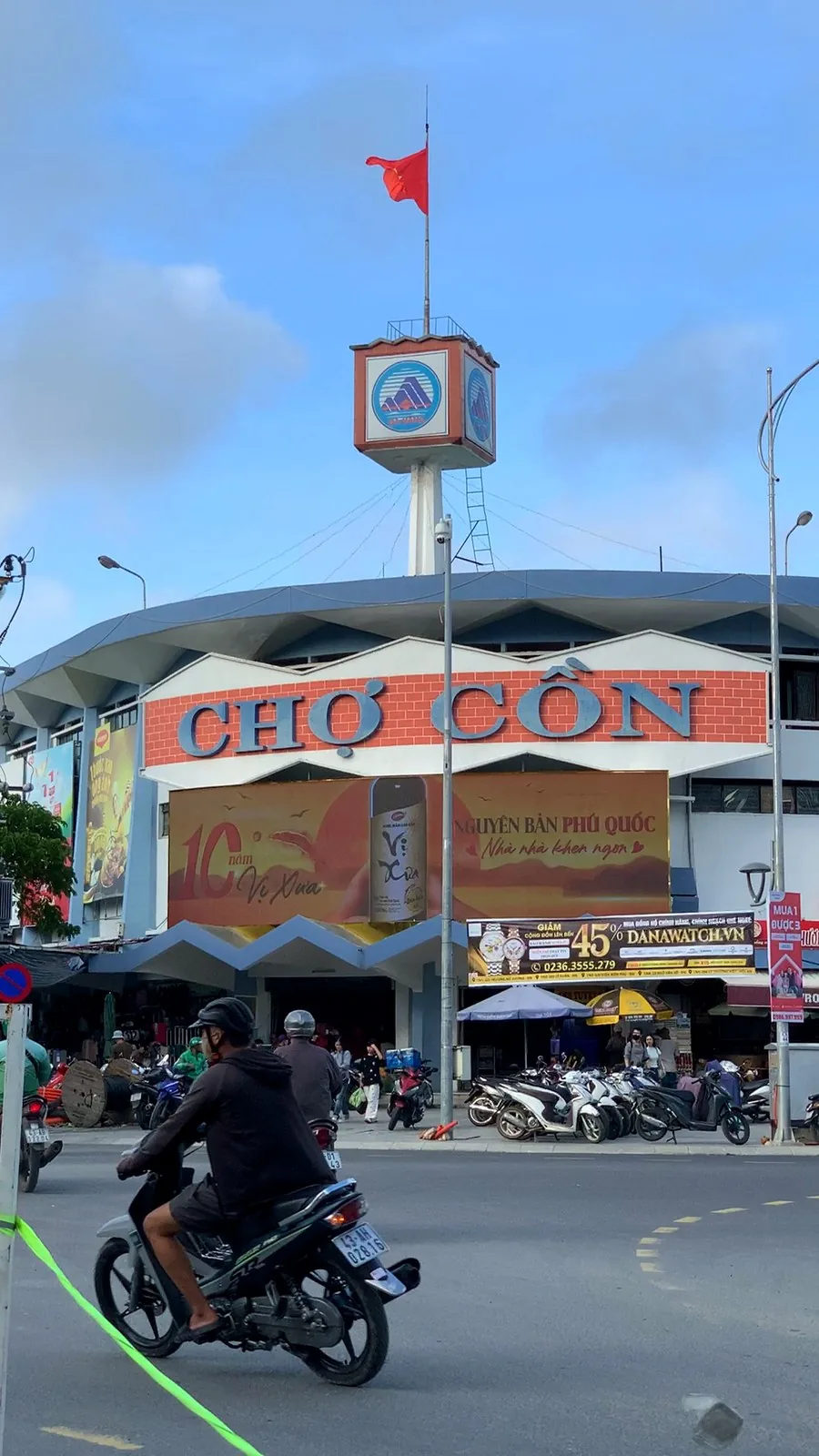
The market is made up of one three-storey building, two two-storey buildings and six single-storey halls. Unlike Han Market by the river, which sees many tour groups, Con Market is where Da Nang families do their own shopping, so you’ll see locals buying fish sauce by the bottle, students grabbing lunch and vendors trading with each other. In April 2026 VnExpress reported that the management had upgraded the lighting and laid new tiled floors, and that the market keeps a reputation for friendly vendors who don’t overcharge visitors. In August 2026 the city and Grab also launched a “Con Market chuyển đổi số” (digital Con Market) programme that puts market stalls and Da Nang specialities on the Grab app, so some vendors now take delivery orders too.
Where is Con Market? Address, opening hours and how to get there
Con Market is at 290 Hùng Vương, Hải Châu ward, Da Nang, on the corner of Hùng Vương and Ông Ích Khiêm streets. It’s right in the city centre: about 1 km west of Han Market, roughly 1 km from the Pink Church and about 3 km from Da Nang International Airport. The market opens at 6 am, and most stalls close around 7–7:30 pm; the food court follows roughly the same hours.
| Vietnamese name | Con Market |
| Address | 290 Hùng Vương, Hải Châu, Da Nang (corner of Ông Ích Khiêm) – open in Google Maps |
| Opening hours | Daily, 6 am to about 7:30 pm (individual stalls vary) |
| Entry | Free |
| Best time | Morning (7–10 am) for shopping and breakfast; avoid the midday rush in the food court |
| Food prices | Most dishes about 30,000–50,000₫ (US$1.20–2) |
| Payment | Mostly cash in Vietnamese dong; lots of vendors now take bank QR transfers |
| Time needed | 1–2 hours (longer if you eat your way through) |
- By Grab (car or bike): the easiest way. Type “Con Market” in the app and you’ll be dropped on Hùng Vương by the main gate. From the My Khe Beach hotels it’s about 15 minutes, depending on traffic and bridges.
- On foot: from Han Market, walk west along Hùng Vương street for about 1 km (roughly 15 minutes).
- By motorbike: park at the paid motorbike parking around the market and keep your ticket.
- By city bus: there is a “Con Market” bus stop on Hùng Vương in front of the market.
What’s where inside Con Market?
Think of Con Market as three zones: the food court, the dry-goods and speciality aisles, and the clothes and household sections. The aisles are narrow and stall signs are in Vietnamese, so it’s easy to get turned around. That’s part of the fun. If you get lost, ask for “khu ăn uống” (the food area) and anyone will point you there.
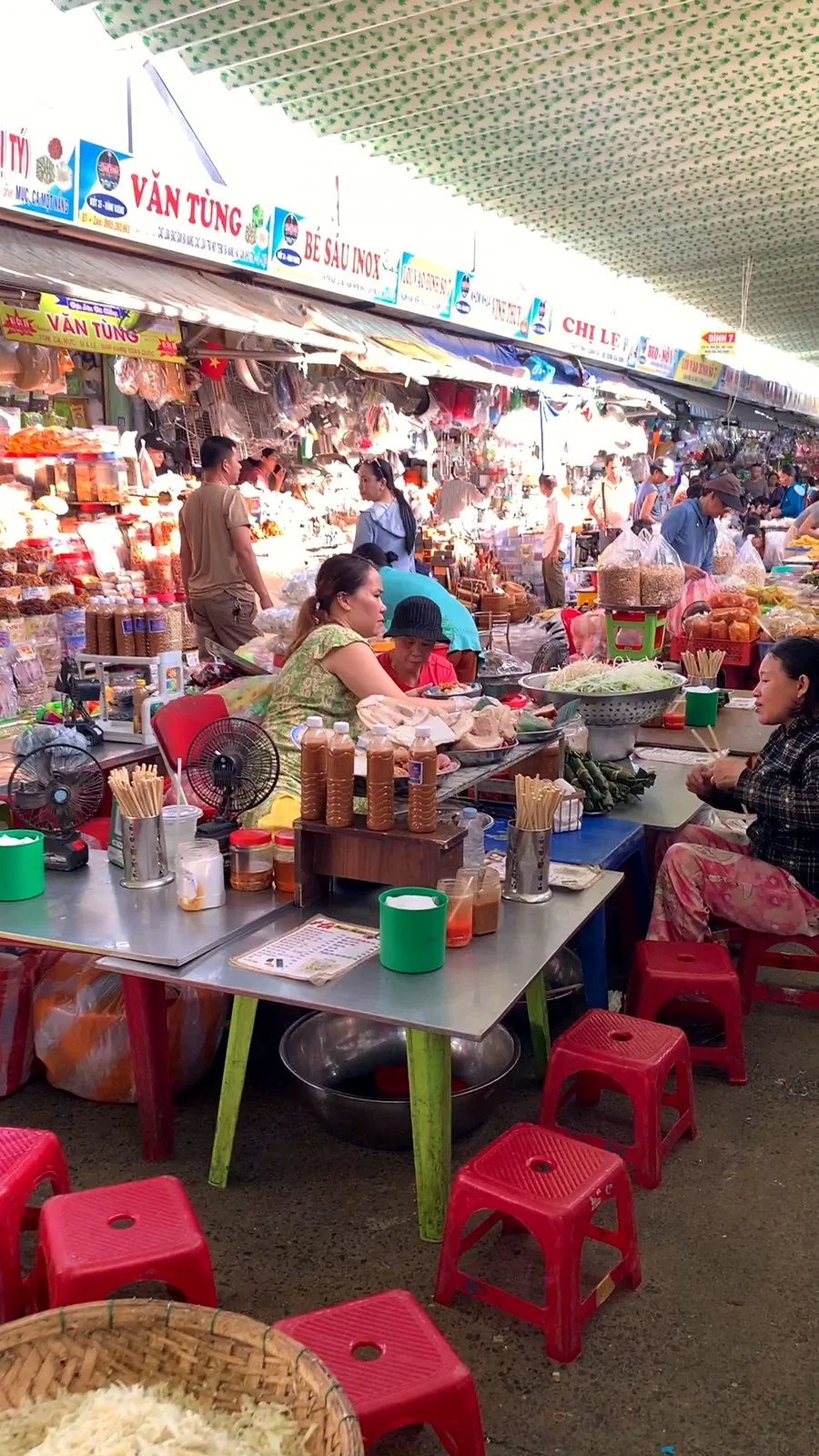
- Food court (khu ẩm thực): long rows of food stalls with low tables and plastic stools, plus an indoor section with stainless-steel tables. This is the busiest part of the market.
- Dried goods and specialities: dried squid, dried shrimp, dried fish, fish sauce and fermented sauces (mắm), spices, snacks, candied fruit, chả (Vietnamese sausage) and gift boxes.
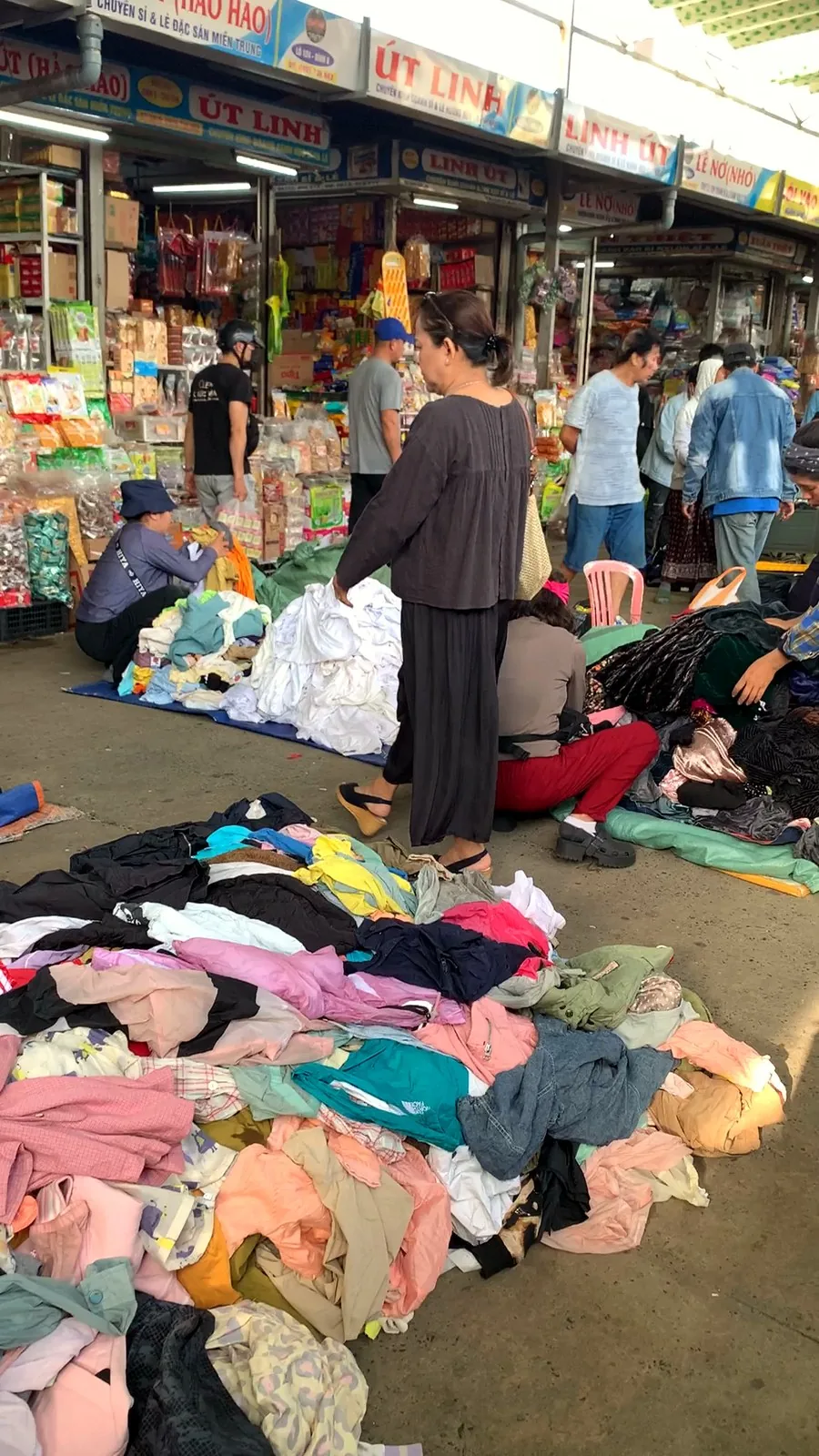
- Clothes and fabric: stalls with clothes hanging to the ceiling and piles of cheap clothes on the floor for bargain hunters, plus fabric, shoes and bags.
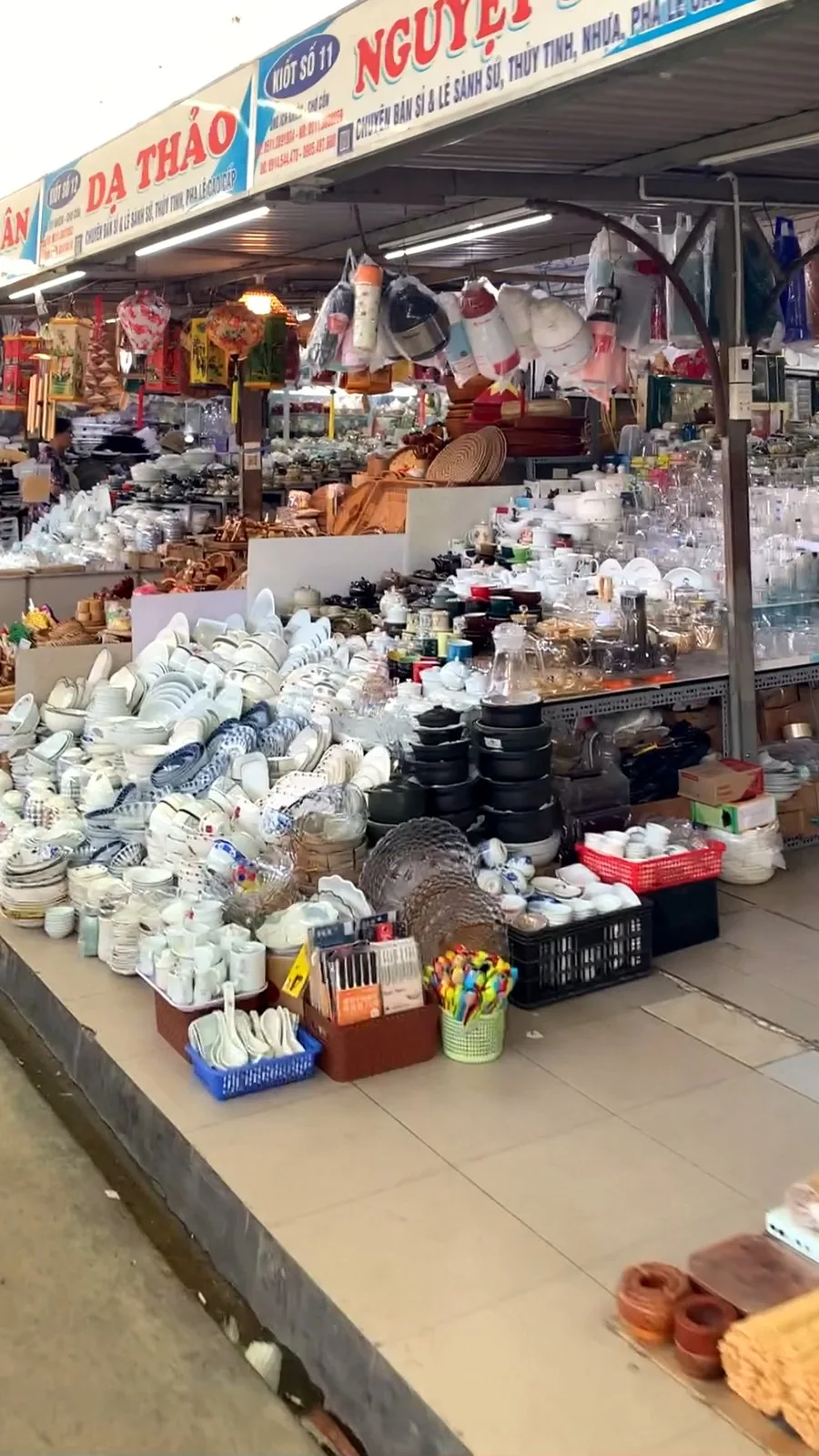
- Household and fresh food: kitchenware, flowers, fruit, vegetables, meat and seafood for locals’ daily cooking.
- Outside on the street: snack and drink vendors around the market edges, busiest from the afternoon.
My 5 favourite things to eat at Con Market
These are the five things I always go back for at Con Market: Da Nang-style phá lấu trộn, cháo cá nục, chè from Quán Hoa Xù, bánh tráng thịt heo from Bi Mỹ, and cháo chả from bà Hường. They’re simple, everyday Da Nang food, the kind locals eat at the market rather than in restaurants. Many stalls have small signs or none at all, so save the names below on your phone and ask any vendor to point you in the right direction. Most of these dishes cost about US$1–4 (roughly 25,000–100,000₫) each, so you can easily try several in one visit.
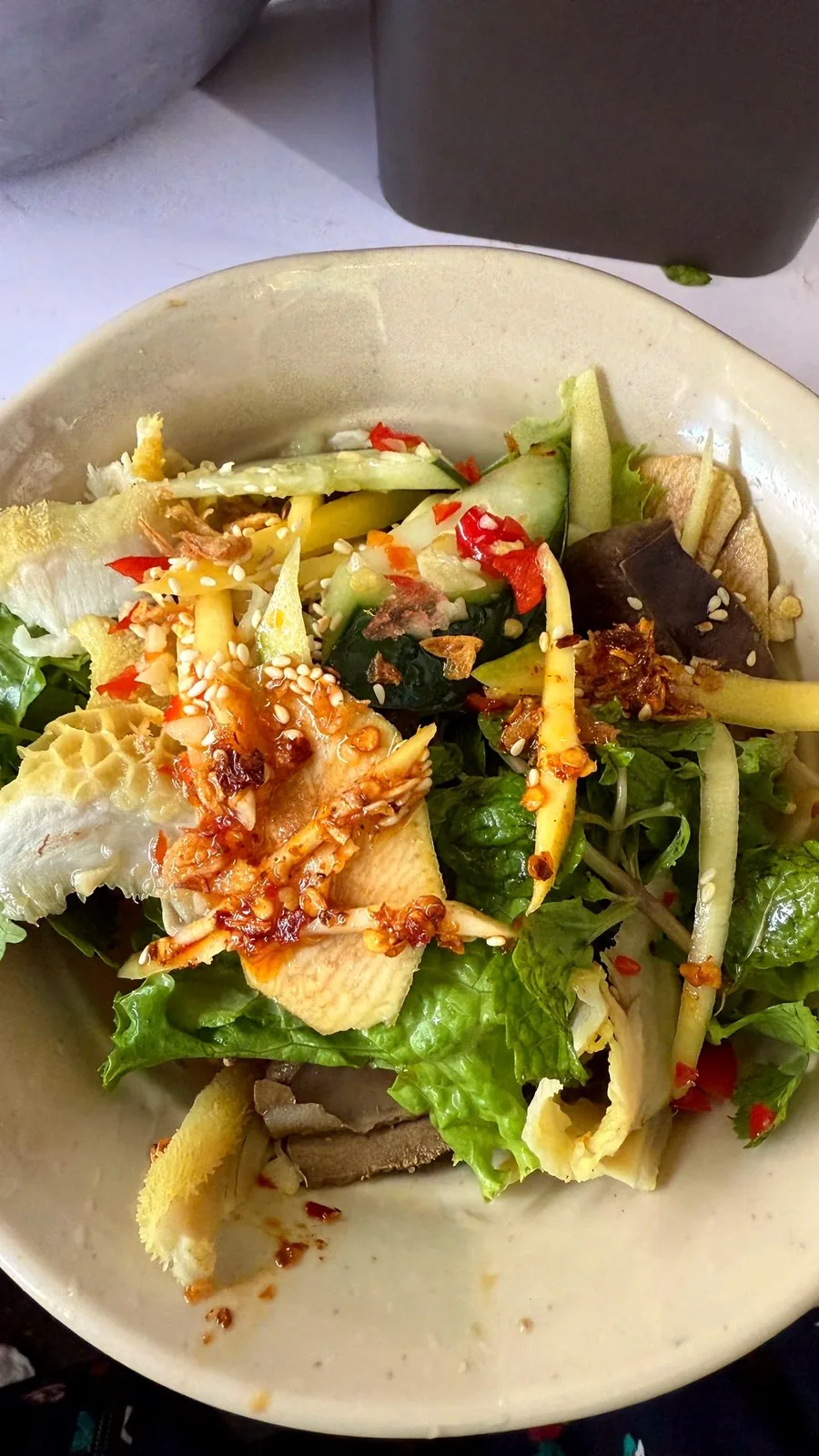
1. Phá lấu trộn kiểu Đà Nẵng (Da Nang-style offal salad)
If you know phá lấu from Saigon, forget the warm stew. In Da Nang, phá lấu trộn is a cold, tossed salad: boiled offal (usually beef or pork, such as stomach and intestine) sliced thin and mixed with shredded green mango, fresh herbs, chili and a sweet-sour fish-sauce dressing, often finished with fried shallots. Expect chewy and crunchy textures, a sharp, tangy kick and plenty of herbs. It’s a great snack to share if you’re curious but not sure about offal. My favourite phá lấu stall is inside the food court by the Hùng Vương gate; ask for “phá lấu trộn” and ask the price first.
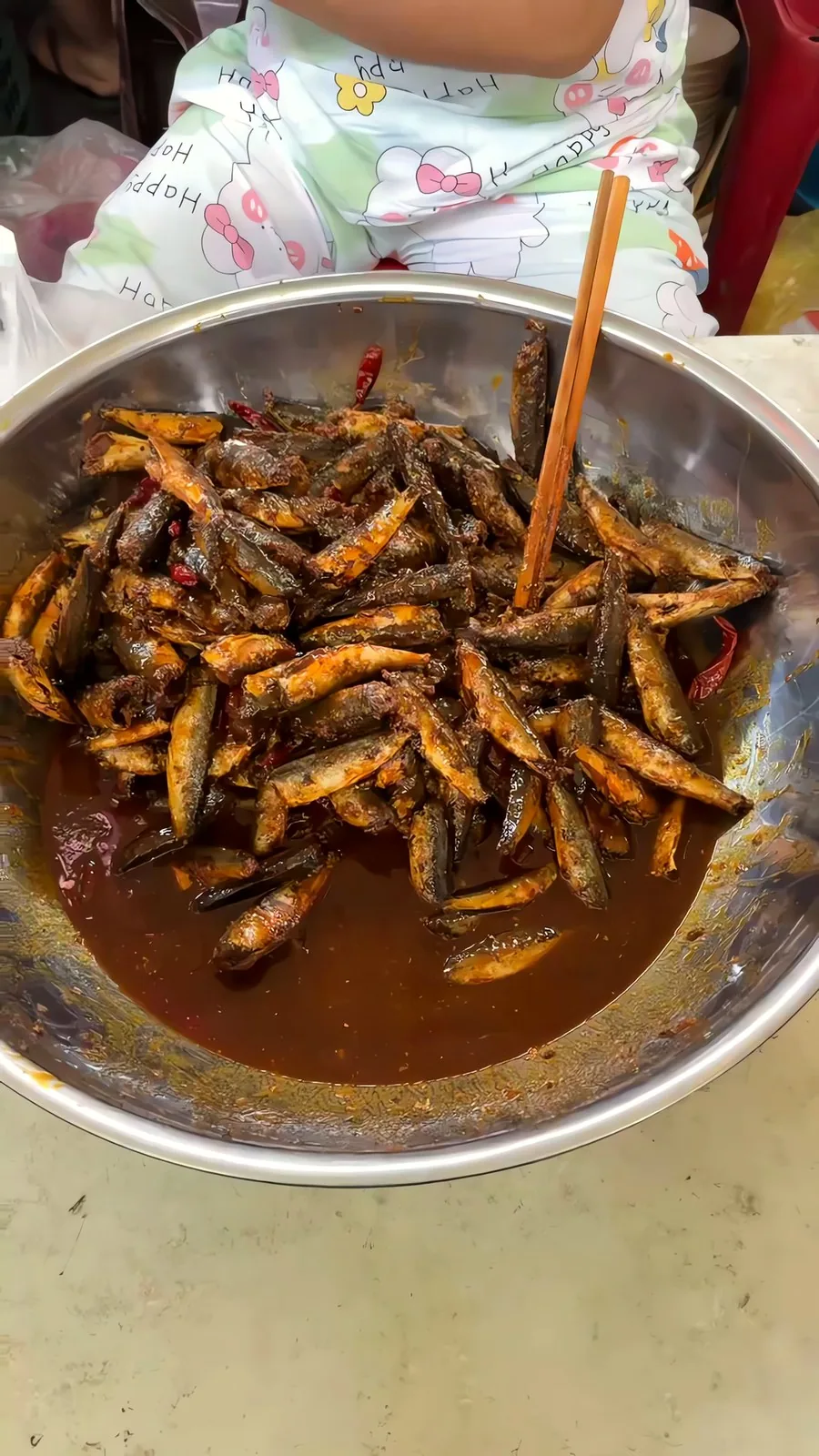
2. Cháo cá nục (rice porridge with braised round scad)
Cháo cá nục is soft rice porridge served with cá nục (round scad), a small, inexpensive sea fish that Da Nang families cook all the time, braised until it’s savoury, slightly sweet and peppery. It’s warm, gentle comfort food and a good choice for breakfast or on a rainy day. Cá nục has small bones, so eat slowly. Ask for “cháo cá nục” in the food area and ask the price first.
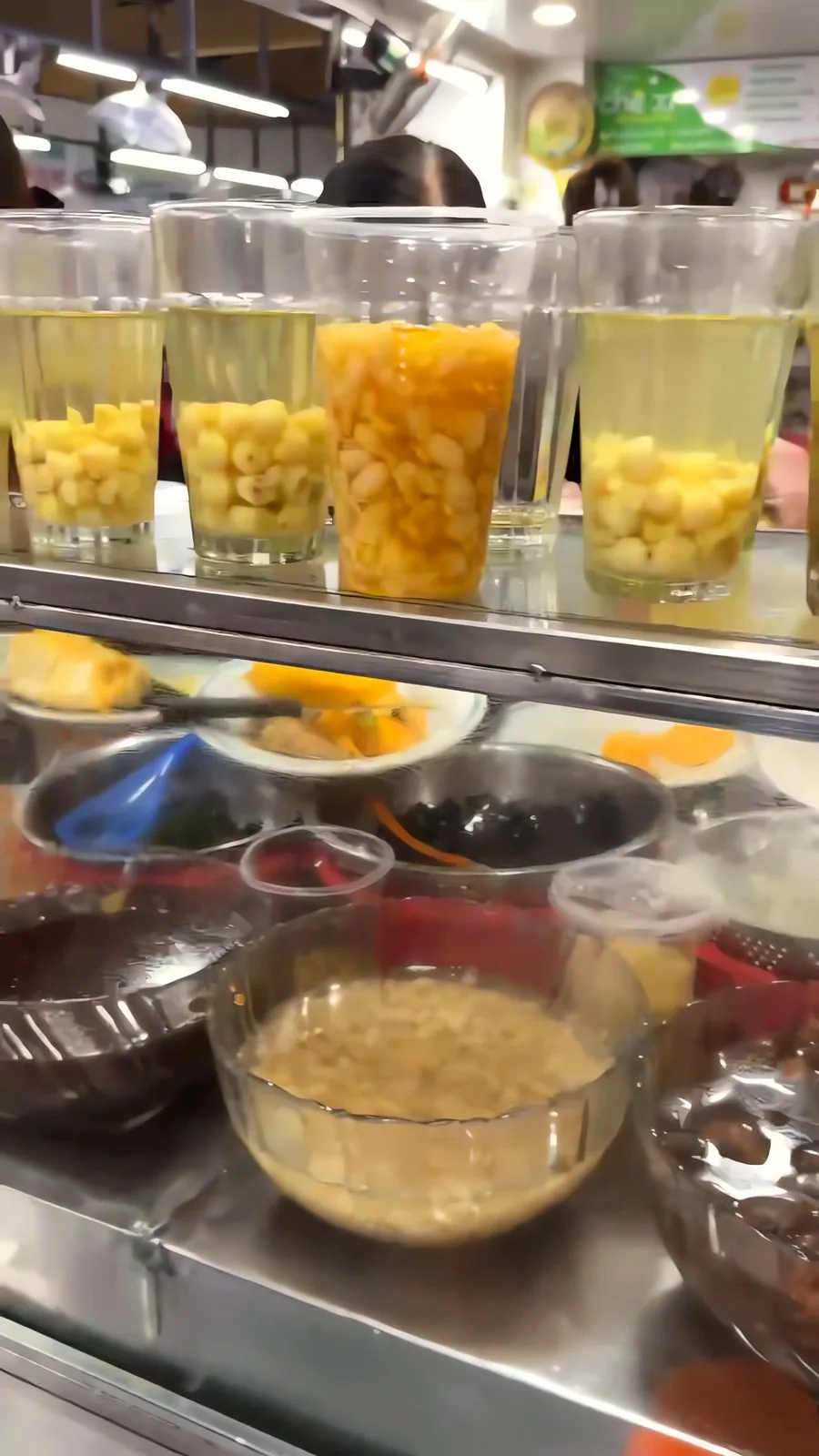
3. Chè at Quán Hoa Xù
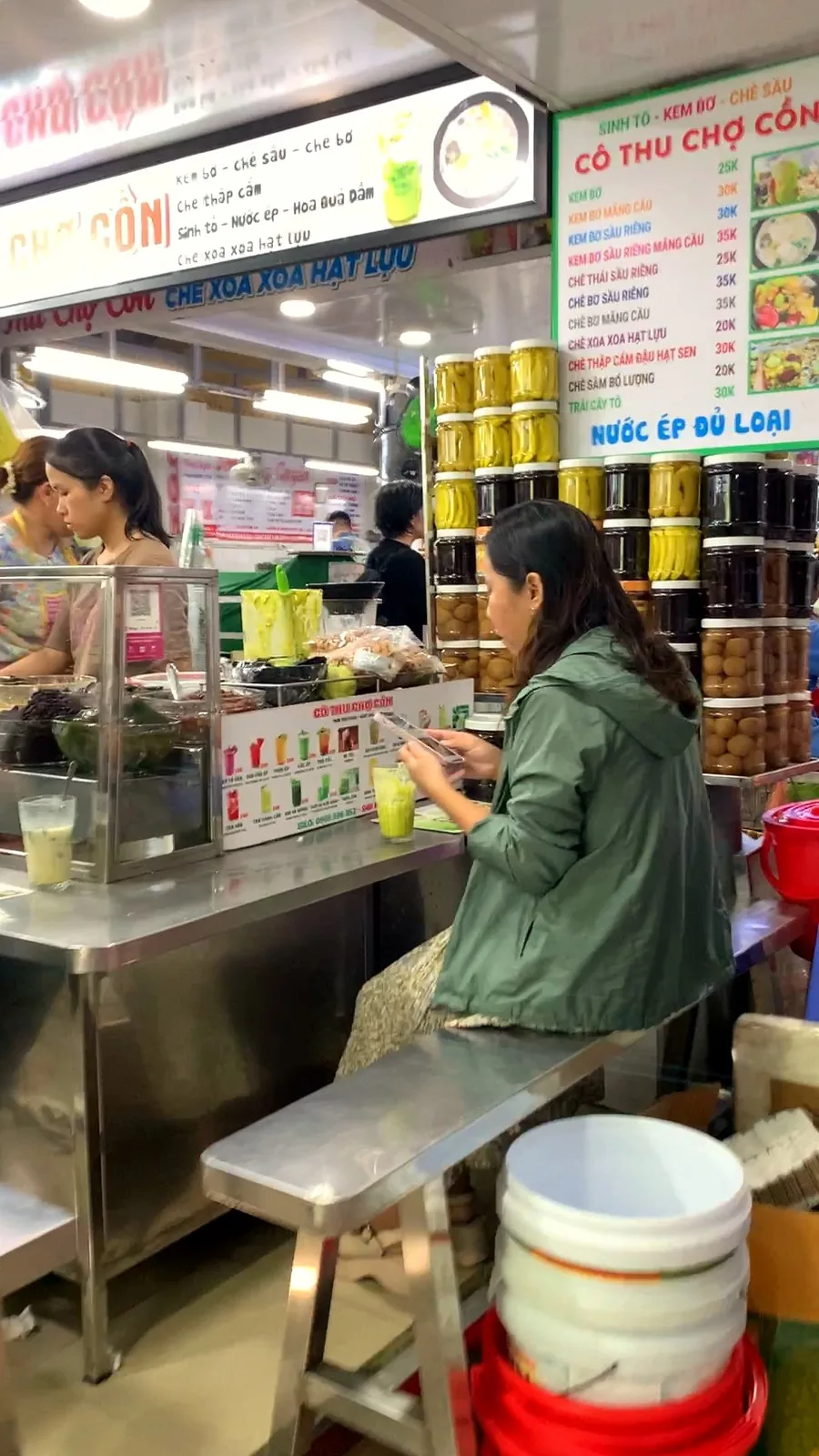
For something sweet, my pick is Quán Hoa Xù, a chè stall inside Con Market whose sign reads “chè thập cẩm · xoa xoa hạt lựu”. Chè thập cẩm is a “mixed” sweet soup: beans, jellies and other toppings layered in a glass with coconut milk and crushed ice. Xoa xoa hạt lựu is grass jelly (xoa xoa) with little red tapioca “pomegranate seeds” (hạt lựu) in sweet coconut milk. Both are cold, sweet and very refreshing on a hot day. Ask the price first.
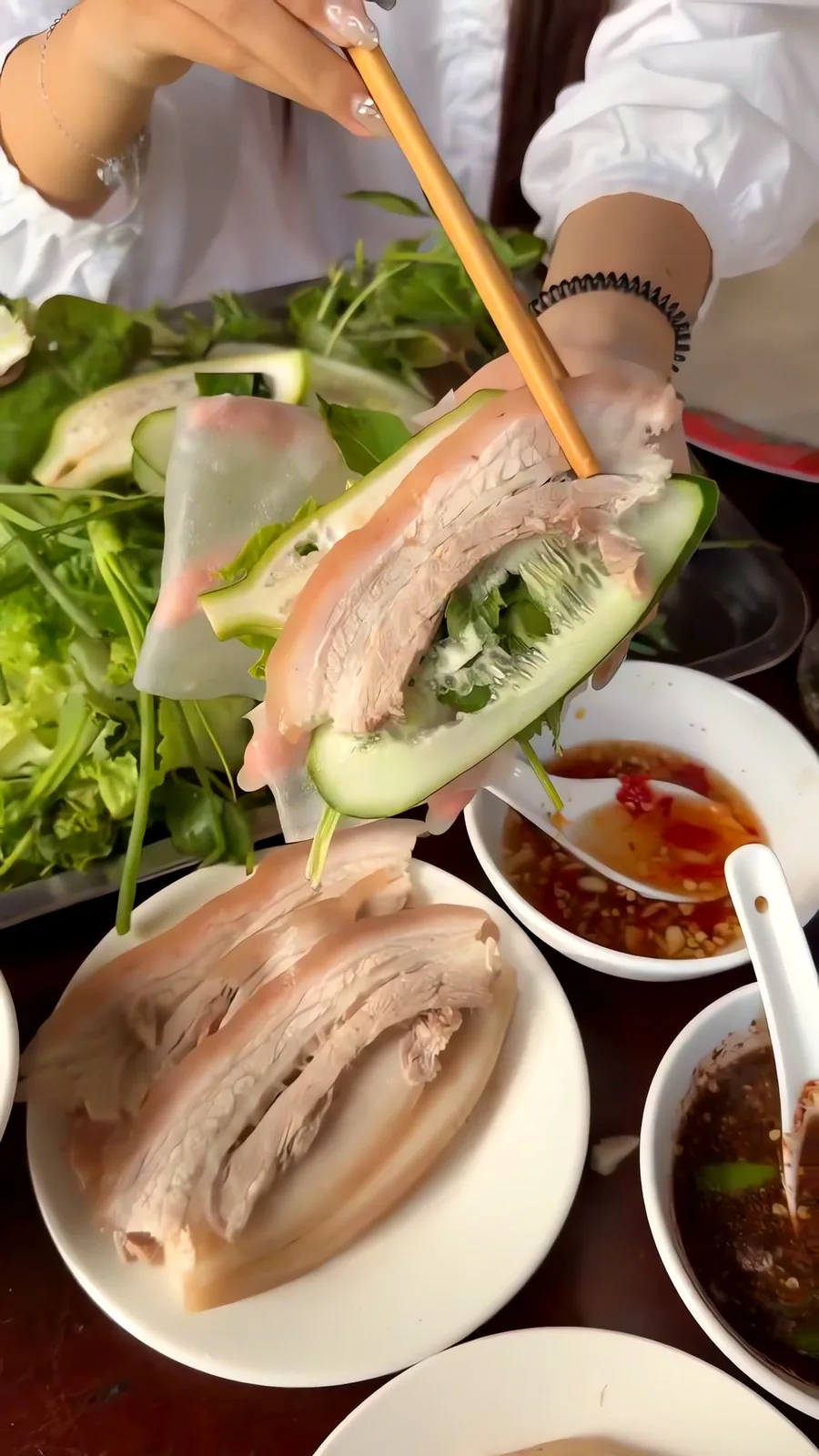
4. Bánh tráng thịt heo at Bi Mỹ
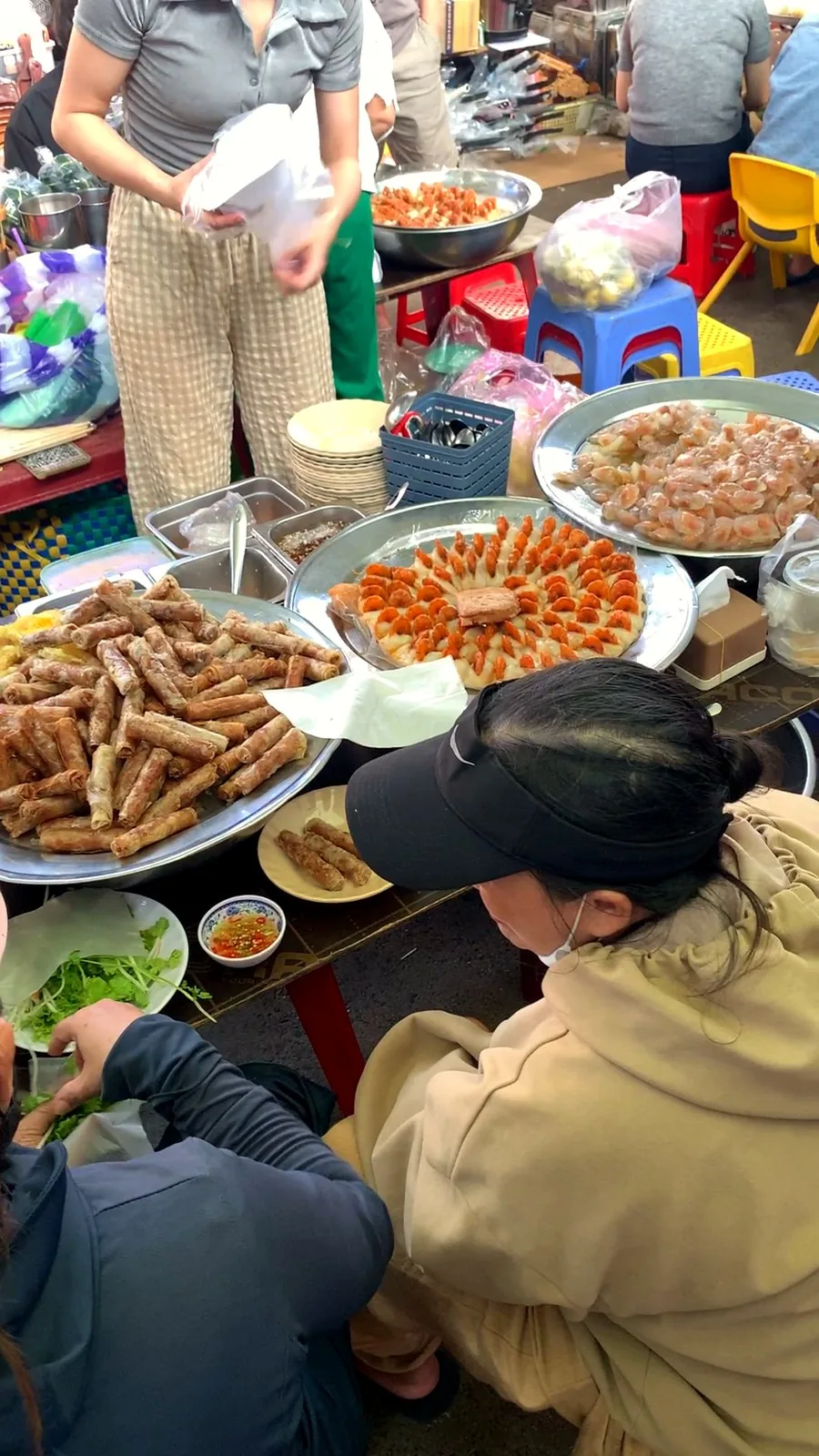
Bánh tráng thịt heo (rice paper rolls with pork) is one of Da Nang’s most loved dishes, and Bi Mỹ is my go-to stall for it in the Con Market food area. You get a plate of thinly sliced boiled pork (lean meat, a little fat and skin), rice paper, fresh herbs and greens, and you roll it yourself and dip it in mắm nêm, the bold fermented anchovy sauce. Don’t worry about making neat rolls; everyone’s rolls look a bit messy. A Vietnamese travel guide updated in April 2026 listed Bi Mỹ at about 35,000–70,000₫ (about US$1.40–2.80) a serving, depending on the portion.
5. Cháo chả at bà Hường’s stall
My last favourite is cháo chả bà Hường: rice porridge served with slices of chả bò, the peppery beef sausage Da Nang is famous for. It’s mild, warming and filling, an easy dish if you’re not ready for strong flavours like mắm nêm. The stall is inside the market; ask for “cháo chả bà Hường” and ask the price first.
What to eat at Con Market
The food court is the main reason to visit Con Market. It serves central Vietnamese dishes such as bún mắm, mì Quảng, bánh xèo, bánh bèo, nem lụi and bánh tráng cuốn thịt heo, and most dishes cost about 30,000–50,000₫ (US$1.20–2). Sit down at any stall that looks busy, point at what other people are eating, and the dish arrives in minutes. It gets more crowded around midday, so a late breakfast or an early afternoon snack is the most relaxed time.
| Dish | What it is | Approx. price |
|---|---|---|
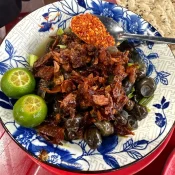
| Bún mắm (nêm) | Rice vermicelli with pork, herbs and a pungent fermented anchovy sauce – the Con Market classic | ~40,000₫ |
| Mì Quảng | Da Nang’s signature turmeric noodles with a little rich broth, pork, shrimp or chicken | ~30,000–50,000₫ |
| Bánh xèo | Crispy rice-flour pancakes, wrapped in rice paper and herbs and dipped in sauce | ~30,000–50,000₫ |
| Bánh bèo, bánh bột lọc & mixed cakes (bánh thập cẩm) | Little steamed rice cakes and chewy tapioca dumplings, often ordered as a mixed plate | ~35,000₫ for a mixed plate |
| Bánh tráng cuốn thịt heo | Rice paper rolls with boiled pork, herbs and greens | Ask the price first |
| Nem lụi | Grilled minced-pork skewers, rolled in rice paper with herbs | Ask the price first |
| Ốc (snails) incl. ốc hút | Snails in lemongrass-chili sauce | Ask the price first |
| Chè, smoothies, avocado ice cream (kem bơ) | Sweet soups, fruit smoothies and Da Nang’s famous avocado ice cream | From ~15,000₫ a glass |
Bún mắm: the dish to try first
If you only eat one thing at Con Market, make it bún mắm. It’s a bowl of cold rice noodles, sliced pork, crunchy greens, herbs and roasted peanuts, dressed with mắm nêm, a strong fermented anchovy sauce with pineapple and chili. The smell is bold, the taste is salty, sweet and sour at once, and Da Nang people love it. VnExpress reported a bowl at about 40,000₫ in April 2026. Mix everything well before your first bite.
Mì Quảng, bánh xèo and little cakes
Mì Quảng is the noodle dish of this region: flat turmeric noodles with only a little broth, topped with meat, a quail egg, peanuts and a crunchy sesame cracker. For a sit-down bowl at a specialist shop, see my best mì Quảng in Da Nang guide. Bánh xèo are sizzling crispy pancakes you roll up in rice paper with herbs, and the small steamed bánh bèo and chewy bánh bột lọc are perfect for sharing. Many stalls sell a mixed plate (bánh thập cẩm) so you can try several at once.
The indoor food area
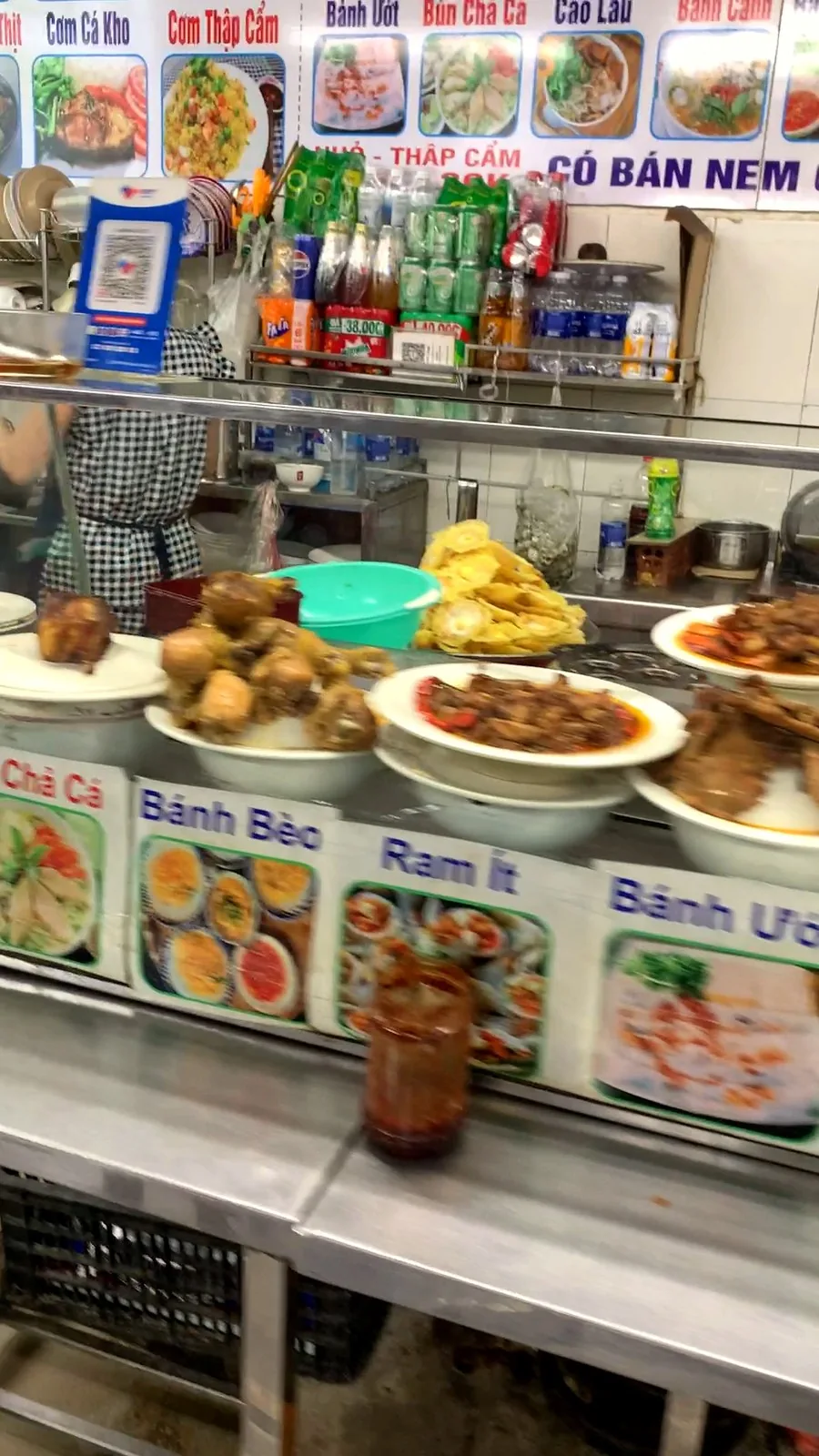
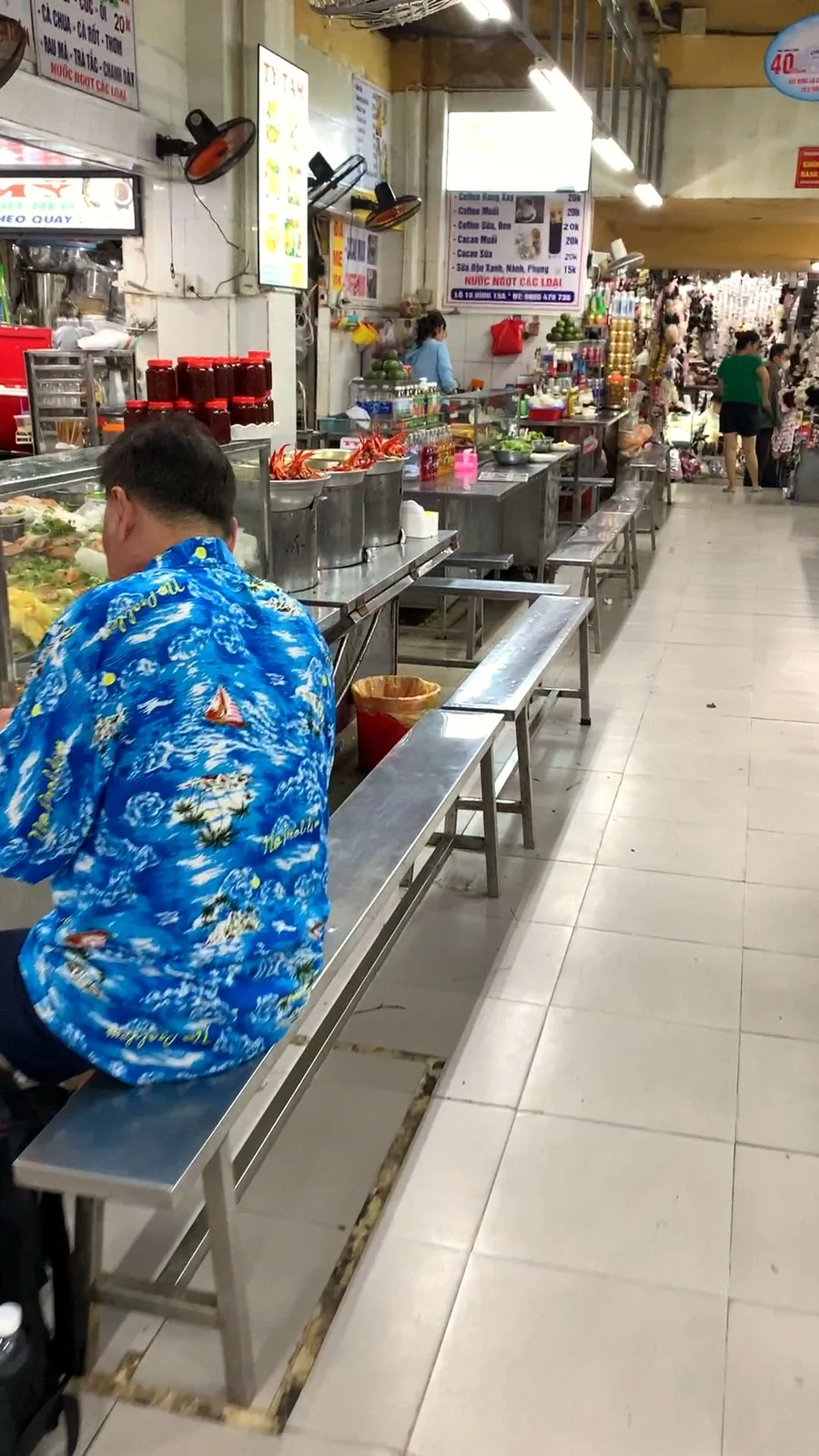
Besides the open rows of plastic stools, Con Market has an indoor food area with stainless-steel tables, where stalls hang signboards showing their dishes. It’s a little calmer and easier to sit in, which helps on a hot day or when it’s raining.
Something sweet
Finish with a glass of chè (sweet soup), a fruit smoothie or kem bơ, Da Nang’s avocado ice cream. For the best chè shops in town, including chè chuối nướng (grilled banana in coconut sauce), see my best desserts in Da Nang list.
What to buy at Con Market
Con Market is the best place in Da Nang to buy dried seafood, fish sauce, spices and local snacks to take home, and it’s also good for cheap clothes and fabric. Food prices are mostly fixed and fair; bargaining is normal for clothes, bags and other non-food items.
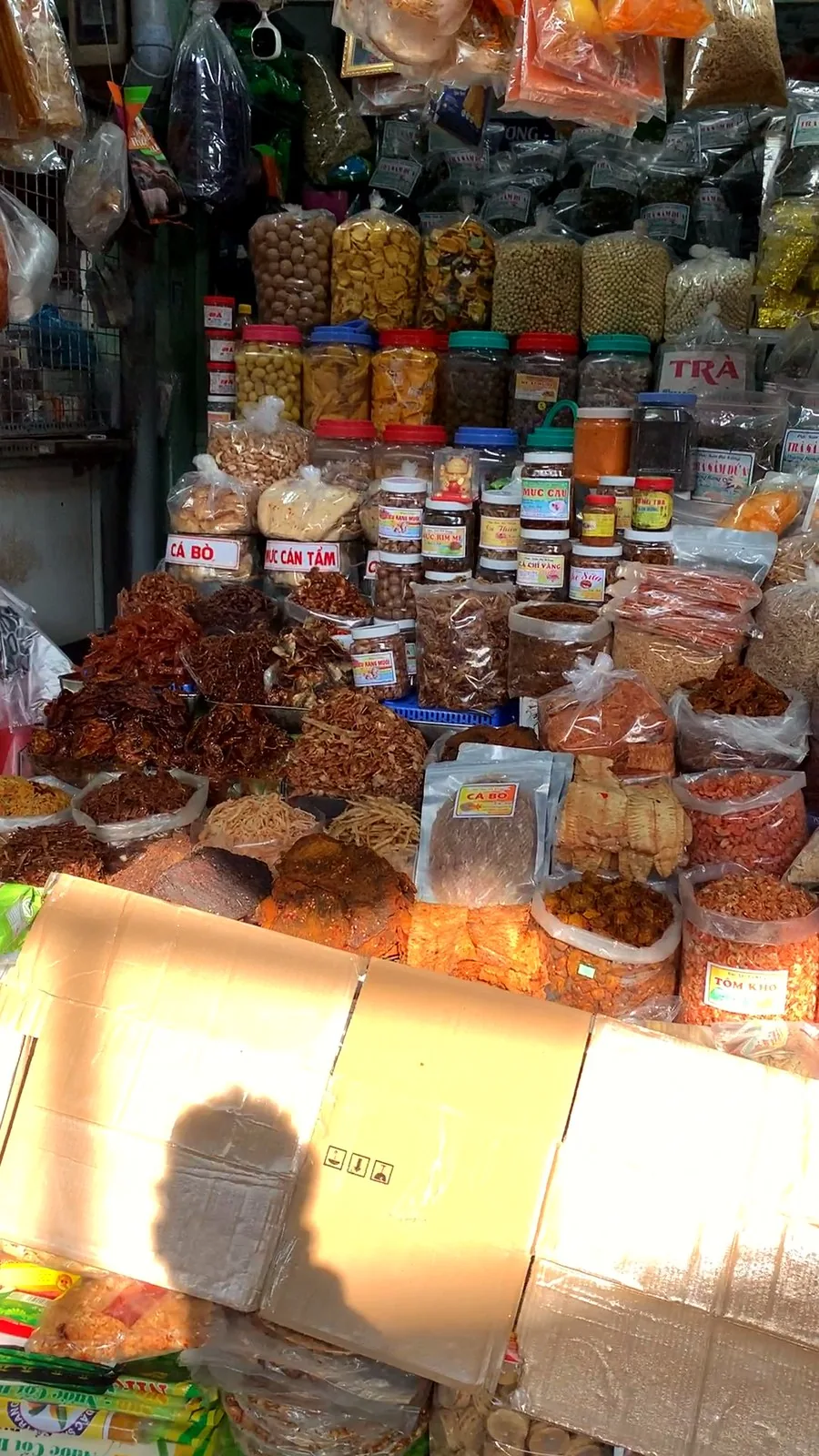
- Dried seafood: dried squid, dried shrimp, dried fish and seasoned fish snacks (cá bò rim, for example). Ask for “hút chân không” if you’d like it vacuum-sealed for your suitcase.
- Fish sauce and mắm: nước mắm and fermented sauces like mắm nêm and mắm ruốc. Ask the stall to wrap bottles well, and check your airline’s liquid rules.
- Chả (Vietnamese sausage): a Da Nang speciality. A January 2026 guide gave about 150,000₫ for a 500 g pack of beef chả; prices vary by shop.
- Spices and snacks: spices, dried fruit, sweets and local coffee.
- Clothes and fabric: cheap everyday clothes, hats, shoes and bags. Some sellers pile clothes on the floor for you to dig through.
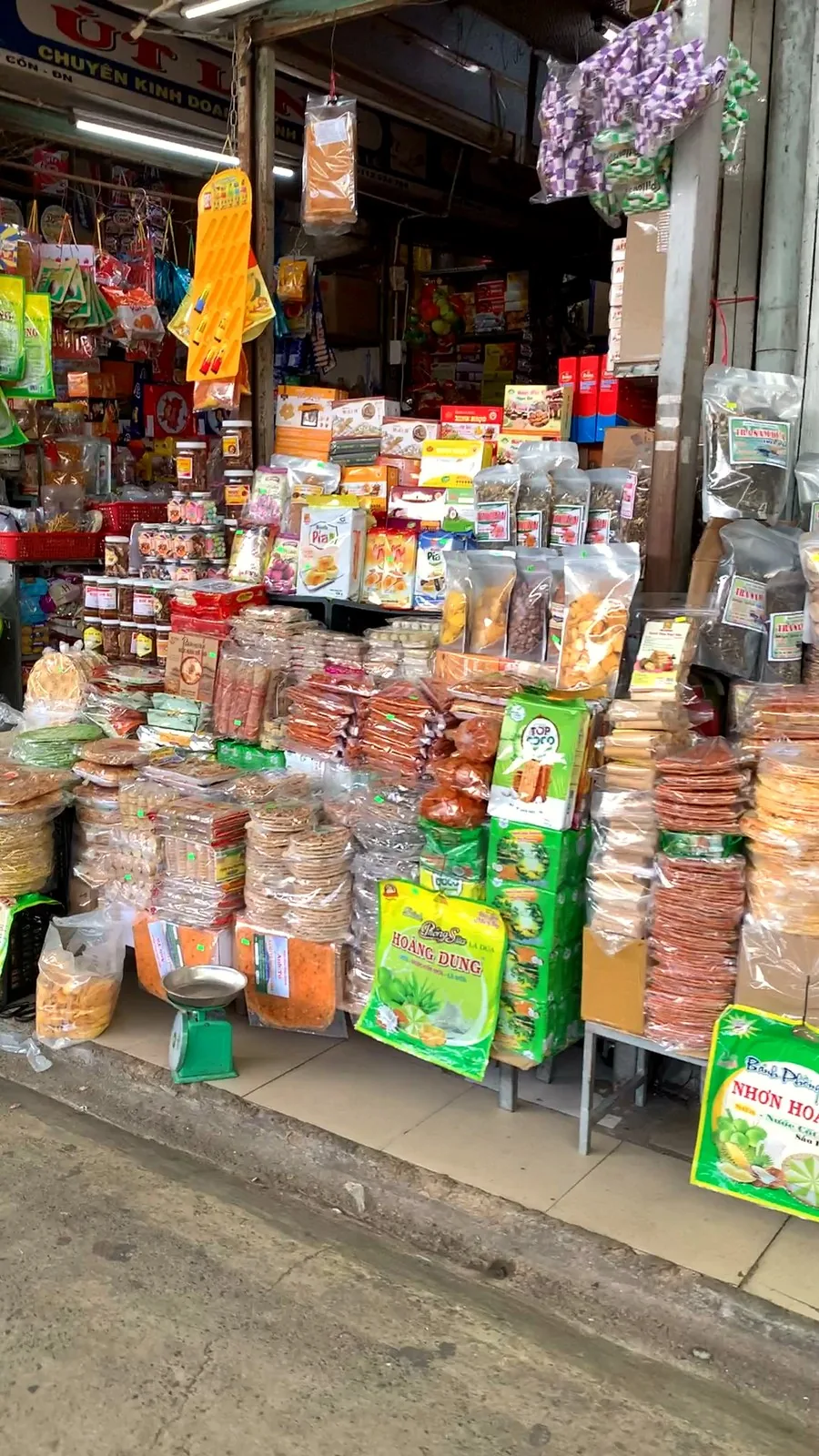
For a full list of the best dried specialities and what they cost, see my Da Nang dried specialities guide. Before you buy food to take home, check your own country’s customs rules: many countries restrict meat, and some restrict seafood or fresh produce.
How to bargain at Con Market
- Ask first: “Bao nhiêu tiền?” (How much?). Many vendors will show you the price on a calculator.
- Bargain on clothes and bags, not on food. For clothes, counter at around 60–70% of the first price and meet in the middle.
- Be polite and smile. “Bớt chút được không?” means “Can you make it a little cheaper?”
- Buying several items? Ask for one price for everything. It’s usually the easiest discount.
- Walk away nicely if the price doesn’t feel right. The same item is almost always at the next stall.
Con Market vs Han Market: which should you visit?
Choose Con Market for eating and local atmosphere, and Han Market for convenience, souvenirs and tailors. They’re only about 1 km apart along Hùng Vương street, so many visitors do both in one morning: breakfast at Con Market, then a walk to Han Market and the river.
| Con Market (Chợ Cồn) | Han Market (Chợ Hàn) | |
|---|---|---|
| Address | 290 Hùng Vương, Hải Châu | 119 Trần Phú, Hải Châu (by the Han River) |
| Feel | Local, busy, where Da Nang families shop | Central and visitor-friendly, more tour groups |
| Size | Bigger: several halls, 2,000+ stalls | Smaller: one two-floor building |
| Food | Huge food court – the main reason to go | Smaller food section |
| Best for | Street food, dried seafood, spices, cheap clothes | Souvenirs, coffee, dried snacks, made-to-measure clothes upstairs |
| English | Little; calculators and pointing work | More vendors speak some English |
| Hours | 6 am to about 7:30 pm | About 6 am to 7 pm (most stalls) |
Tips for visiting Con Market
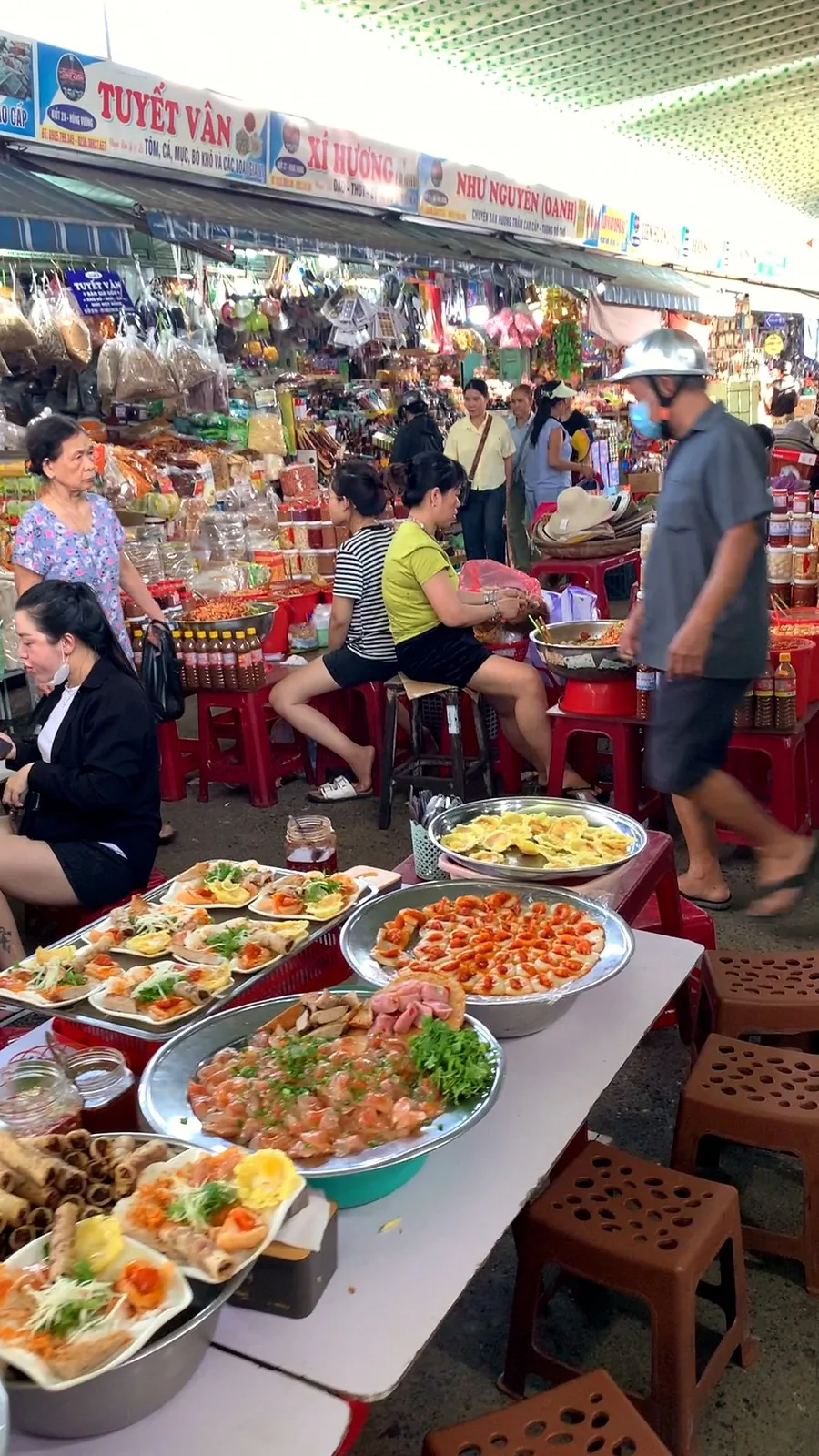
- Go in the morning. It’s cooler, the stalls are fully stocked and the food court is calmer before the lunch rush. Many stalls start packing up in the late afternoon.
- Bring cash in small notes. Most stalls still prefer Vietnamese dong, but lots of vendors now take bank QR transfers (handy if you have a Vietnamese banking app). Don’t count on cards.
- Ask the price before you order or buy. Con Market has a good reputation for fair prices, but checking first avoids any surprise, especially for dishes without a price on the board.
- Watch your bag and phone. The aisles are crowded; carry your bag in front.
- Eat where it’s busy. A full stall means fast turnover and fresh food. Choose dishes cooked hot in front of you if you have a sensitive stomach.
- Bring tissues and hand sanitiser. Napkins aren’t always on the table.
- Allergies: many dishes use fish sauce, shrimp paste or peanuts. Show the vendor a written note if you have an allergy.
- Rainy day? Most of the market is covered, which makes it one of my top rainy day ideas in Da Nang.
What’s near Con Market?
- Ốc Hà (294 Ông Ích Khiêm): just around the corner, a popular snail shop that stays open late. Read my ốc hút in Da Nang guide to learn how to eat “sucking snails” like a local.
- Chè chuối nướng (190/01 Ông Ích Khiêm): a little shop on the same street selling grilled banana in warm coconut sauce from mid-afternoon – details in my desserts guide.
- Han Market and the Han River: about 1 km east along Hùng Vương.
- Da Nang Cathedral (the Pink Church): about 1 km away on Trần Phú – see my Pink Church guide.
Con Market is in Hải Châu, the city centre. If you like being able to walk to markets and street food, have a look at my where to stay in Da Nang guide. And if you’re heading south, Hội An has its own market and street food: see my Hoi An from Da Nang guide.
👉 Want a local to take you? See the street-food tours and cooking classes I recommend, with prices and direct booking links, on my Book your trip page.
FAQ: Con Market Da Nang
Where is Con Market in Da Nang?
Con Market (Chợ Cồn) is at 290 Hùng Vương, Hải Châu, Da Nang, on the corner of Hùng Vương and Ông Ích Khiêm streets. It’s in the city centre, about 1 km west of Han Market and about 3 km from the airport.
What are Con Market’s opening hours?
Con Market is open every day from 6 am until about 7:30 pm. Individual stalls set their own hours, and many start closing in the late afternoon, so go in the morning for the best choice.
What should I eat at Con Market?
Try bún mắm (noodles with fermented anchovy sauce), mì Quảng, bánh xèo, a mixed plate of bánh bèo and bánh bột lọc, nem lụi and rice paper rolls with pork, then finish with chè or avocado ice cream. My personal favourites are Da Nang-style phá lấu trộn (offal salad with green mango and herbs), cháo cá nục (porridge with braised round scad), chè at Quán Hoa Xù, bánh tráng thịt heo at Bi Mỹ and cháo chả at bà Hường’s stall. Most dishes cost about 30,000–50,000₫ (US$1.20–2).
Is Con Market or Han Market better?
Con Market is better for street food, dried seafood, spices and a local atmosphere. Han Market is better for souvenirs, coffee and tailored clothes, and it’s easier for first-time visitors. They’re about 1 km apart, so you can visit both in one morning.
Do vendors at Con Market overcharge tourists?
Con Market has a good reputation for fair prices, and food prices are mostly fixed. Bargaining is normal for clothes and other non-food items. Ask the price before you order or buy, and keep small notes so you can pay the exact amount.
Can I pay by card at Con Market?
Mostly no. Bring cash in Vietnamese dong. Lots of vendors now accept Vietnamese bank QR transfers, but cards are rarely accepted.
How old is Con Market?
Con Market was built in 1940, making it one of Da Nang’s oldest markets. Its name comes from the sandbar (“cồn”) it was first built on.
Final thoughts
Con Market isn’t pretty or polished, and that’s exactly why I keep recommending it. It’s where Da Nang people have been shopping and eating for more than 80 years, and a bowl of bún mắm on a plastic stool here tells you more about this city than any mall. If you only have time for a few dishes, start with my five favourites: phá lấu trộn, cháo cá nục, chè at Hoa Xù, Bi Mỹ’s pork rolls and bà Hường’s cháo chả. Come hungry, bring small notes, smile when you bargain, and don’t worry if you get a little lost between the dried squid and the clothes piles. That’s part of the experience. Ăn ngon nhé – enjoy your meal!