Published 14 October 2026. This is a developing case; I’ll update this page as police release more details.
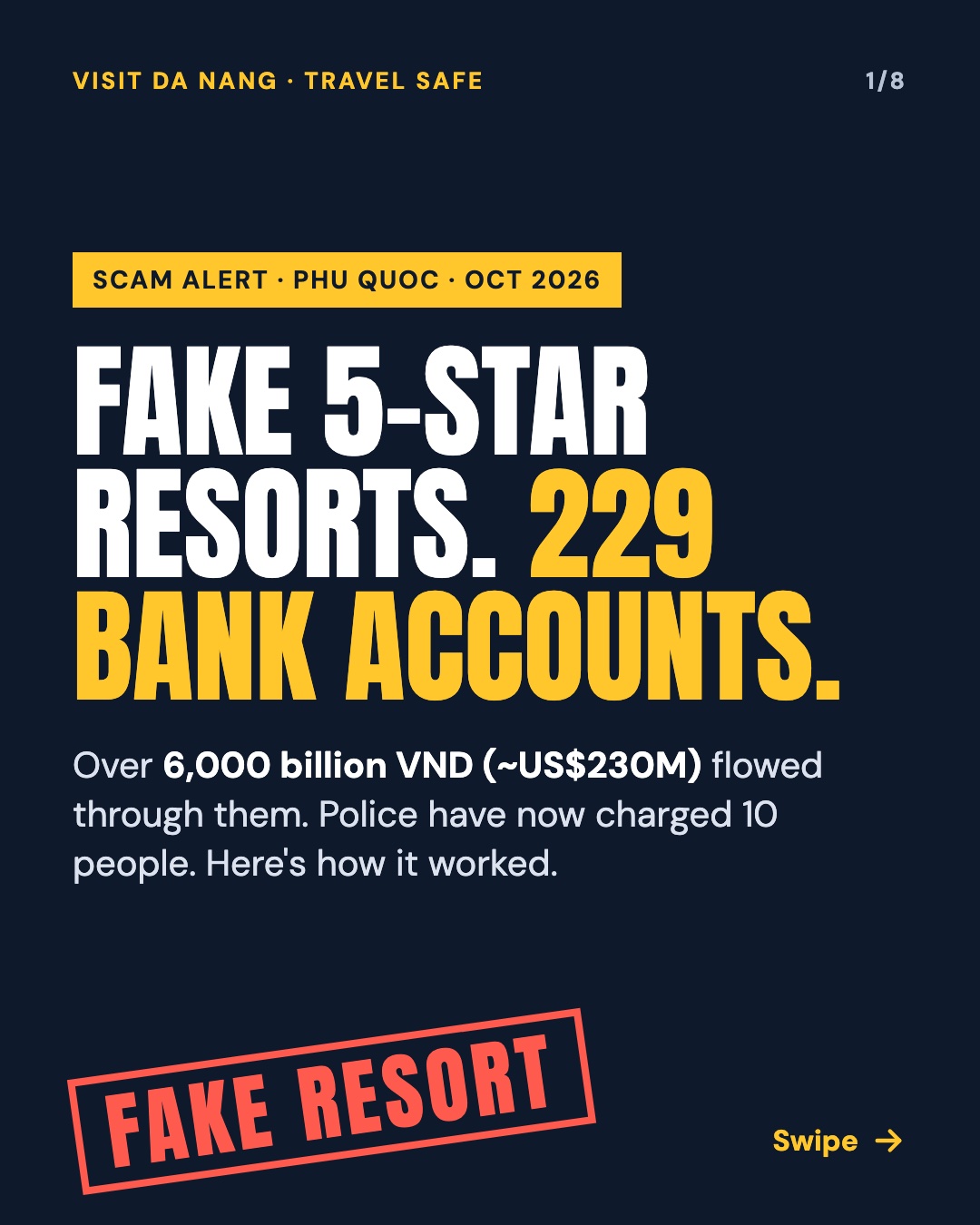
Quick answer: On 14 October 2026, police in An Giang province announced they had broken up a ring that pretended to be 5-star hotels and resorts in Phú Quốc to take travellers’ booking deposits. Ten people have been charged and detained. Police reviewed 229 bank accounts with more than 6,000 billion VND (about US$230 million) flowing through them, and have identified 60 victims so far. The new twist: the gang opened accounts in the names of shell companies, so victims thought they were paying a real business. The lesson for anyone booking in Da Nang, Hoi An or anywhere in Vietnam: a company name on the bank account is not proof the hotel is real.
What happened
According to VnExpress, Colonel Nguyễn Nhật Trường, deputy director of An Giang provincial police, said the force had been tracking the group since April 2026. The first 4 suspects were arrested on 10 July. As of 14 October, police have charged and detained 10 people, are holding 1 more in temporary custody, and have barred 12 people from leaving Vietnam.
- 229 bank accounts checked, with more than 6,000 billion VND (about US$230 million) moving through them. That is the total money flow police found, not the confirmed amount taken from travellers.
- 60 victims identified so far. 17 of them sent a combined several billion VND to accounts in the name of a company called KOKOSA.
- The same group is also accused of other scams, including fake tuition fees and fake insurance sales. Police have opened 3 more related cases and are widening the investigation.
How the fake resort scam worked
- Fake websites and pages. The group built websites and social media pages using the names of 5-star hotels and resorts in Phú Quốc.
- Ads and fake engagement. They ran ads and bought likes and interactions so the pages looked popular and trustworthy.
- A deposit request. When people got in touch to book a room, they were asked to transfer a deposit to “hold” it.
- Gone. Once the money arrived, the scammers blocked the victim or disappeared.
The new twist: company bank accounts

Most hotel scams we’ve seen ask you to pay into a personal bank account, which is a well-known red flag. This ring went further: it set up shell companies that did no real business and opened bank accounts in those company names. To a traveller, a transfer to “XYZ Company” looks like paying a real hotel. It wasn’t.
So if a hotel asks for a deposit by bank transfer, a company name on the account isn’t enough. The company should match the hotel’s legal name on its official website, and you should still confirm the booking by phone using the number from the hotel’s official site or Google Maps, never the one the page or chat gives you.
Does this affect Da Nang?
This ring targeted Phú Quốc, but the same trick has hit Da Nang, Hoi An, Da Lat, Nha Trang and Sapa. Our guide to fake hotel pages in Vietnam covers real cases, including a mother who lost more than 250 million VND on a fake Da Nang hotel page. Christmas, New Year and Tết are when these pages are busiest, because travellers are rushing to find a room.
Red flags: stop before you pay

- Book on the official website (type the address yourself) or a major booking platform, and keep payments inside the platform.
- Call the hotel on the number from its official website or Google Maps listing, and ask them to confirm your booking.
- Pay by credit card where you can. Card payments can be disputed; a bank transfer inside Vietnam is very hard to reverse.
- Check the page. On Facebook, open About → Page transparency: a “5-star resort” page created recently or renamed several times is a red flag. Lots of likes and ads prove nothing, because this ring bought them.
- Walk away from pressure. A too-good price, “only one room left” and “pay the deposit today” together are the classic pattern.
Already paid a deposit?
- Call your bank immediately and ask them to stop or recall the transfer.
- Screenshot everything: the page or website, the chat, the account details and your receipt.
- Report it to the police (dial 113 or visit the nearest ward police station) and contact the real hotel. In Da Nang you can also call the tourist support hotline on (+84) 236 3550 111.
- Never pay again to “fix”, “unlock” or “refund” the first payment. That is the same scam.
For more real cases and step-by-step advice, read our guide to hotel booking scams in Vietnam.
FAQ
What was the Phú Quốc fake resort scam?
A ring that built fake websites and social media pages in the names of 5-star Phú Quốc hotels and resorts, took booking deposits by bank transfer and then disappeared. An Giang police announced on 14 October 2026 that 10 suspects had been charged and detained.
How much money was involved?
Police said more than 6,000 billion VND (about US$230 million) flowed through the 229 bank accounts they reviewed. That is total money flow, not the confirmed amount lost by travellers. 60 victims have been identified so far.
Is paying a hotel deposit to a company account safe?
Not on its own. This ring used shell-company accounts to look legitimate. Confirm the booking by calling the hotel on the number from its official website or Google Maps, check the company name matches the hotel’s legal name, and use a credit card or a major booking platform when you can.
Source
👉 Want to book safely? See the hotels I recommend in Da Nang and Hoi An, with prices and direct links to trusted booking platforms, on my Book your trip page.