Last updated: November 17, 2026
Quick answer: Tra Nhieu (Trà Nhiêu) is a quiet community eco-village on the lower Thu Bon River, just across the water from Hoi An. It is the “untouched side of Hoi An”: basket-boat rides through wild nipa palms, giant lift-net fishing stations, net weaving, sedge mat looms, a family rice wine distillery and bamboo craft, all without the Old Town crowds. Plan a half day, go early morning or late afternoon, and get there by bike, motorbike, car or a guided tour from Hoi An.
Like a shy countryside girl tucked away across the river from Hoi An, Tra Nhieu looks from afar like a quiet, untouched island. Step inside and you find winding lanes shaded by bamboo, towering areca palms and the kind of slow rural Vietnamese life that has mostly disappeared from the busy Old Town. We spent a day here with our camera, and it quickly became one of our favourite hidden gems in Central Vietnam.
Centuries ago, the Thu Bon River carried ships into Hoi An, one of the busiest trading ports in Asia. Follow the same river a little downstream and the crowds fade away. Tra Nhieu feels like Hoi An did decades ago: fishermen raising nets with the current, women tying fishing nets by hand, and craftspeople who still work without modern machines.
Watch: the untouched side of Hoi An
What is Tra Nhieu village?
Tra Nhieu is a riverside fishing and farming village on the lower Thu Bon River, a short trip from Hoi An’s Old Town. It became an official community ecotourism village in July 2010, when local households were trained to welcome visitors, and today families run basket-boat rides, fishing trips, craft workshops and home-cooked meals themselves. More than half of the villagers still make a living from fishing.
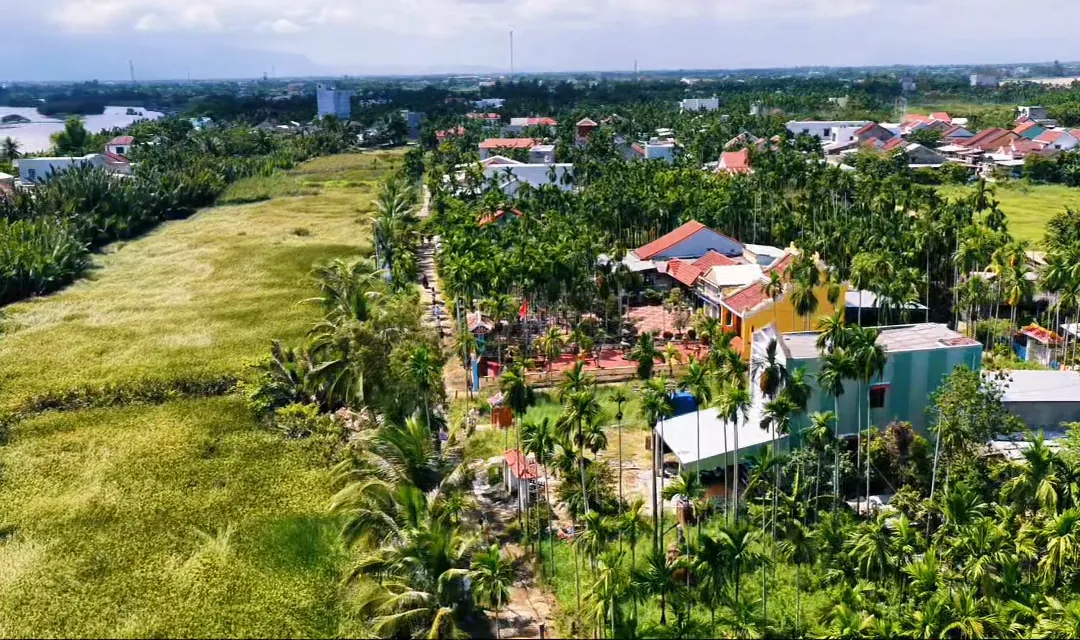
The village sits inside a green wall of water coconut (nipa palm) forest, stretching for nearly 2 km along the river, which protects the riverbanks and gives Tra Nhieu its island feel. Inside, it is all bamboo-shaded lanes, areca gardens, trimmed tea-plant hedges and hammocks strung in home gardens.
Tra Nhieu was also famous for its sedge mats (chieu coi). Mat weaving was once the village’s best-known craft, and in October 2026 the Da Nang Tourism Promotion Center and the local commune ran training for about 50 villagers, plus a workshop on new sedge products for visitors, to keep the craft and community tourism going.
Where exactly is Tra Nhieu?
Tra Nhieu is on the south side of the Thu Bon River, just across the water from Hoi An, about 5 km from the Old Town. You will often see it listed as Duy Vinh commune, Duy Xuyen district, Quang Nam province. Since Vietnam’s July 2025 administrative reform, Quang Nam has become part of Da Nang city, and Duy Vinh was merged into the new Nam Phuoc commune (xa Nam Phuoc), Da Nang. Search Google Maps for “Tra Nhieu” or “Làng du lịch sinh thái Trà Nhiêu” rather than the old address.
The river side: lift nets, fishing nets and basket boats
The morning on the river is the heart of a Tra Nhieu visit. This is where you see the untamed riverside life that made us call it “the place where time stopped”.
Watch lift-net fishing (cat ro) at Chu Chin’s station
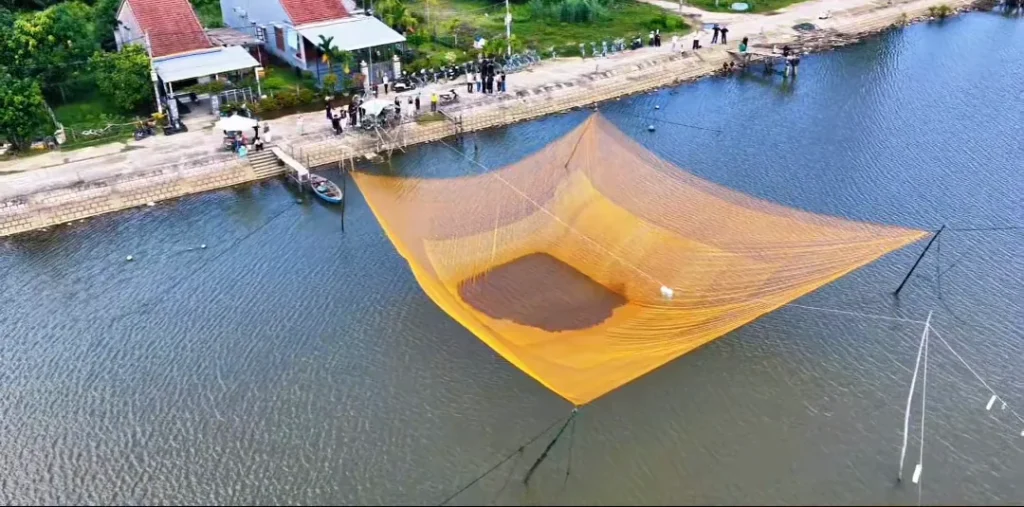
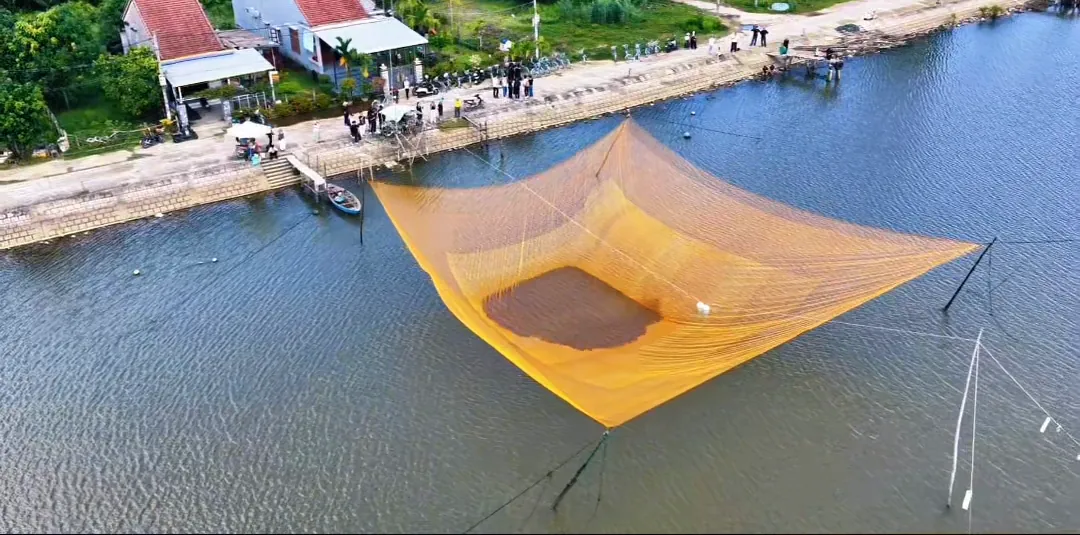
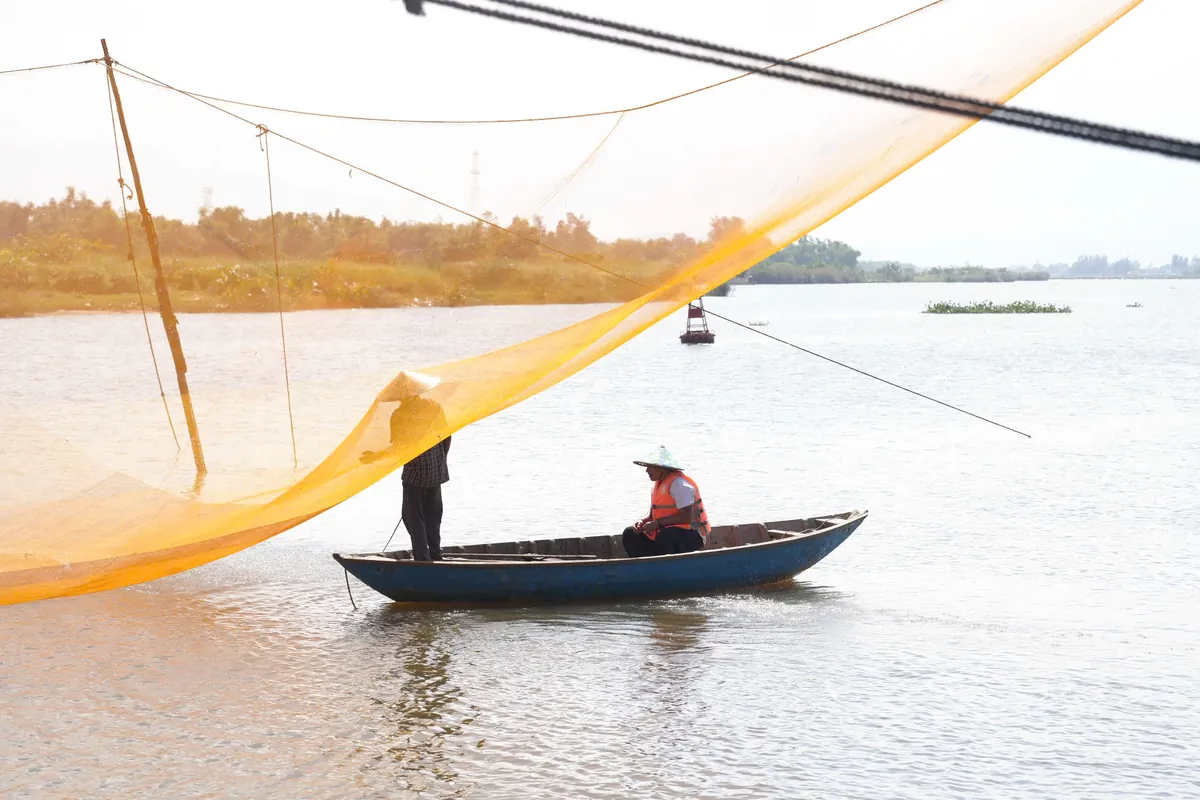
Lift-net fishing is a traditional way of fishing on the Thu Bon. Fishermen build wooden and bamboo platforms over the water and use a winch to lower and raise a huge square net, timing it with the current. We stopped at Chu Chin’s (Chú Chín) lift-net station, climbed onto the wooden platform and watched the giant orange net rise out of the river, dripping and glowing in the sun. If you are lucky, there are small fish, shrimp or crabs flapping in the middle.
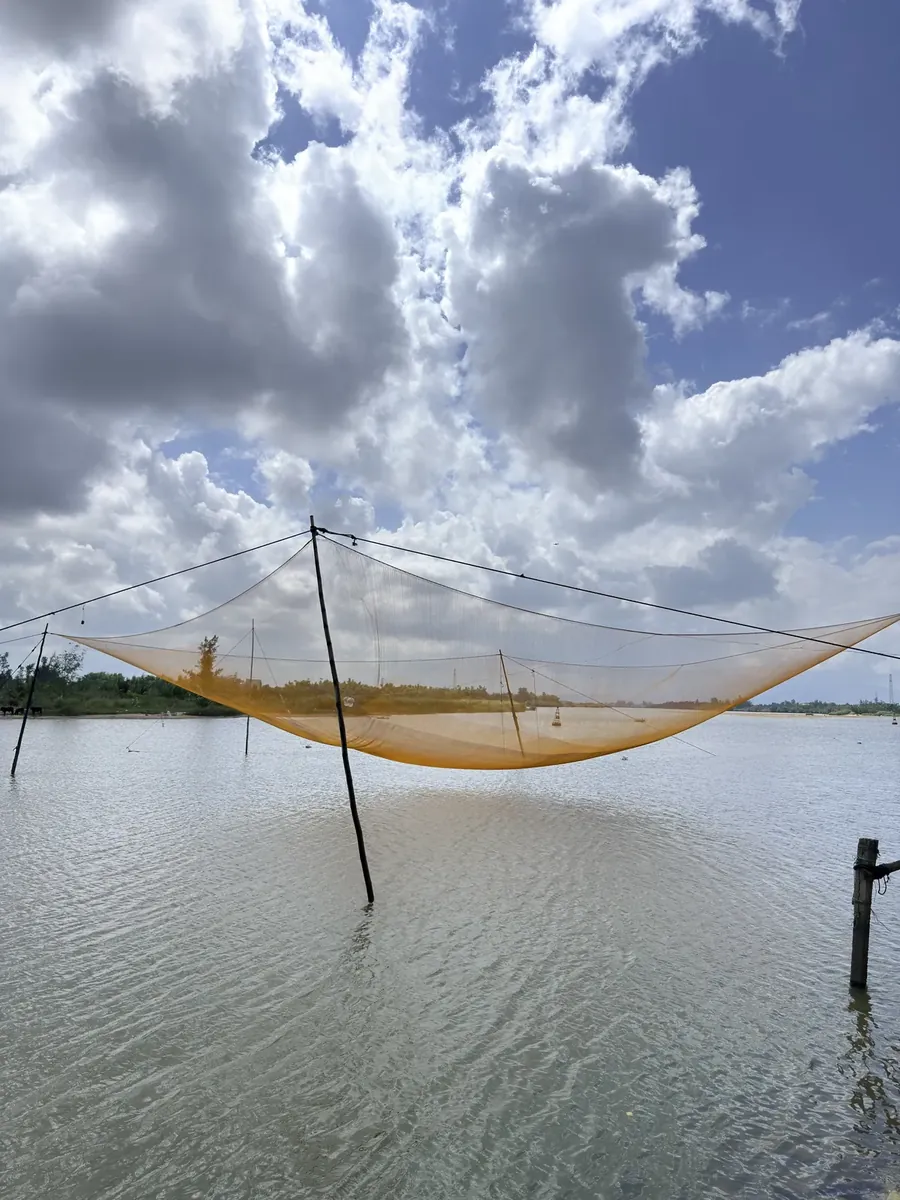
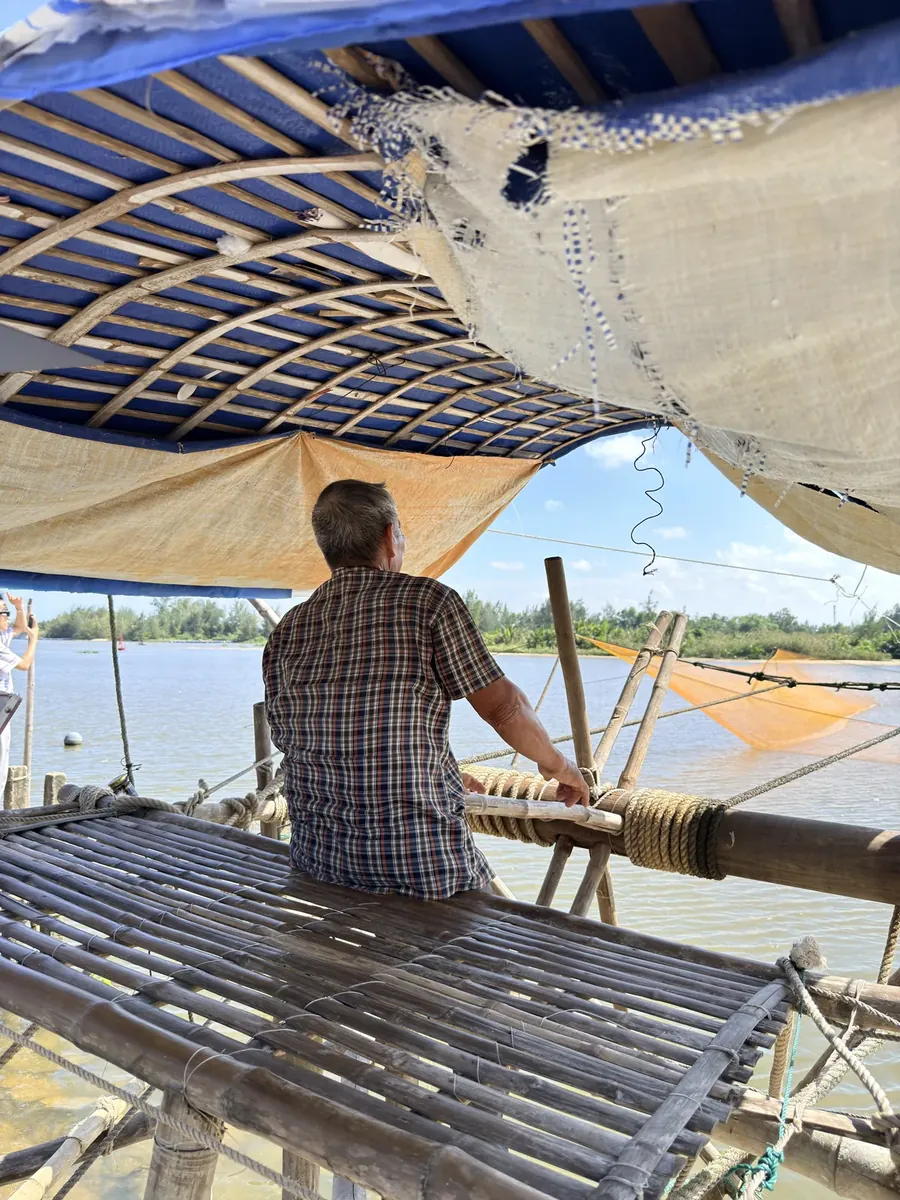
Raising the lift net at Chu Chin’s station. Photos: Visit Da Nang
See fishing nets woven by hand
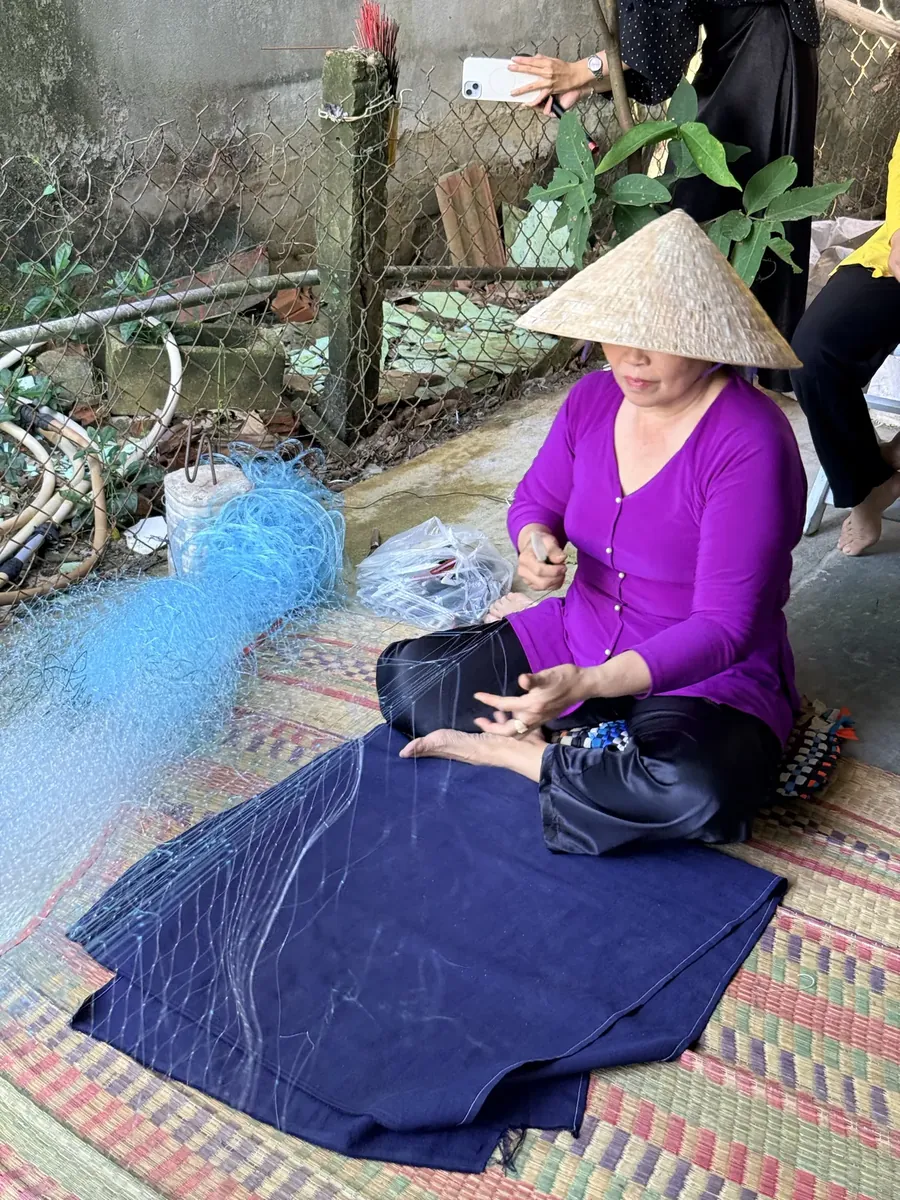
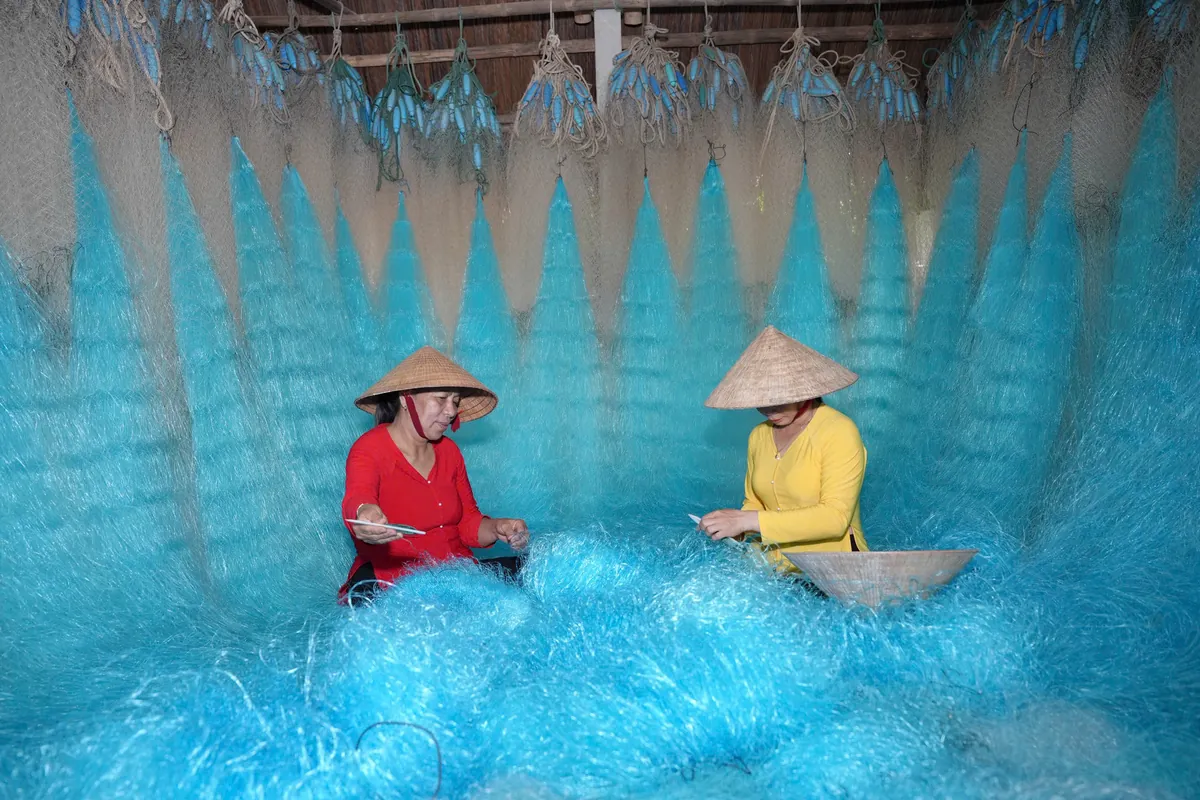
Step ashore into the fishing hamlet and you will find local women sitting on mats, tying fishing nets knot by knot. Net weaving has always been women’s work here, done while the men are out on the river or at sea. It takes patience, and the women are happy to show you how the shuttle moves. Ask if you can try a few knots yourself.
Glide through wild nipa palms by basket boat
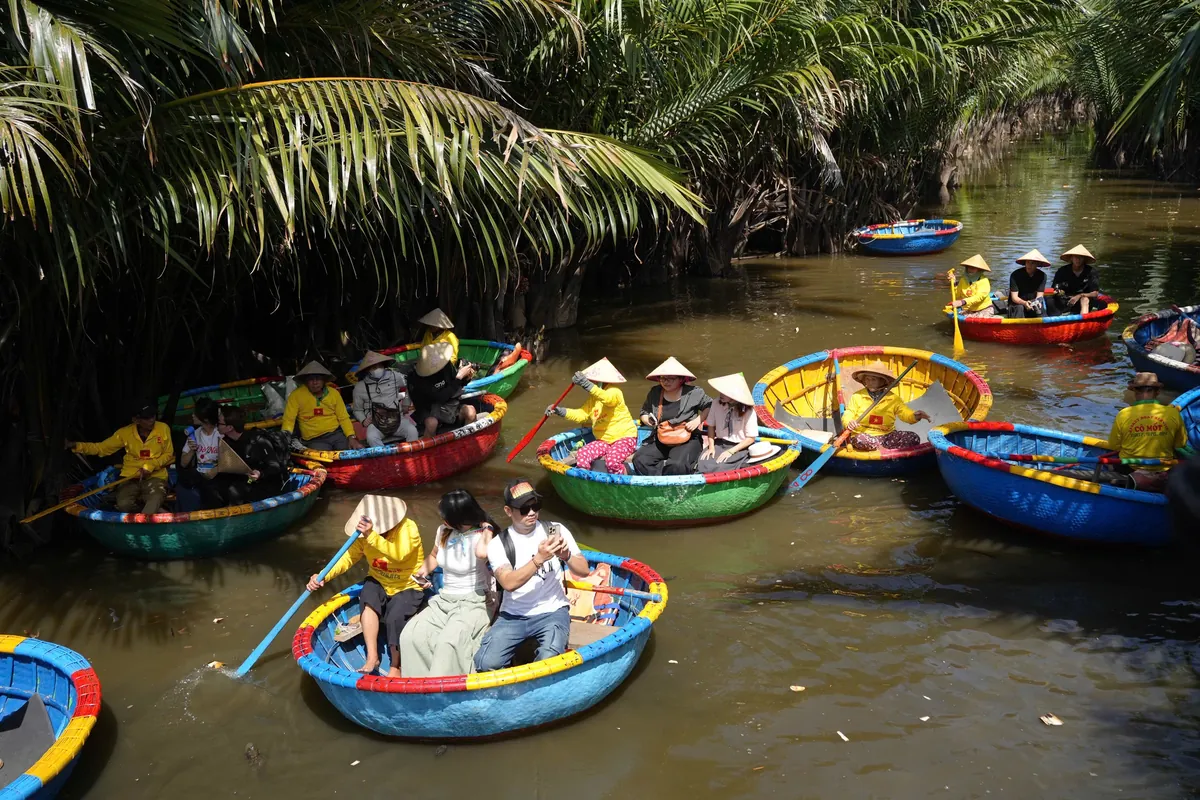
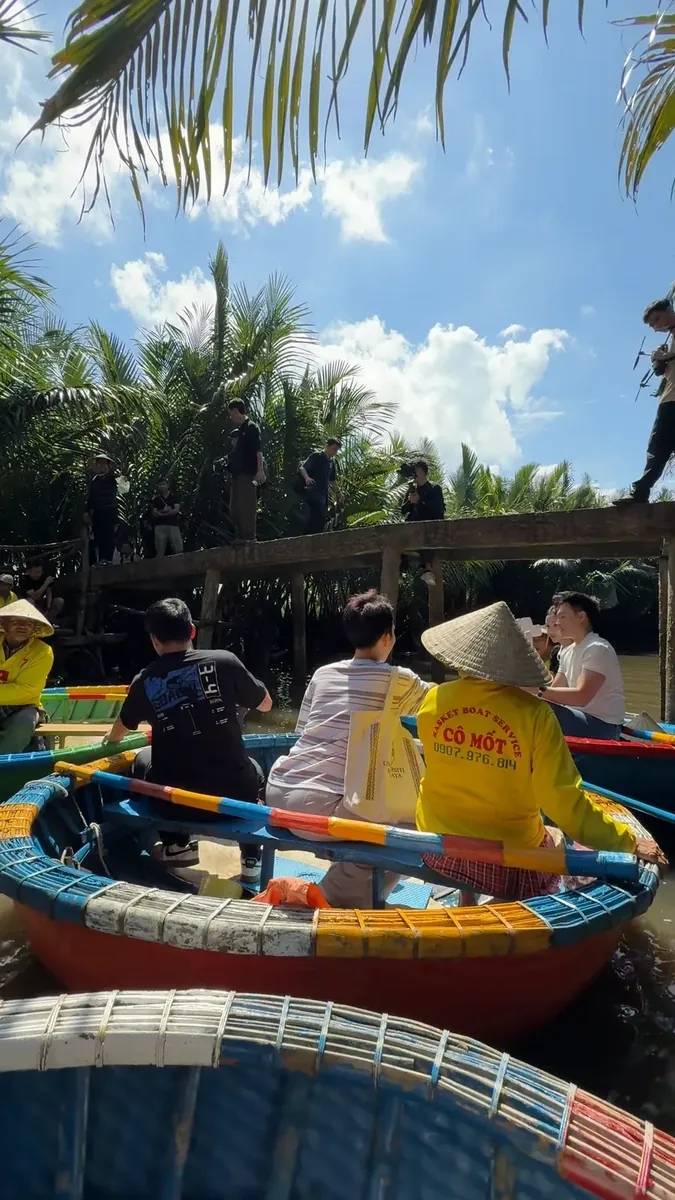
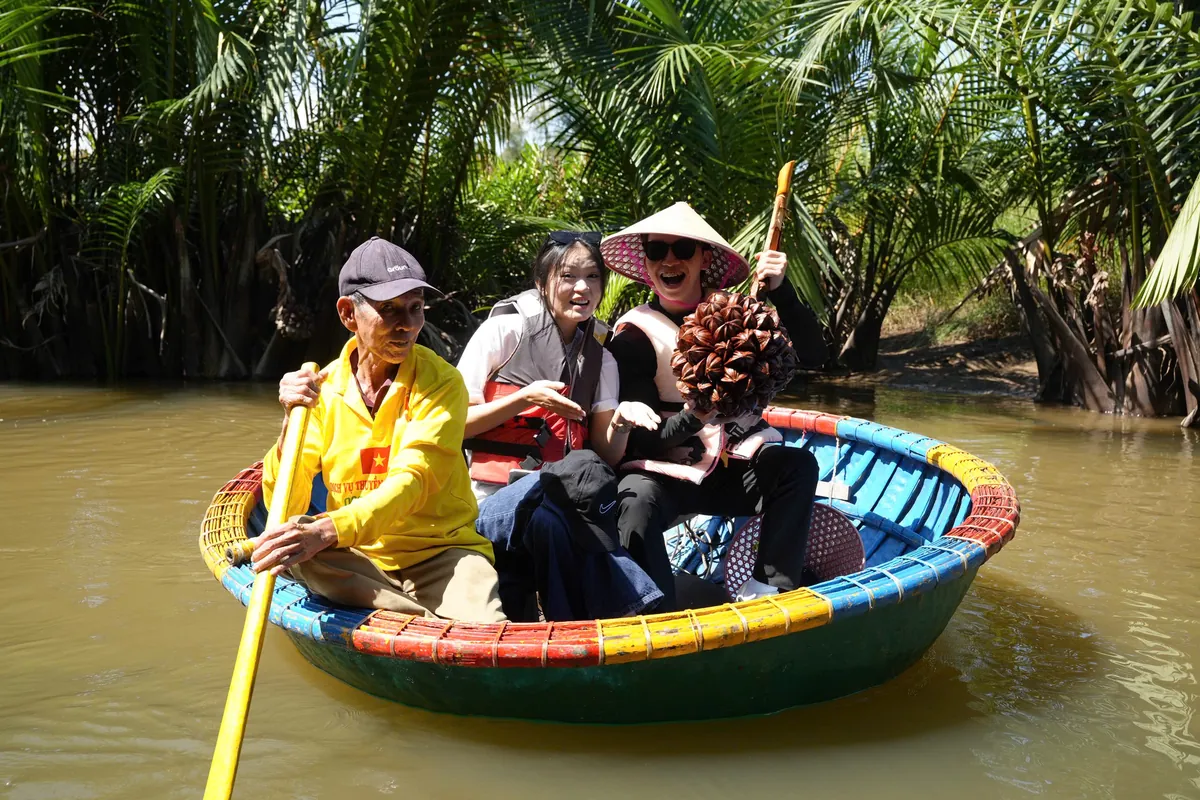
The basket-boat ride is the highlight for most visitors. Local rowers paddle you in round bamboo boats (thuyen thung) through narrow canals in the wild nipa palm forest. Look down and you will see small fish in the water; look up and you may spot herons nesting in the palms. Unlike the famous Bay Mau coconut forest, which can get loud with music and spinning-boat shows, the canals at Tra Nhieu felt calm and natural when we visited.
Catch and cook river food
Some local hosts take you out with fishermen to catch river clams (sia), shrimp and fish, then cook simple country dishes by the water. You can also try village farm jobs like tending the jute fields. Ask your host or tour operator in advance what is running on the day, as it depends on the tide and season.
The craft village side: rice wine, sedge mats and bamboo
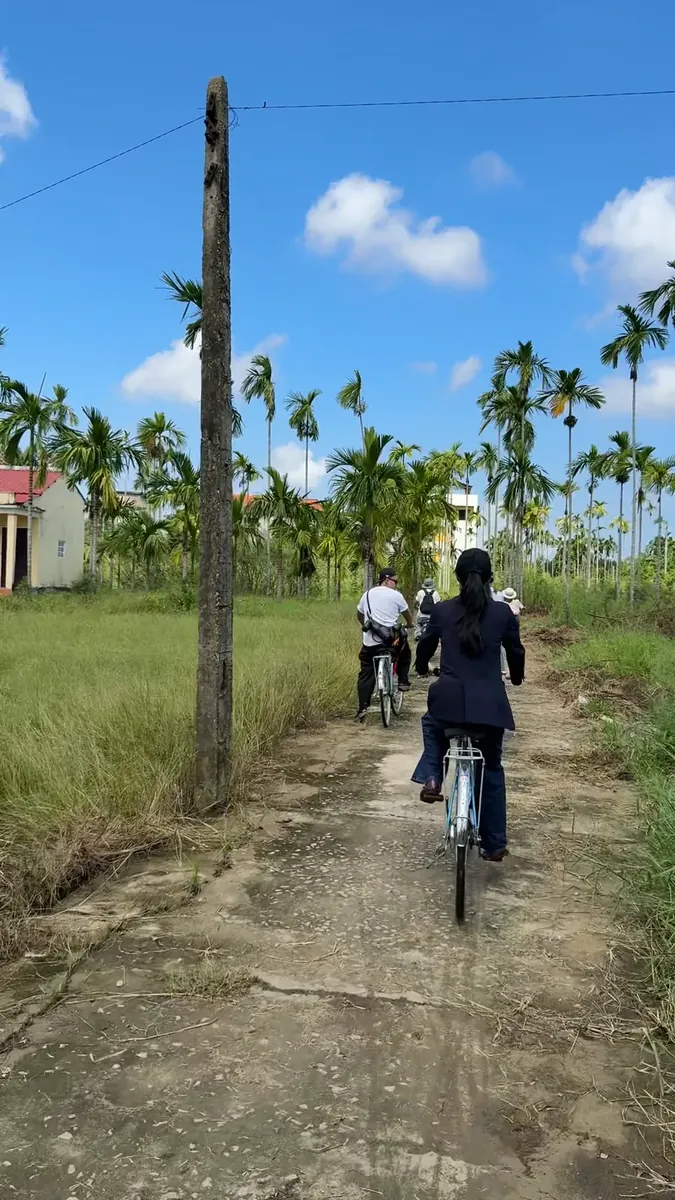
Leave the riverbank, get on a bicycle and ride the shaded village lanes. This side of Tra Nhieu is a living craft village with almost no modern machinery. Everything is still made by hand.
Taste rice wine at Ba Huu Distillery
Our first stop was Ba Huu (Bá Hữu) Distillery, a family rice wine maker. The rice is cooked, spread out and hand-fermented with the family’s own recipe before it is distilled. The owner walked us through each step and poured a small taste. Rice wine is strong, so sip slowly, and do not ride your bike straight after.
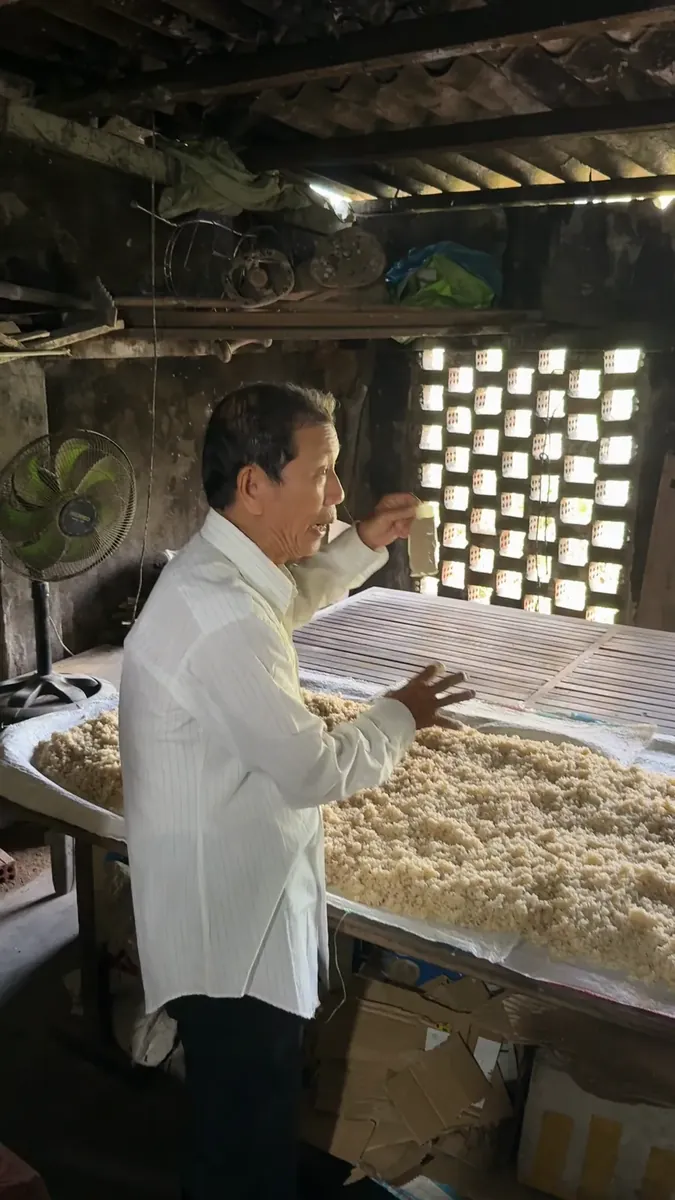
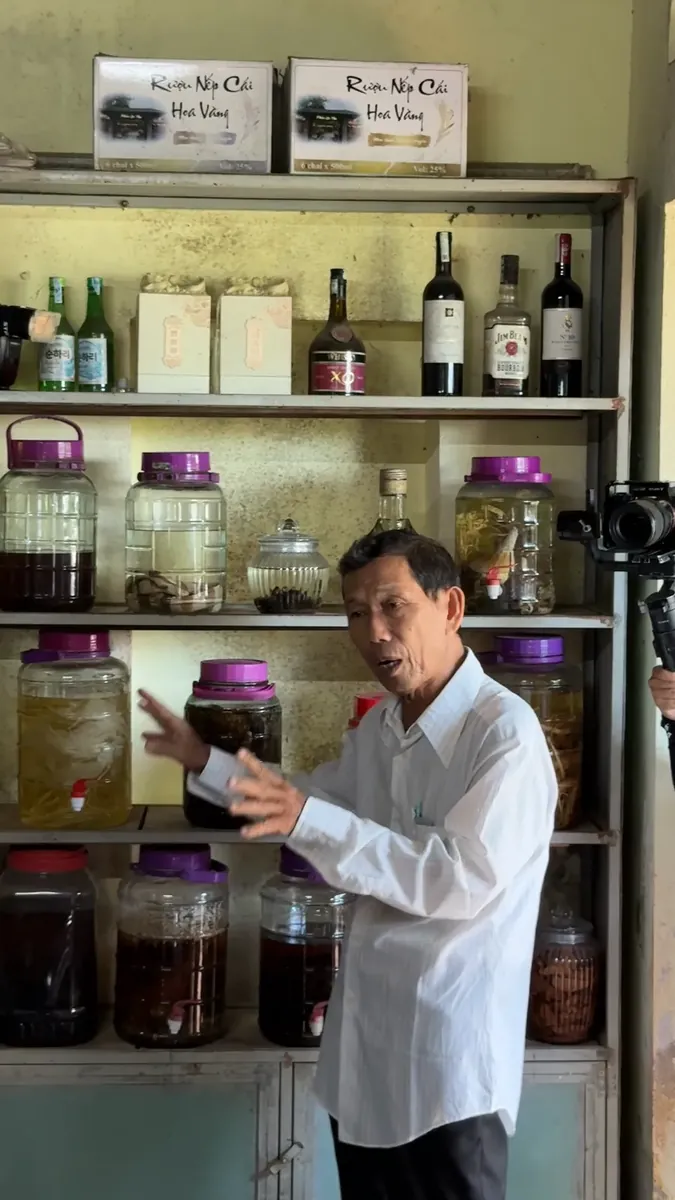
Hand-fermented rice wine from a family recipe. Photos: Visit Da Nang
Weave a sedge mat at Mrs. Hong’s workshop
Next came Mrs. Hong’s (Hồng) workshop, where colourful sedge mats are woven on vintage wooden looms. One person feeds the dyed sedge stems through while another presses them tight with the heavy wooden frame. You are welcome to sit down and try weaving a few rows by hand. It is harder than it looks, and a great hands-on activity for kids.
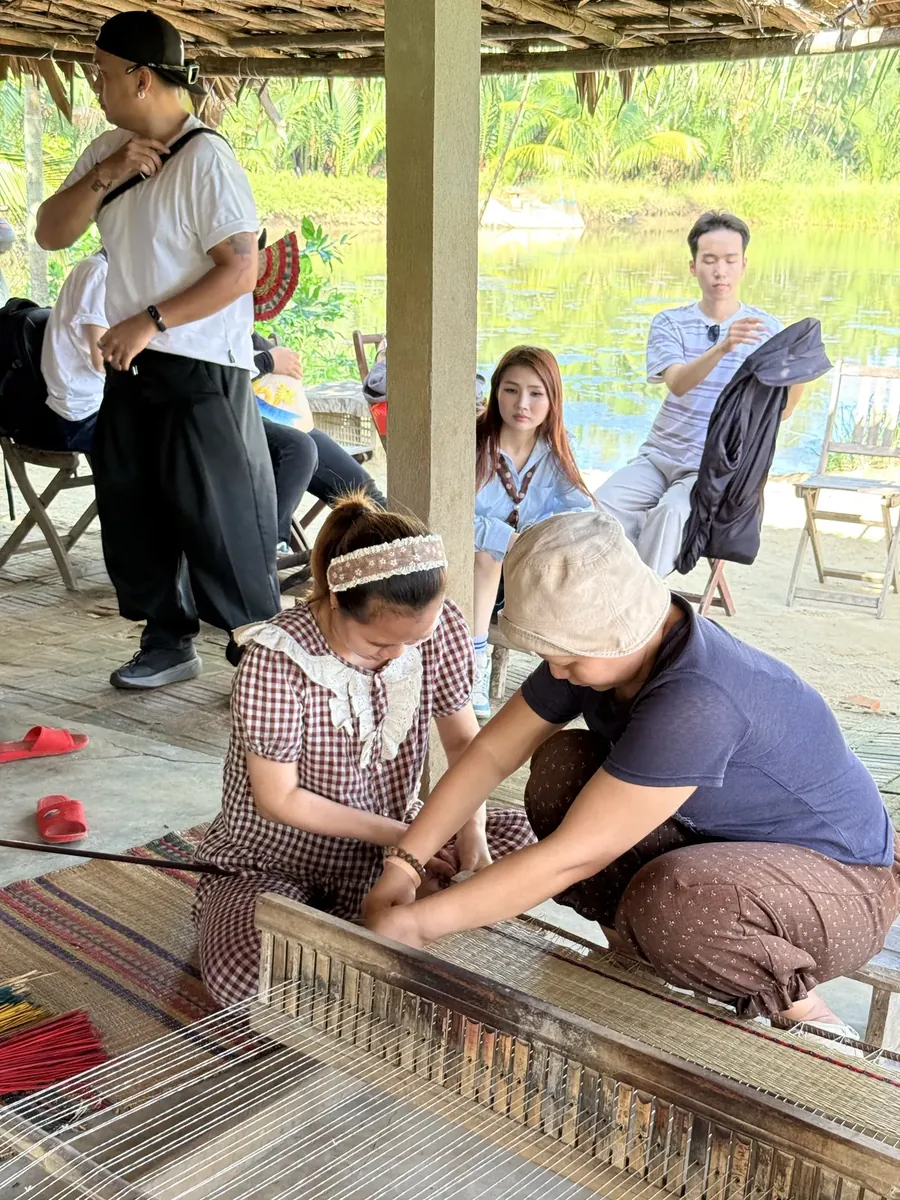
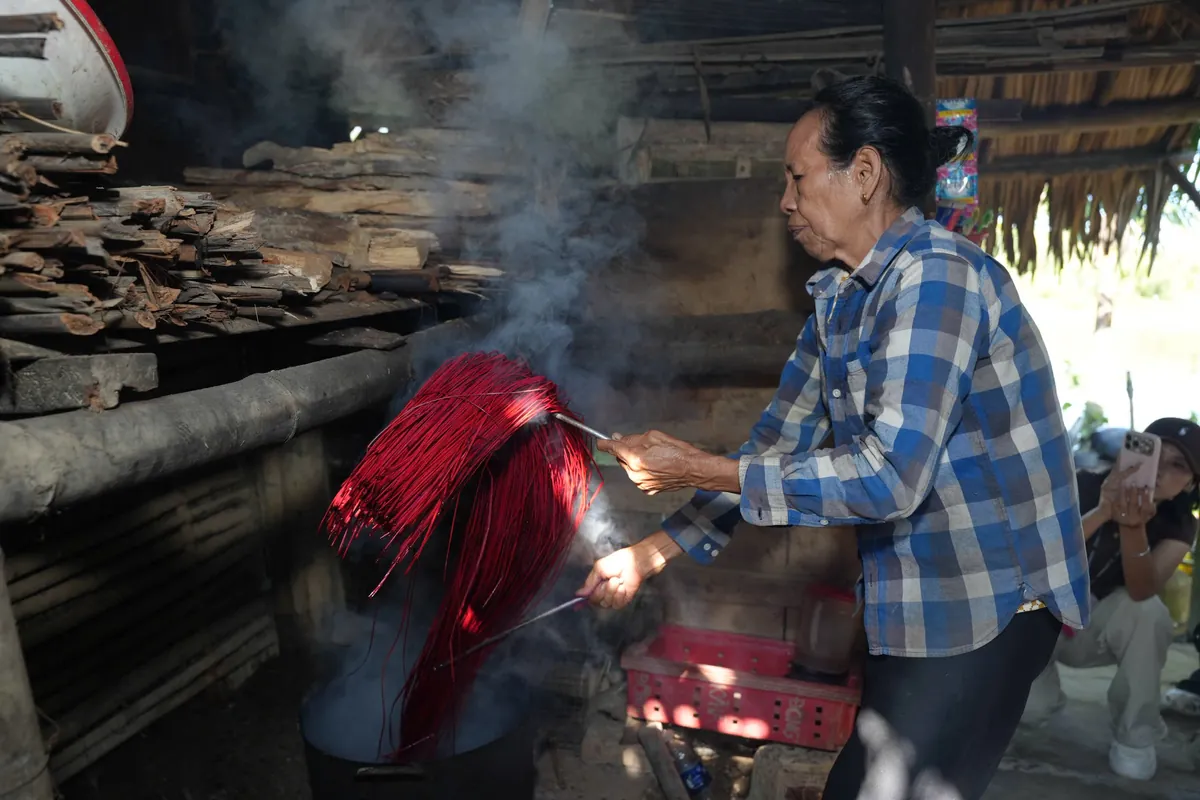
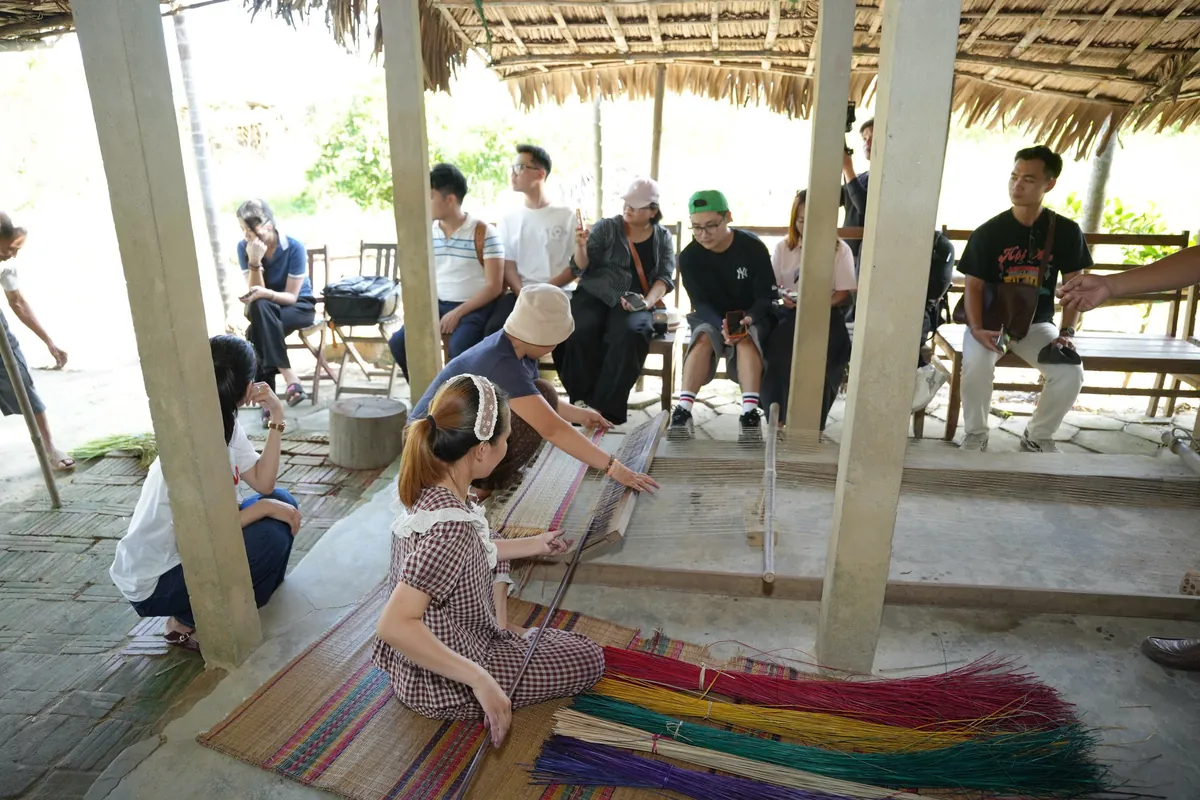
Dyeing the sedge, then weaving it on the loom. Photos: Visit Da Nang
Watch bamboo craft and basket-boat making
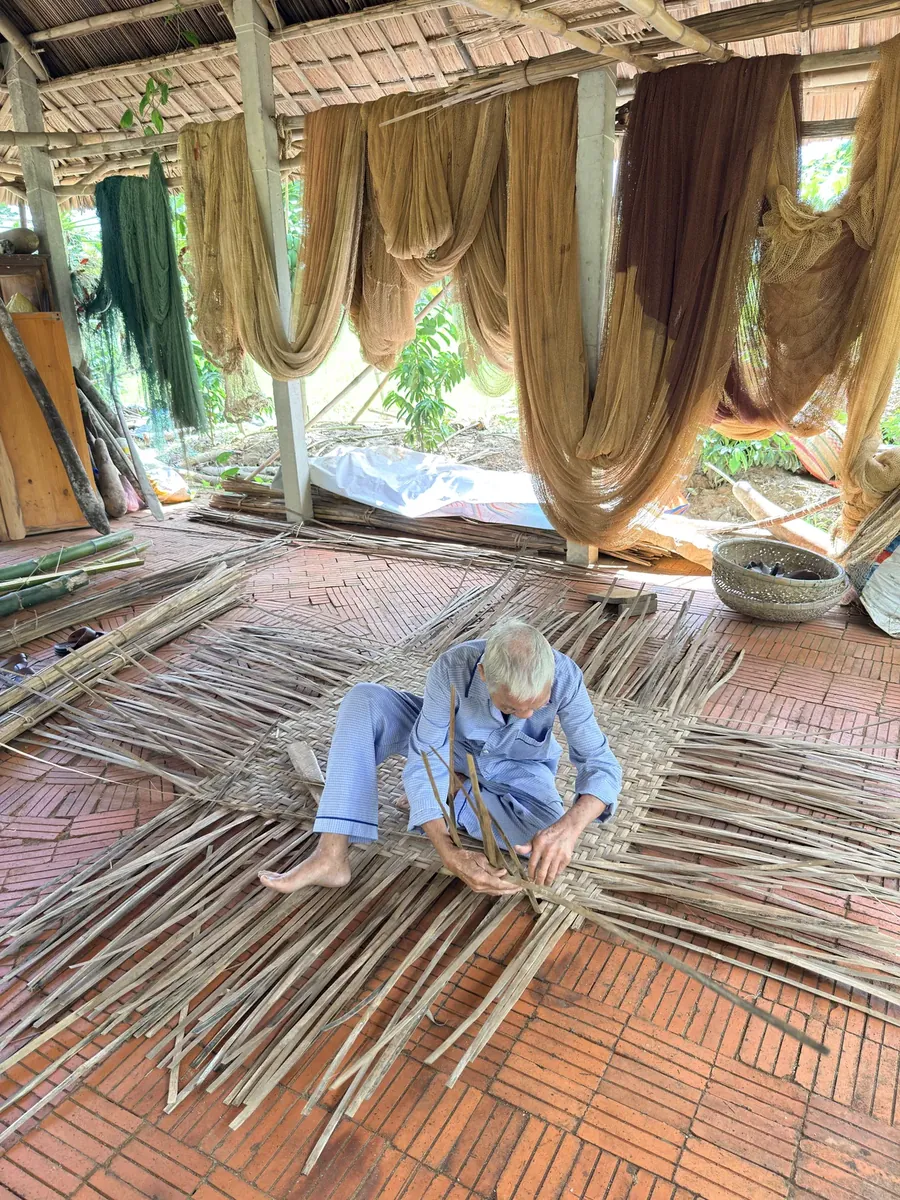
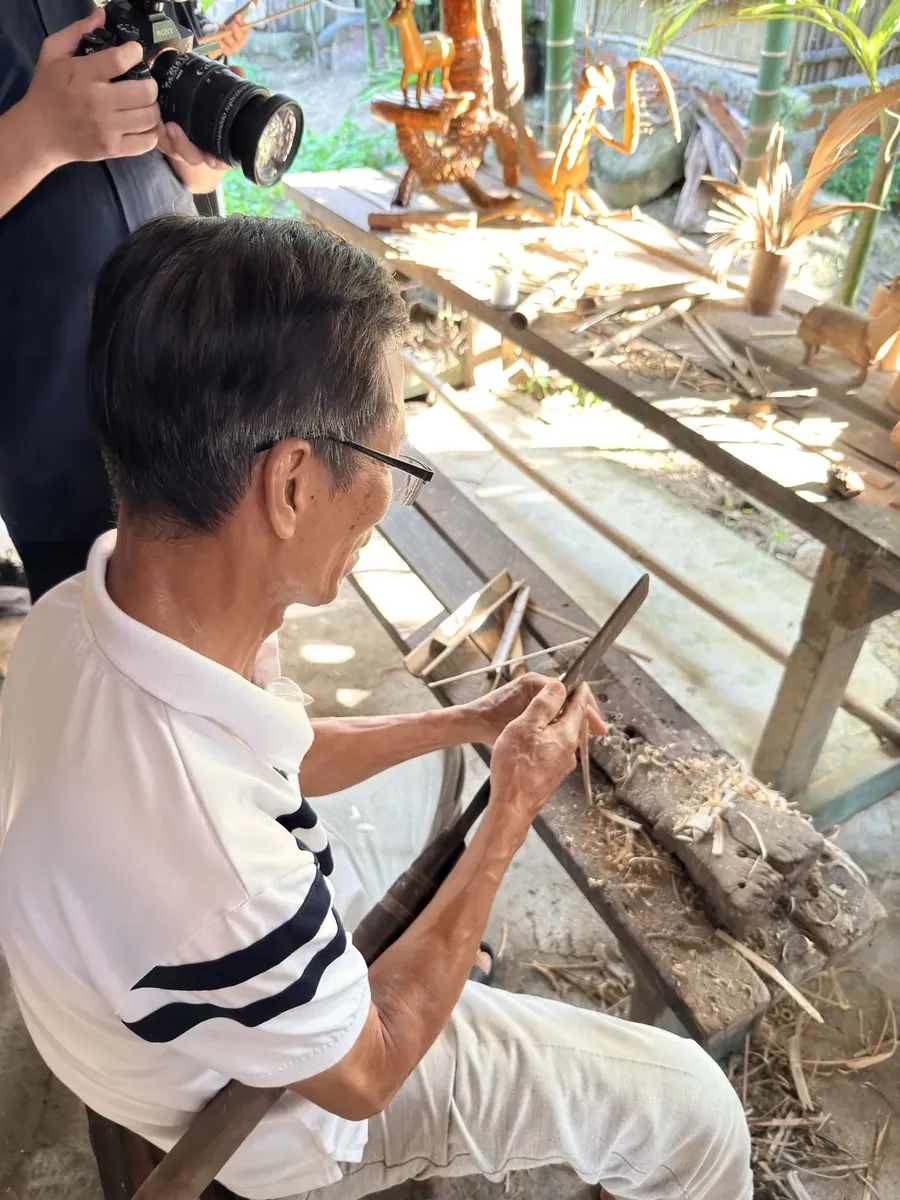
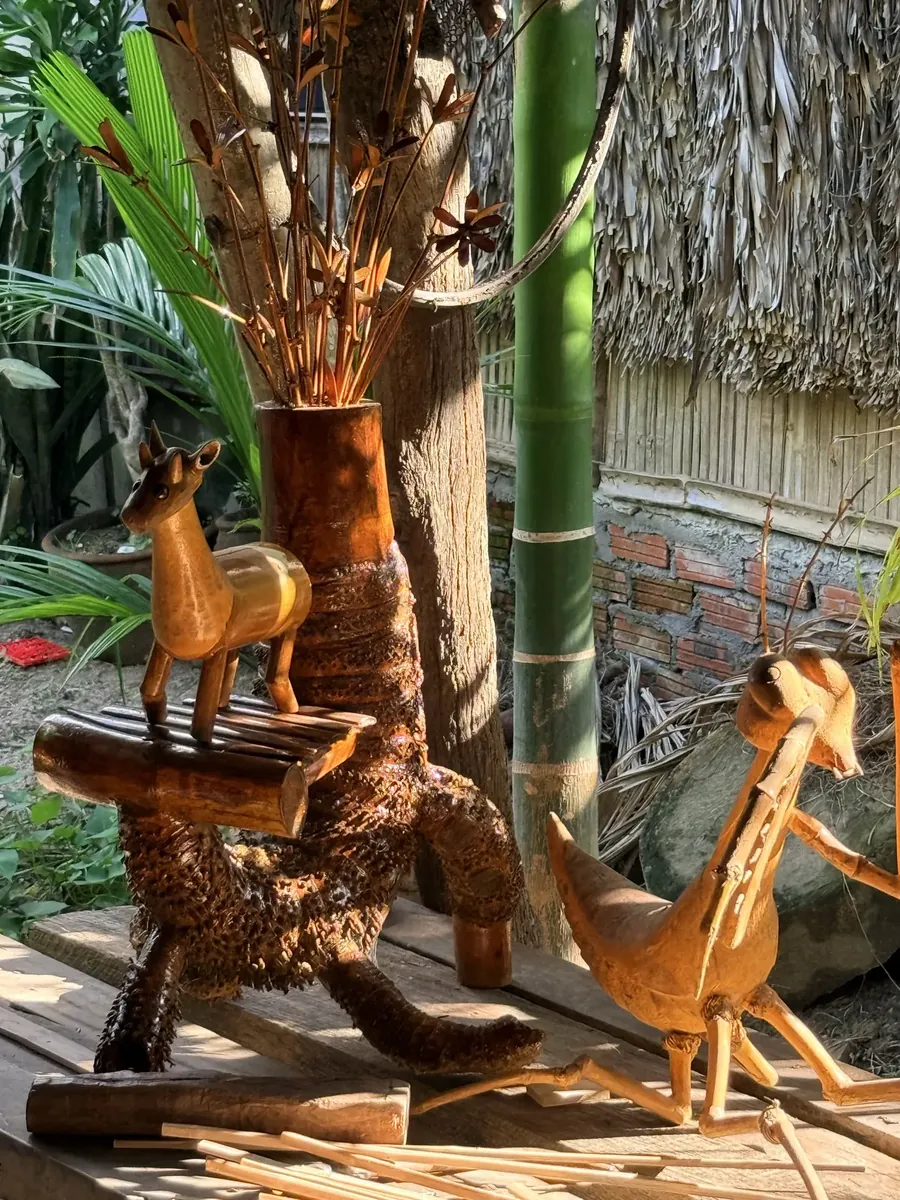
Further down the shaded lane, craftsmen split raw bamboo into thin strips and weave them into the round basket boats you rode on the river. Others carve bamboo into lamps, tables and little animal figures. Watching an elderly craftsman shape a whole boat floor by hand, sitting cross-legged on the tiles, was one of our favourite moments of the day.
What to eat in Tra Nhieu
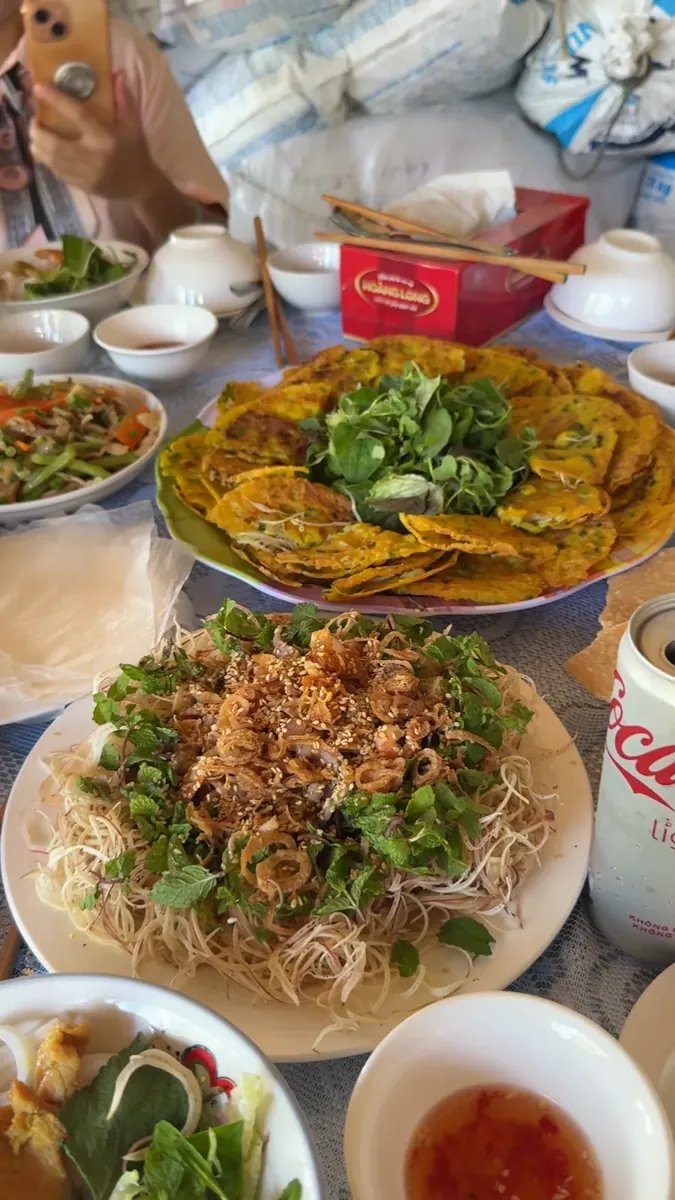
Lunch in Tra Nhieu is simple, local and delicious. We ate on a wooden porch by the water: crispy banh xeo pancakes rolled with fresh herbs and rice paper, plates of local noodles, and a cold drink. Village eateries built from bamboo and nipa leaves also serve Quang noodles (mi Quang), chicken rice and rice rolls. If you join a fishing trip, your own catch may end up on the table.
How to plan your visit
How do you get to Tra Nhieu from Hoi An?
Tra Nhieu is an easy half-day trip from Hoi An by bicycle, motorbike, Grab car or on a guided tour. Many visitors cycle there through the countryside, while some tours arrive by boat along the Thu Bon River. From Da Nang, allow about an hour by car to the Hoi An area first (see our Hoi An from Da Nang guide).
- Bicycle: the most fun way. Many Hoi An hotels lend bikes for free, and the flat lanes are easy for beginners.
- Motorbike or Grab: quick and flexible; type “Trà Nhiêu” into Google Maps or the Grab app.
- Guided tour: the easiest way to get the basket boat, lift-net station and craft workshops lined up in one trip, with a guide to translate.
Should you join a tour?
You can explore on your own, but the workshops and lift-net stations are family homes and working spaces, so a local guide or the village’s own tour team makes the day much smoother. Tours usually cost around US$21–50 (about 550,000–1,300,000 VND) per person, depending on what is included. Check whether the price covers bike hire, the basket-boat ride, lunch and hotel pickup before you book.
Some tours combine Tra Nhieu with Kim Bong carpentry village, areca gardens, rice fields and a local whale temple (Lang Ong), which makes a nice full countryside day.
When is the best time to visit?
Go early in the morning or in the cooler late afternoon. Mornings are best for fishing life on the river and soft light for photos; the middle of the day is hot and the lanes have little shade between gardens. Weekdays are quieter than weekends. In the rainy season (roughly October to December) the river can run high, so check with your host before you go and keep a spare day in your plan.
| Tra Nhieu at a glance | |
|---|---|
| Where | Lower Thu Bon River, across from Hoi An; Nam Phuoc commune, Da Nang (formerly Duy Vinh, Duy Xuyen, Quang Nam) |
| Distance | About 5 km from Hoi An Old Town |
| Time needed | Half a day (4 to 5 hours) |
| Best time | Early morning or late afternoon, weekdays |
| Top things to do | Basket boat through nipa palms, lift-net fishing, net weaving, rice wine, sedge mats, bamboo craft |
| Guided tours | Usually around US$21–50 (about 550,000–1,300,000 VND) per person |
| Community tourism since | July 2010 |
Tips for a respectful visit
- This is a working village, not a theme park. Ask before photographing people up close, especially the women weaving nets and mats.
- Bring cash in small notes for drinks, snacks, tips for rowers and handmade souvenirs like sedge mats.
- Wear a hat, sunscreen and comfortable clothes you do not mind getting a little wet in the basket boat.
- Buy something small from the craft families if you can. Your money goes straight to the people keeping these crafts alive.
- Slow down. The whole point of Tra Nhieu is that nothing is rushed.
Is Tra Nhieu worth visiting?
Yes, if you want to see the Hoi An countryside the way it used to be. Tra Nhieu is not about one big sight. It is a gentle mix of river life, handmade crafts and village food, with very few other tourists around. If you have already seen the lanterns of the Old Town and want something calmer and more real, spend half a day here. Slow down your pace.
Planning more around Hoi An? See our guides to 16 places to visit in Da Nang and Hoi An, My Son Sanctuary, what to wear in Hoi An and visiting Hoi An in October and November. Need a place to stay nearby? Read our La Siesta Hoi An review.
👉 Want a tour sorted? See our hand-picked Hoi An and Da Nang tours.
FAQ
Where is Tra Nhieu village?
Tra Nhieu is on the lower Thu Bon River, just across the water from Hoi An. It was part of Duy Vinh commune, Duy Xuyen district, Quang Nam; since the July 2025 reform it is in Nam Phuoc commune, Da Nang city.
How far is Tra Nhieu from Hoi An?
It is roughly 5 km from Hoi An Old Town, an easy bike, motorbike or Grab ride, or a short boat trip along the Thu Bon River.
What can you do in Tra Nhieu?
Ride a basket boat through wild nipa palms, watch lift-net (cat ro) fishing at a wooden station, see fishing nets woven by hand, taste family rice wine, try sedge mat weaving on a wooden loom, watch bamboo basket-boat making, and eat a home-style village lunch.
Is Tra Nhieu better than the Bay Mau coconut forest?
They are different. Bay Mau is bigger and busier, with music and spinning basket-boat shows. Tra Nhieu is quieter and more about village life and crafts. Choose Tra Nhieu if you prefer calm and authentic over lively.
How much does a Tra Nhieu tour cost?
Tours usually cost around US$21–50 (about 550,000–1,300,000 VND) per person, depending on what is included.
When is the best time to visit Tra Nhieu?
Early morning or late afternoon, ideally on a weekday. Avoid the midday heat, and check river conditions during the rainy season from about October to December.