Updated 14 November 2026.
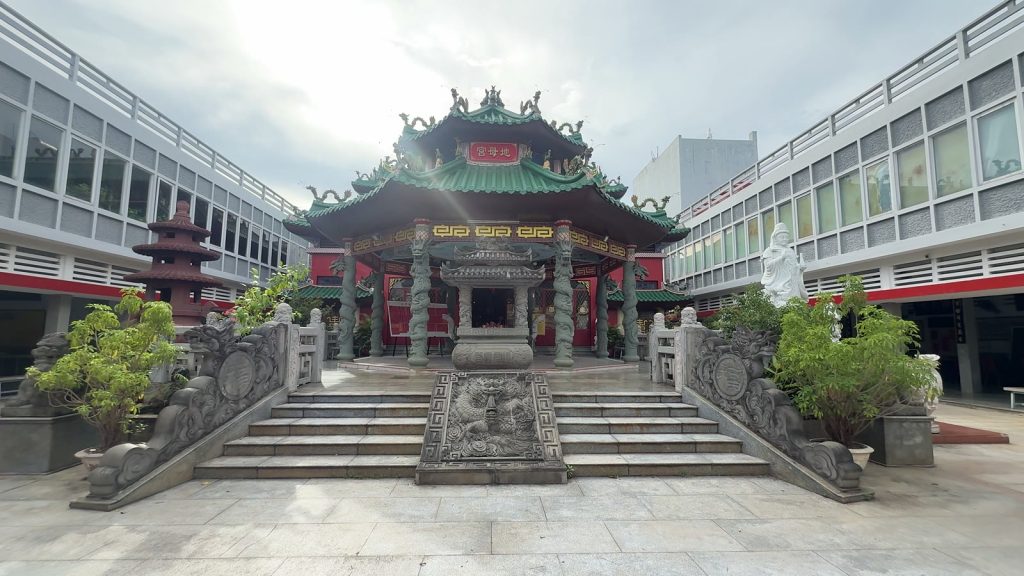
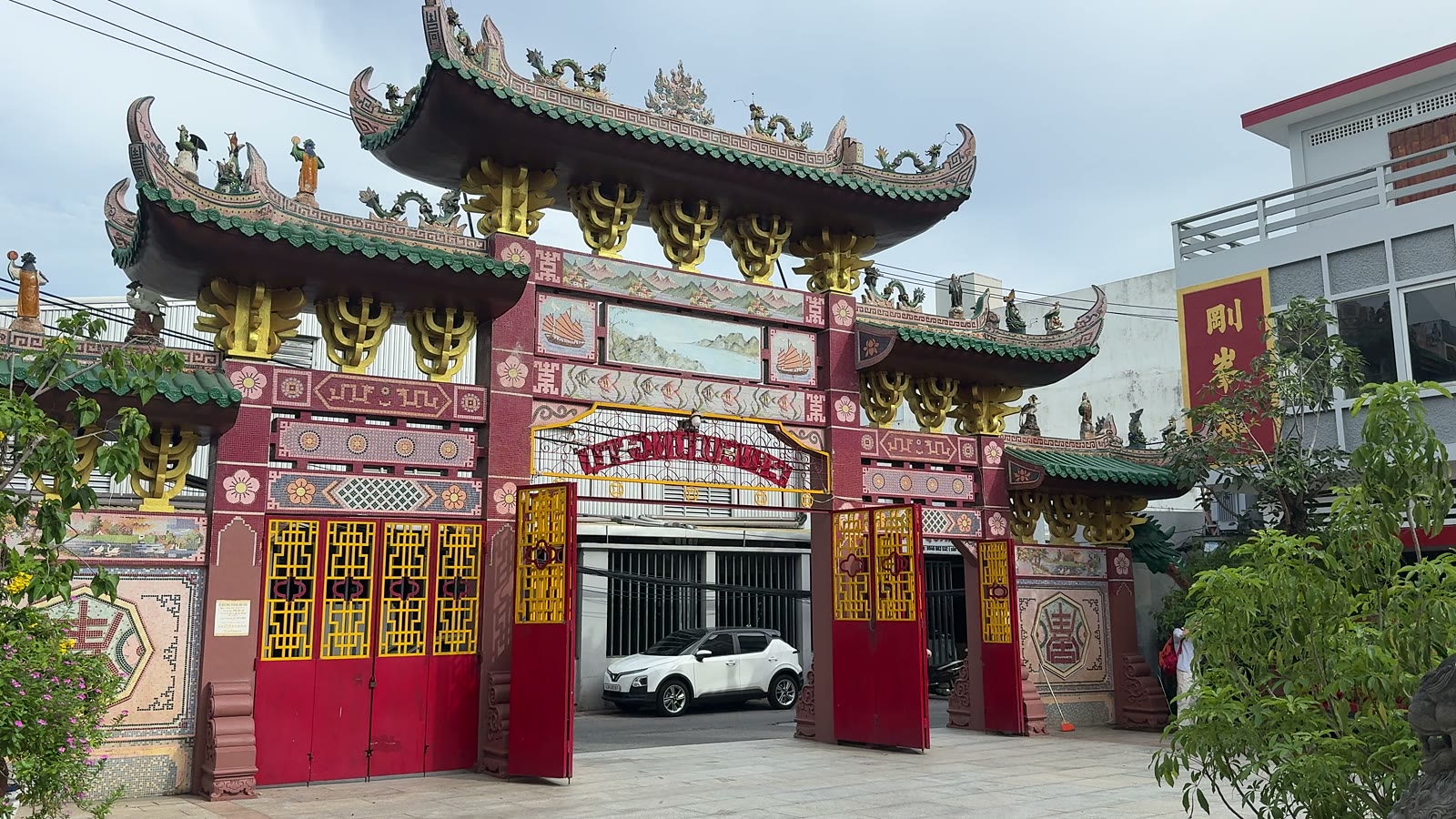
Quick answer: Chieu Ung Temple (Chua Chieu Ung, also called the Hainan Assembly Hall) is a Chinese temple in a quiet lane at K47/19 Ly Thai To, Thanh Khe, Da Nang. Young locals call it “Chua Se Duyen”, the love temple, because it has an altar to Nguyet Lao, the god of matchmaking. It was built by Da Nang’s Hainanese community and finished in 1970. Every year, around the full moon of the 6th lunar month, they hold the Hainan festival here for their 108 ancestors.
Why this temple is personal for me
Most of my Da Nang guides are about places I found as a grown-up. This one is different. My late grandpa was Chinese, and his family roots were in Hainan. When I was a little girl, he used to bring me here, and it is still one of my favourite places in the city.
The Hainanese families in Da Nang were very close. They worked hard, did business honestly, and many of them did well. My grandpa was one of them. In his day, he owned quite a few houses around Da Nang. This temple was the heart of that community, and walking through the gate today still feels like visiting family.
Why locals call it the “love temple” (Chua Se Duyen)
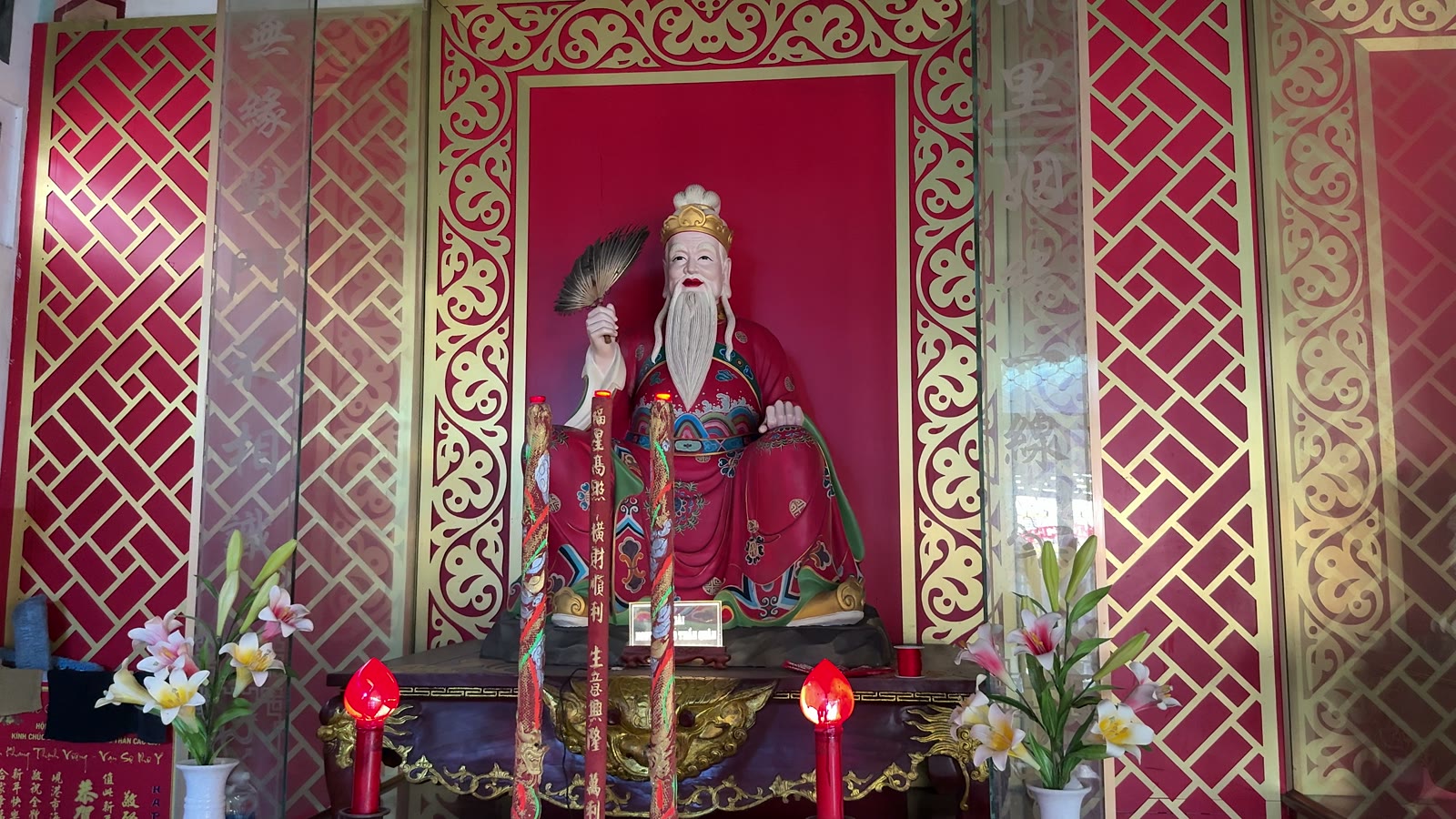
Search for “chua se duyen Da Nang” and this is the temple you will find. The name comes from its altar to Nguyet Lao, the Old Man under the Moon. In Chinese and Vietnamese folk belief, he ties a red thread between two people who are meant to be together.
When I was a kid, I always heard the grown-ups say this was the place for single people who wanted to pray for their other half. That has not changed. Young people from all over Da Nang still come here to pray for love, a good match and a happy family. The busiest days for Nguyet Lao are:
- 14 February, Valentine’s Day
- The 7th day of the 7th lunar month, the Vietnamese and Chinese lovers’ day (That Tich)
- The 15th day of the 8th lunar month, Mid-Autumn, said to be Nguyet Lao’s birthday
If you come to pray, dress modestly, speak quietly and follow what the caretakers show you. A sincere heart matters more than a big offering.
Watch: the love temple in 15 seconds.
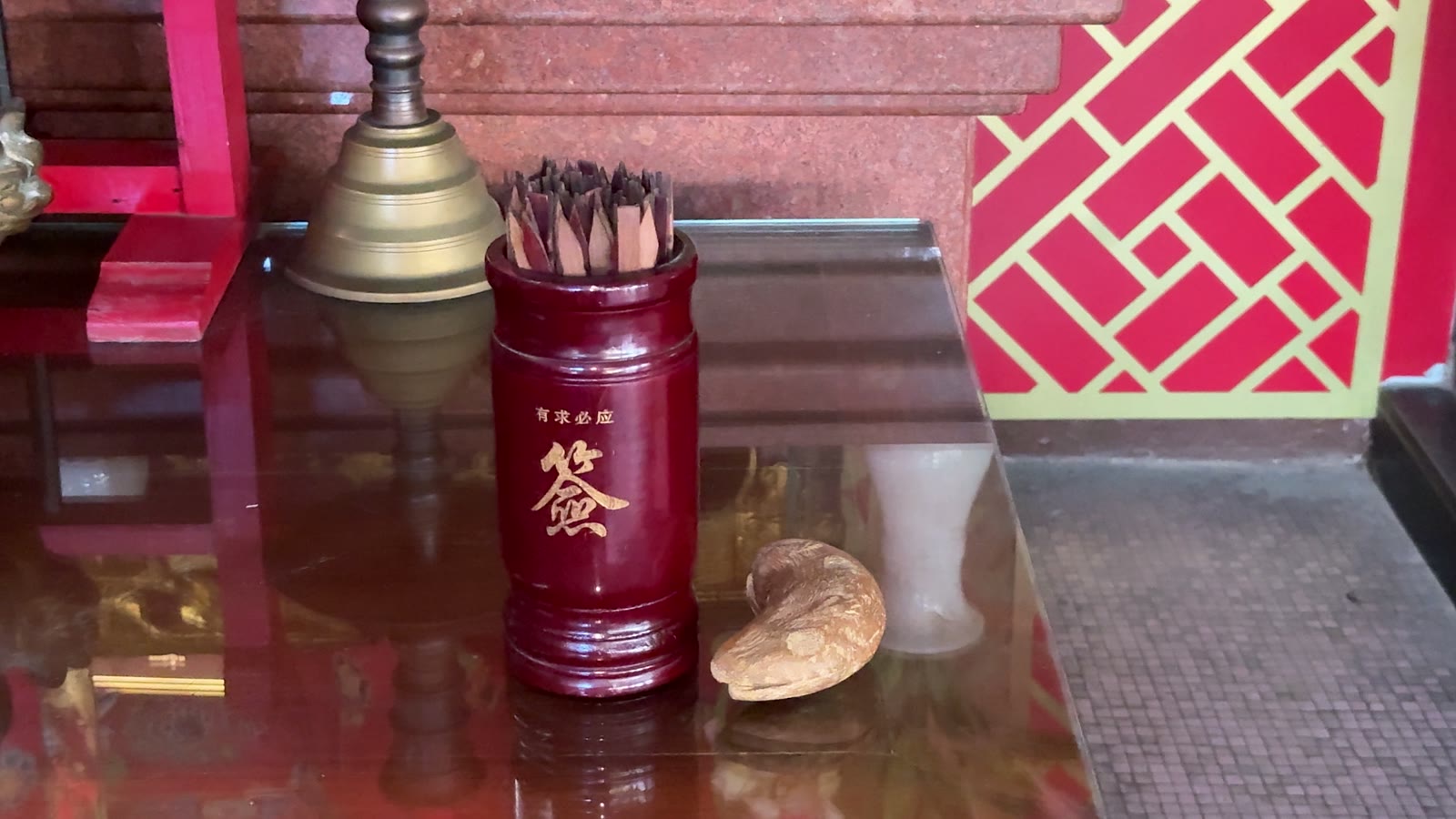
A Hainanese hall, not a Buddhist pagoda
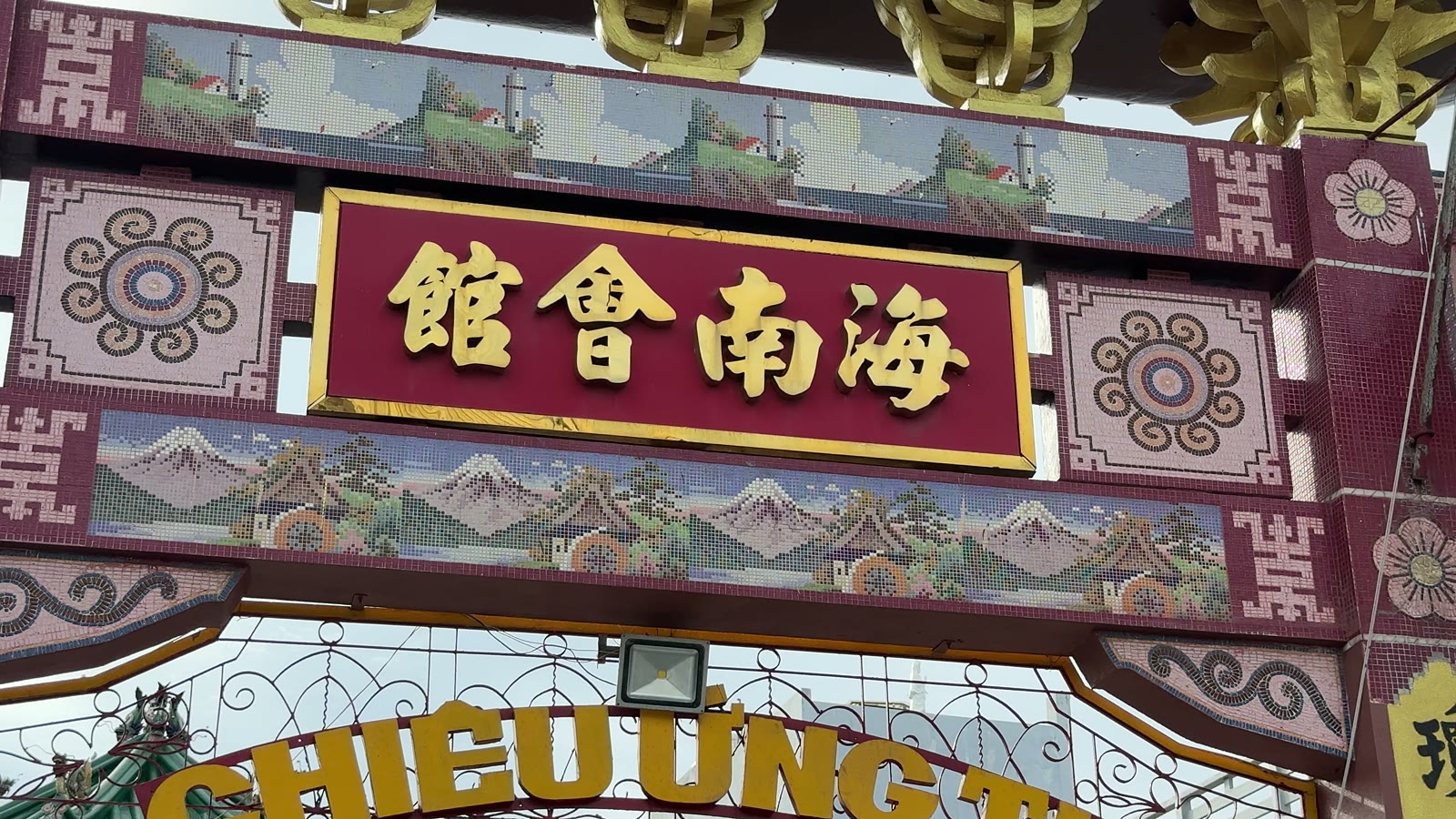
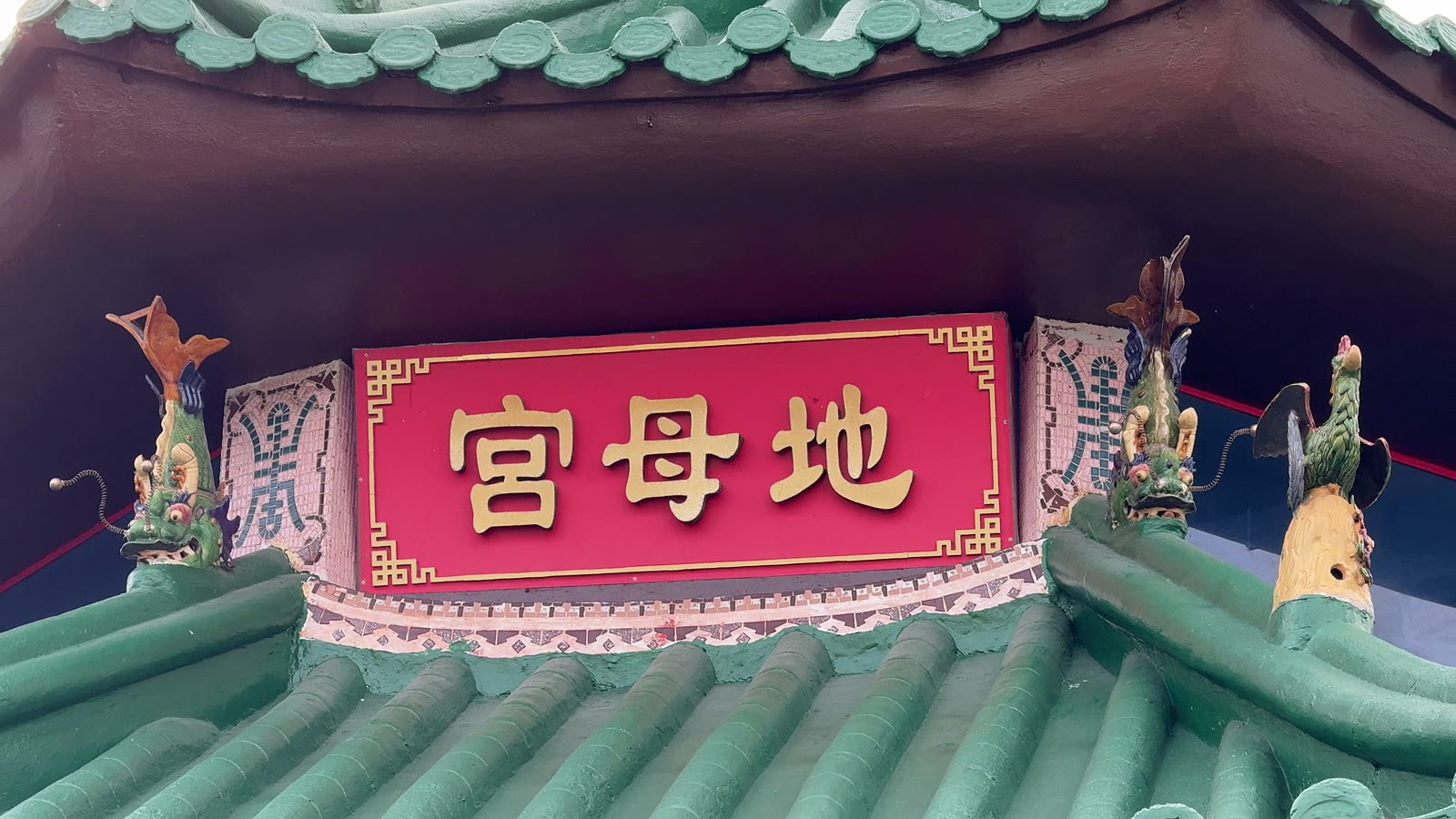
Many people call it a “chua” (pagoda), but Chieu Ung is really a Chinese community temple. The Chinese characters over the gate read Hai Nam Hoi Quan, the Hainan Assembly Hall.
Chinese traders came to Da Nang in the early 19th century, when the Nguyen kings made it the port for foreign trade. They belonged to five groups: Hainan, Teochew, Fujian, Cantonese and Hakka. At first all five shared one temple, Chua Ba (Thien Hau) in Hai Chau.
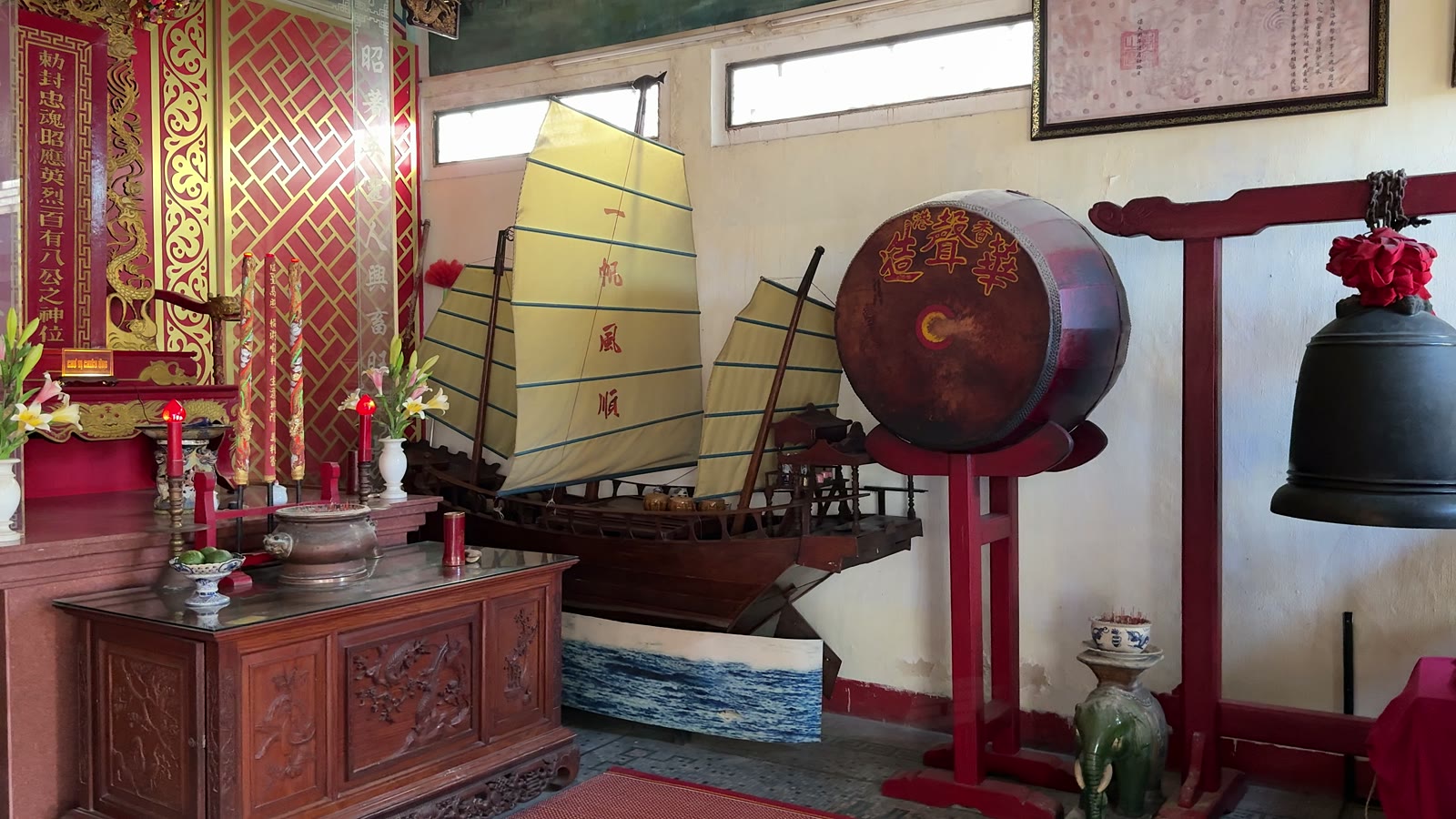
Later, six Hainanese elders raised money and bought a 1,500 m² plot in Thac Gian. After two years of building, their own hall was finished in 1970. Its bell and drum were cast in Hong Kong in 1968. The temple has been renovated several times, most recently in 2015, and a board elected by the community still looks after it.
The story of the 108 Hainanese ancestors
The main reason this temple exists is to honour 108 people from Hainan, known by the royal title Chieu Ung Anh Liet.
The story my family tells: there were really 109 of them. In the middle of the 19th century, life back home in Hainan was very hard, so they left on a boat to find a better life. On the way, a terrible storm hit. 108 of them were lost in the East Sea. Only one man survived and drifted ashore in Quang Nam. He lived to tell what happened, and that is how the story has been passed down to this day.
What the court records say: the Nguyen dynasty chronicle Dai Nam Thuc Luc tells a darker version. Two officials attacked boats off Quang Nam and Quang Ngai, killed the innocent people on board, and claimed they were pirates. When the truth came out, the king held a ceremony for the victims and honoured them as Chieu Ung Anh Liet. The temple keeps a copy of a royal decree from the Duy Tan era naming the 108.
Either way, the 108 became guardian spirits for Hainanese people far from home. You will find shrines to them in Hue, Nha Trang, Ca Mau and Hoi An. The Hainan Assembly Hall on Tran Phu street in Hoi An’s Old Town is the best known, so it is worth a look on your Hoi An trip.
What to see inside
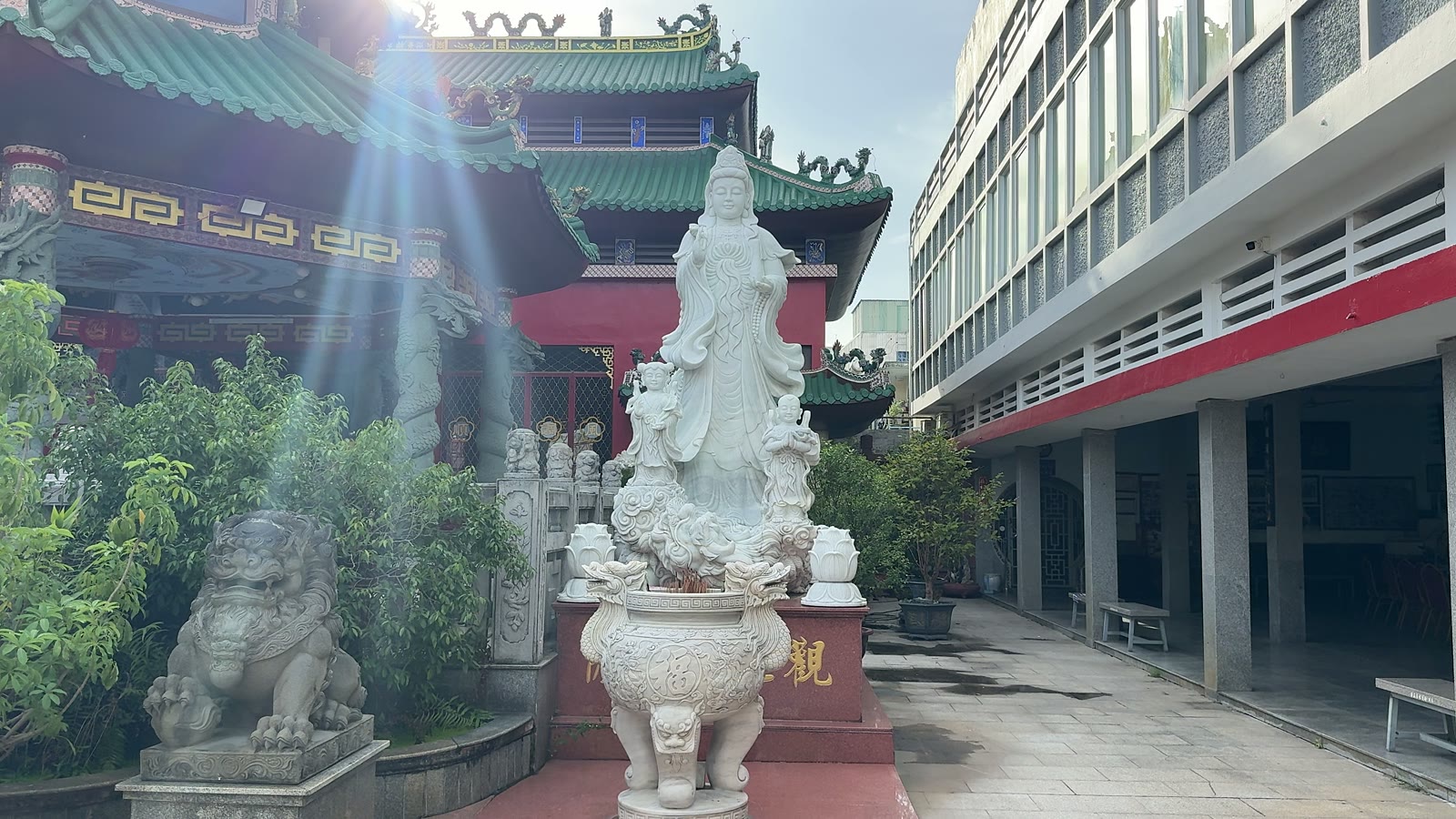
- The triple gate. A brick-and-stone gate with a two-tier Chinese roof and upturned corners. Look up for two dragons facing the sun, and the three gods of luck, wealth and long life (Phuc, Loc, Tho).
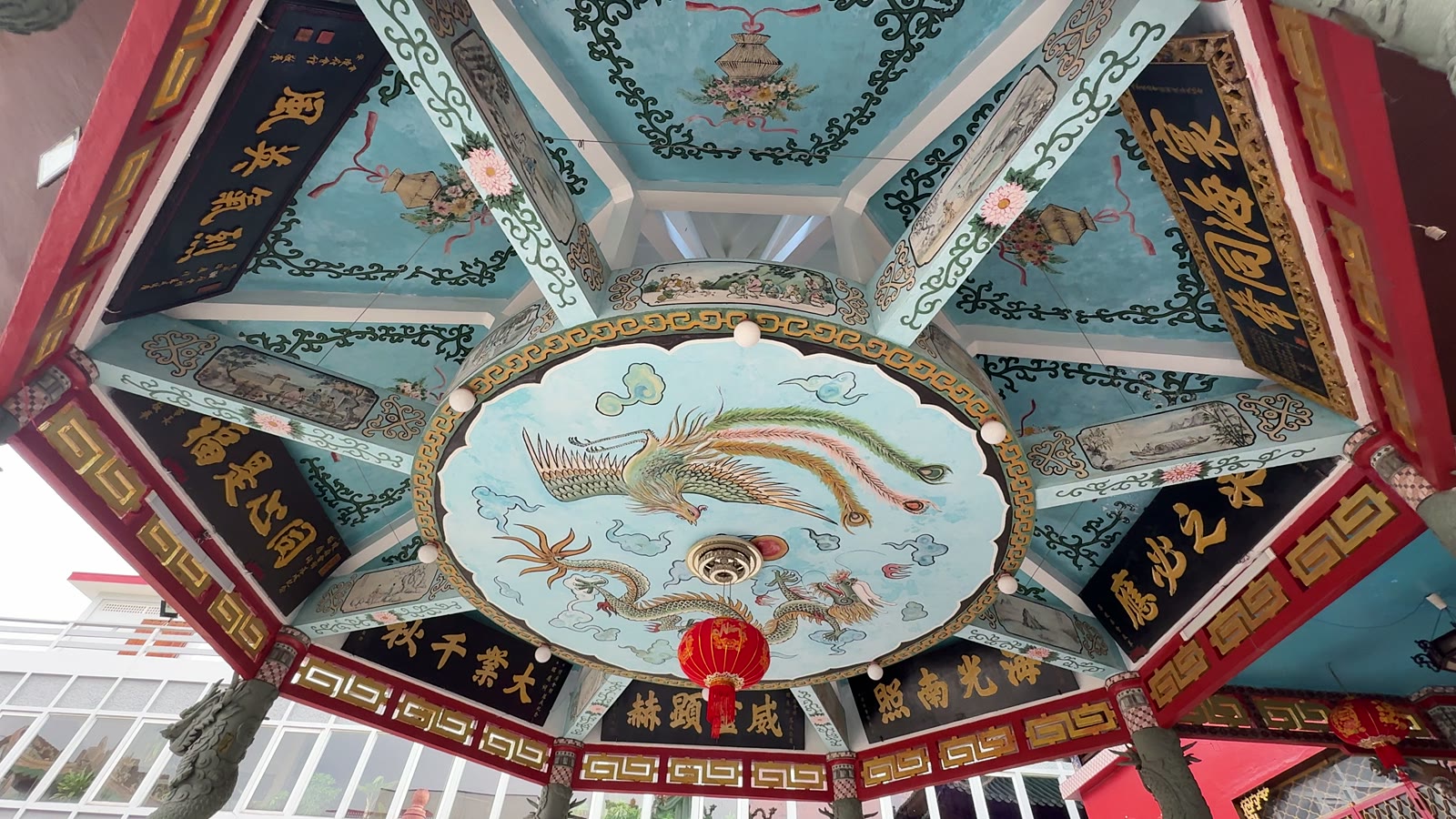
- The octagonal pavilion. In the front courtyard, with dragons wrapped around the columns and a carp leaping over the dragon gate on the roof.
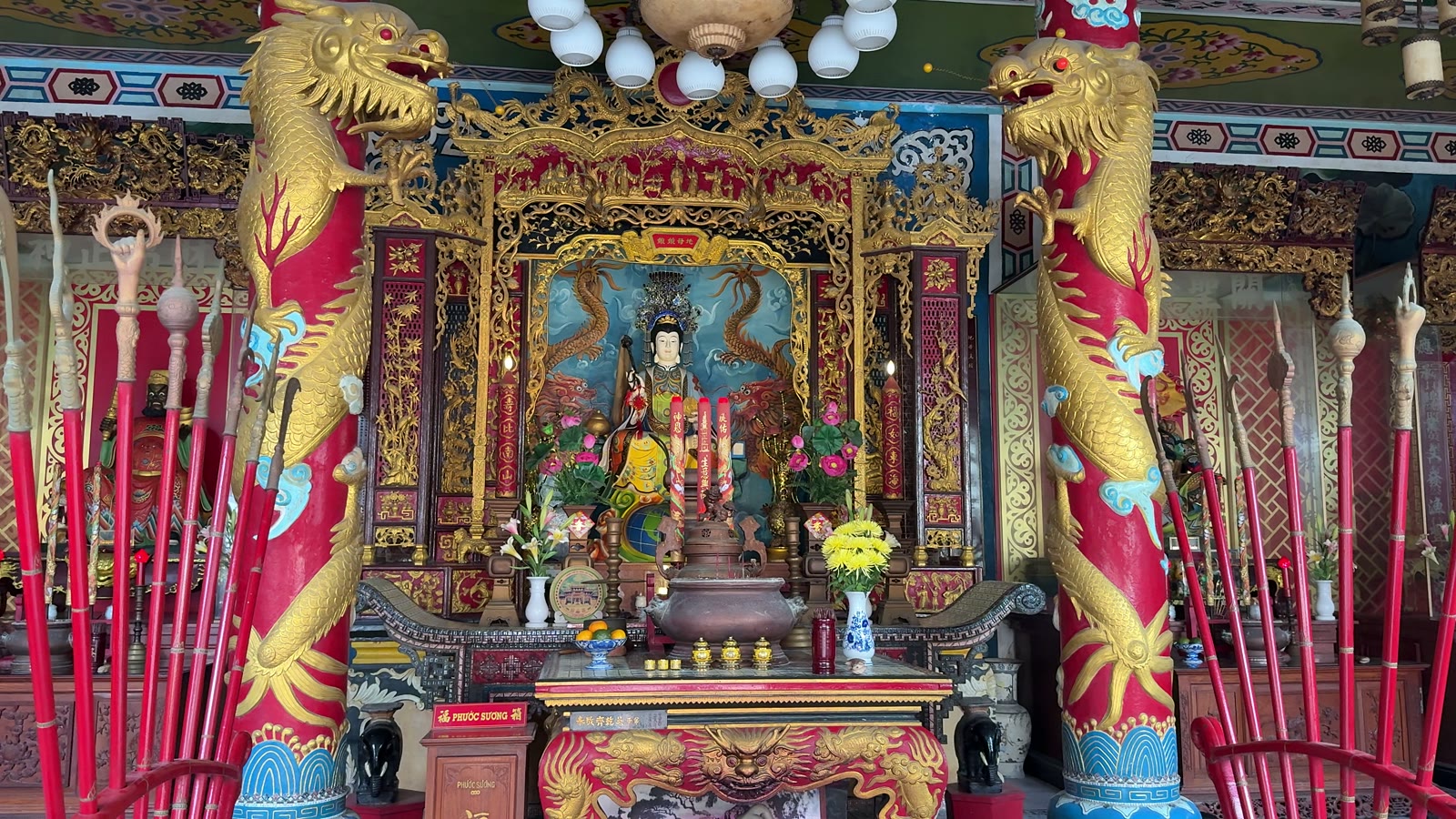
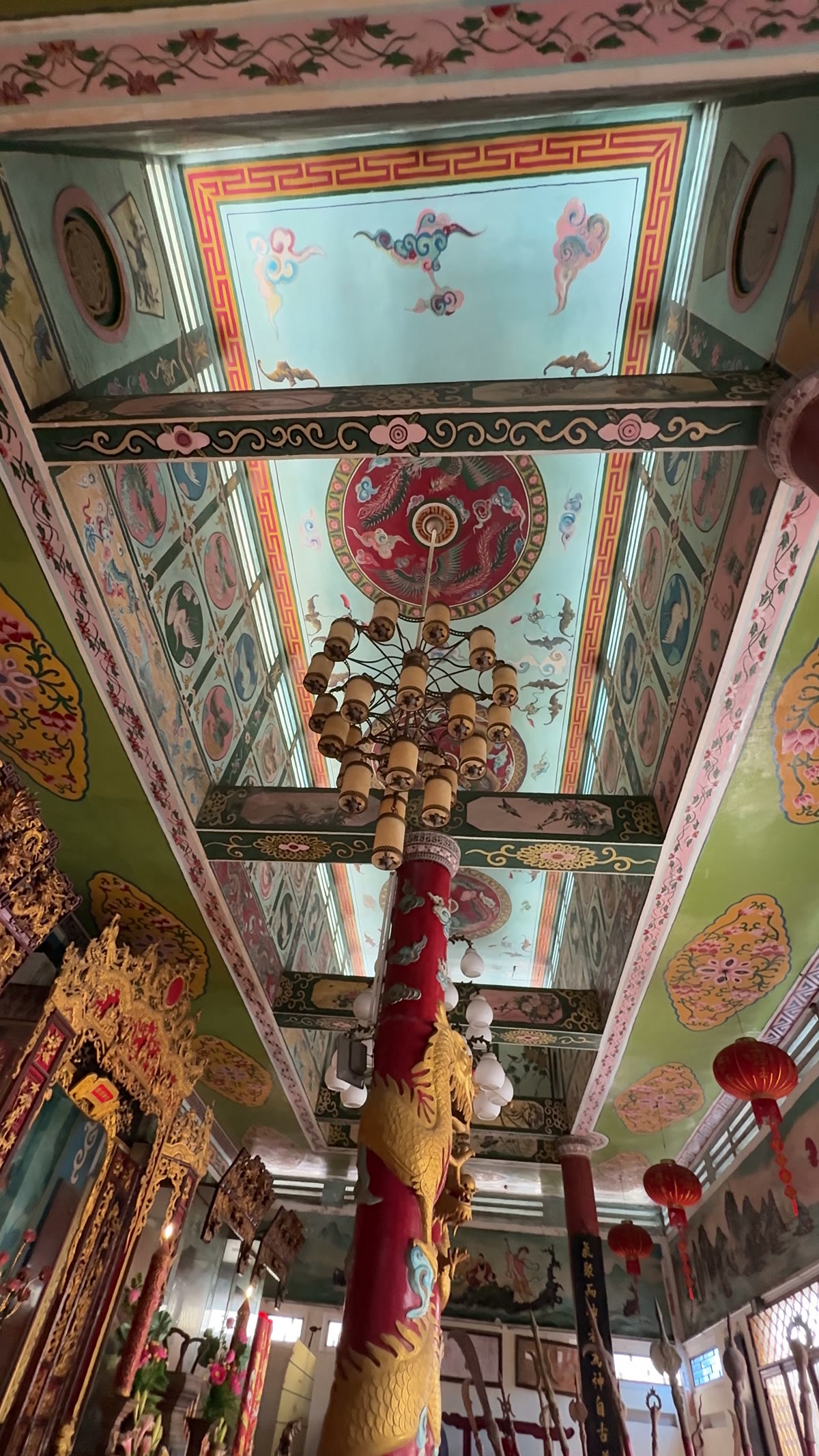
- The main hall. Red lacquer and gold leaf everywhere, with paintings of the Eight Immortals crossing the sea and a model sailing junk, a reminder that the Hainanese were seafaring traders.
- Dia Mau, the Earth Mother. She sits on the central altar, holding a horsetail whisk and a bagua mirror.
- Quan Cong (Guan Yu), the god of loyalty, on the right.
- The tablet of the 108 Chieu Ung ancestors.
- Tai Bach, the God of Wealth, popular with business owners.
- Nguyet Lao, the matchmaker, the reason for the “love temple” name.
- The White Tiger shrine, with a bowl of water full of coins. People say the tiger brings money and protects children.
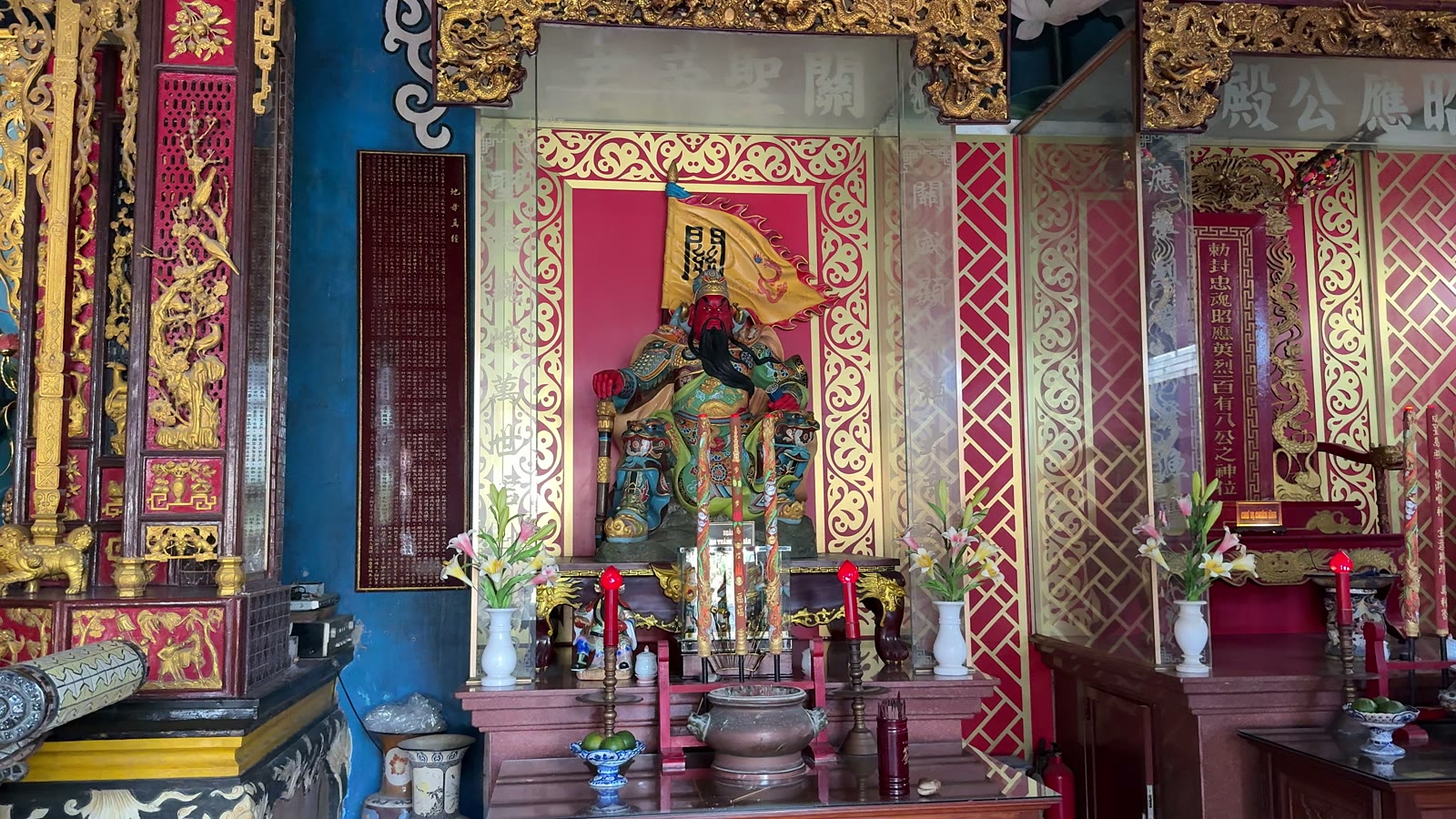
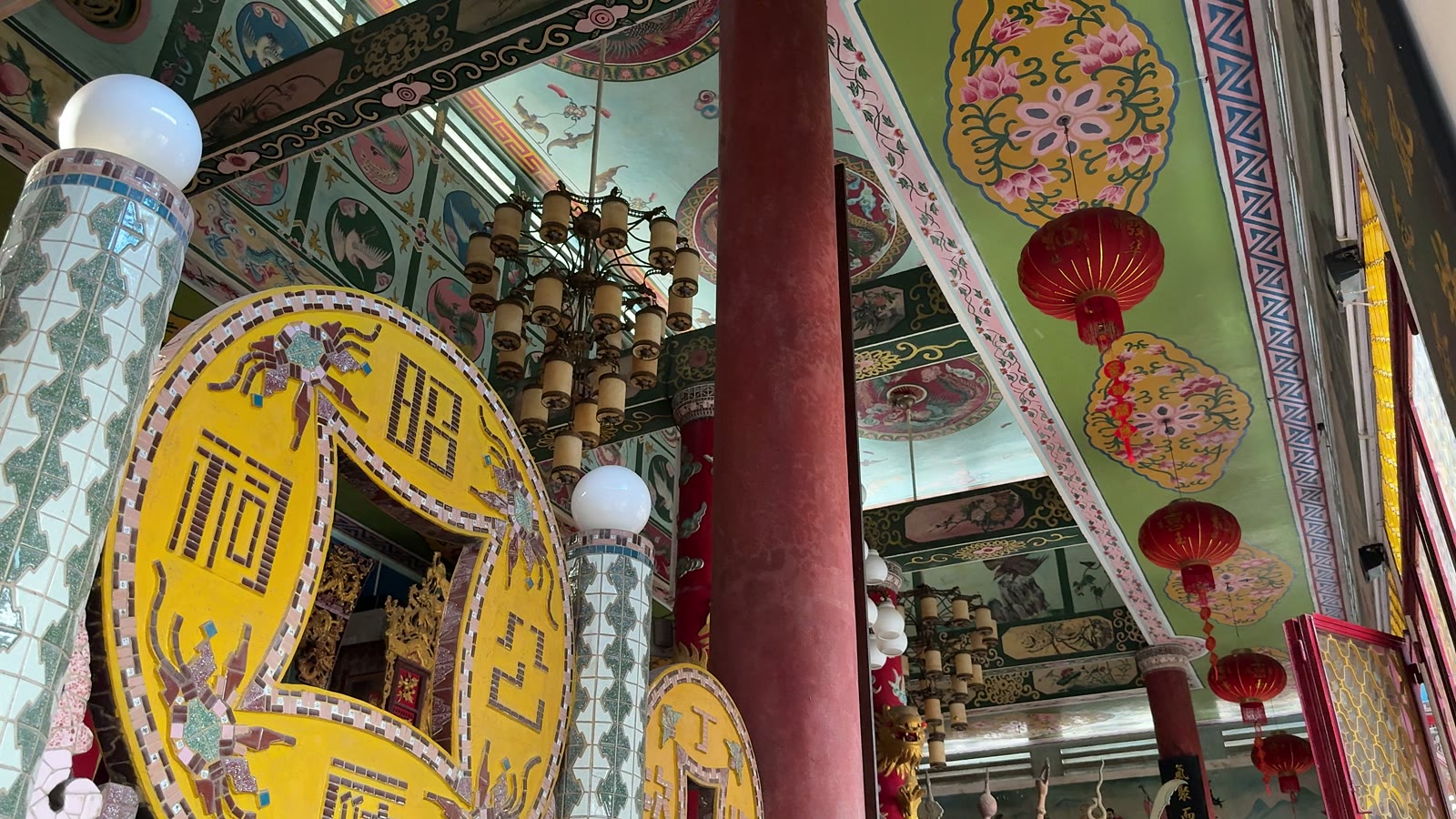
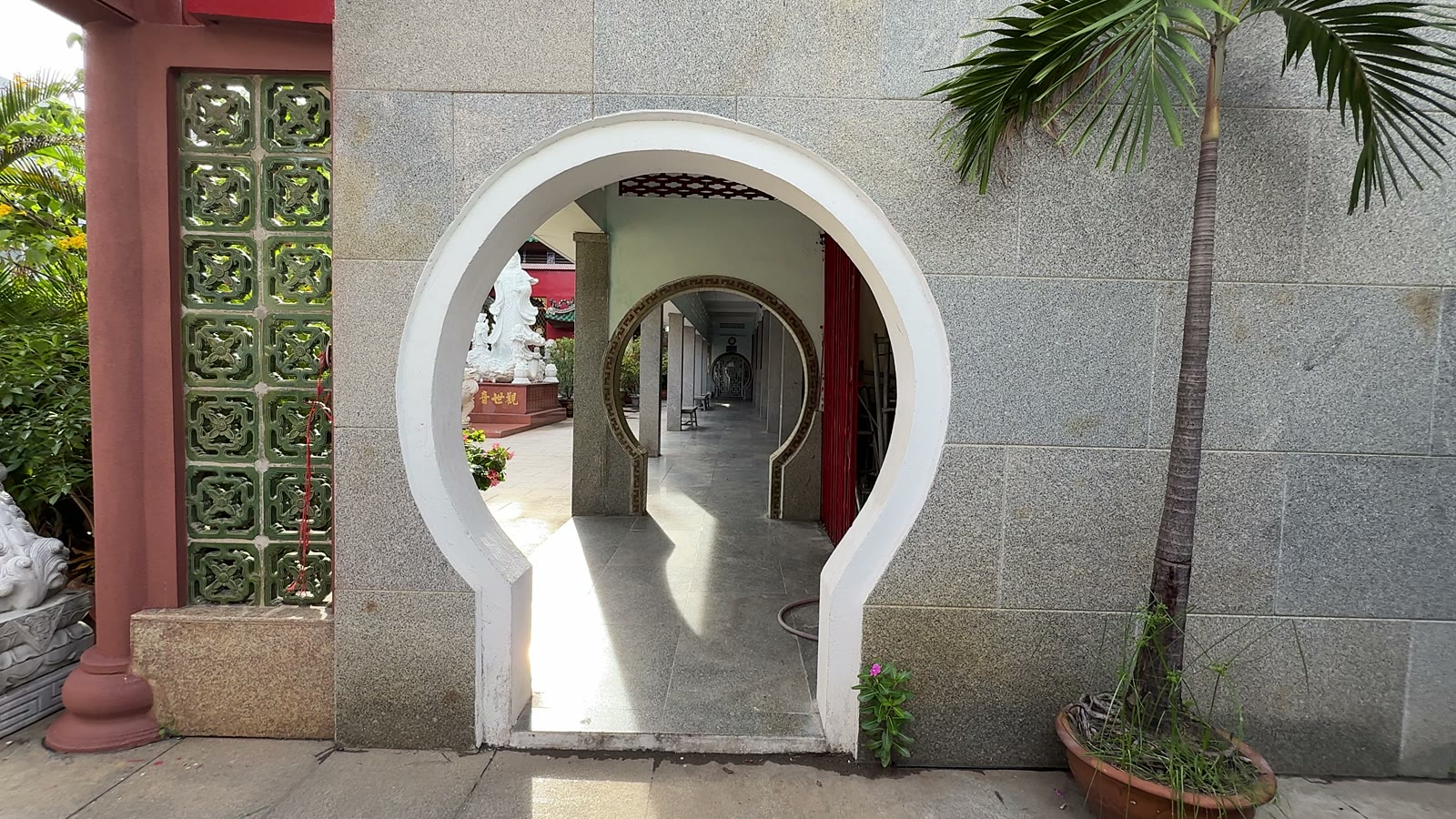
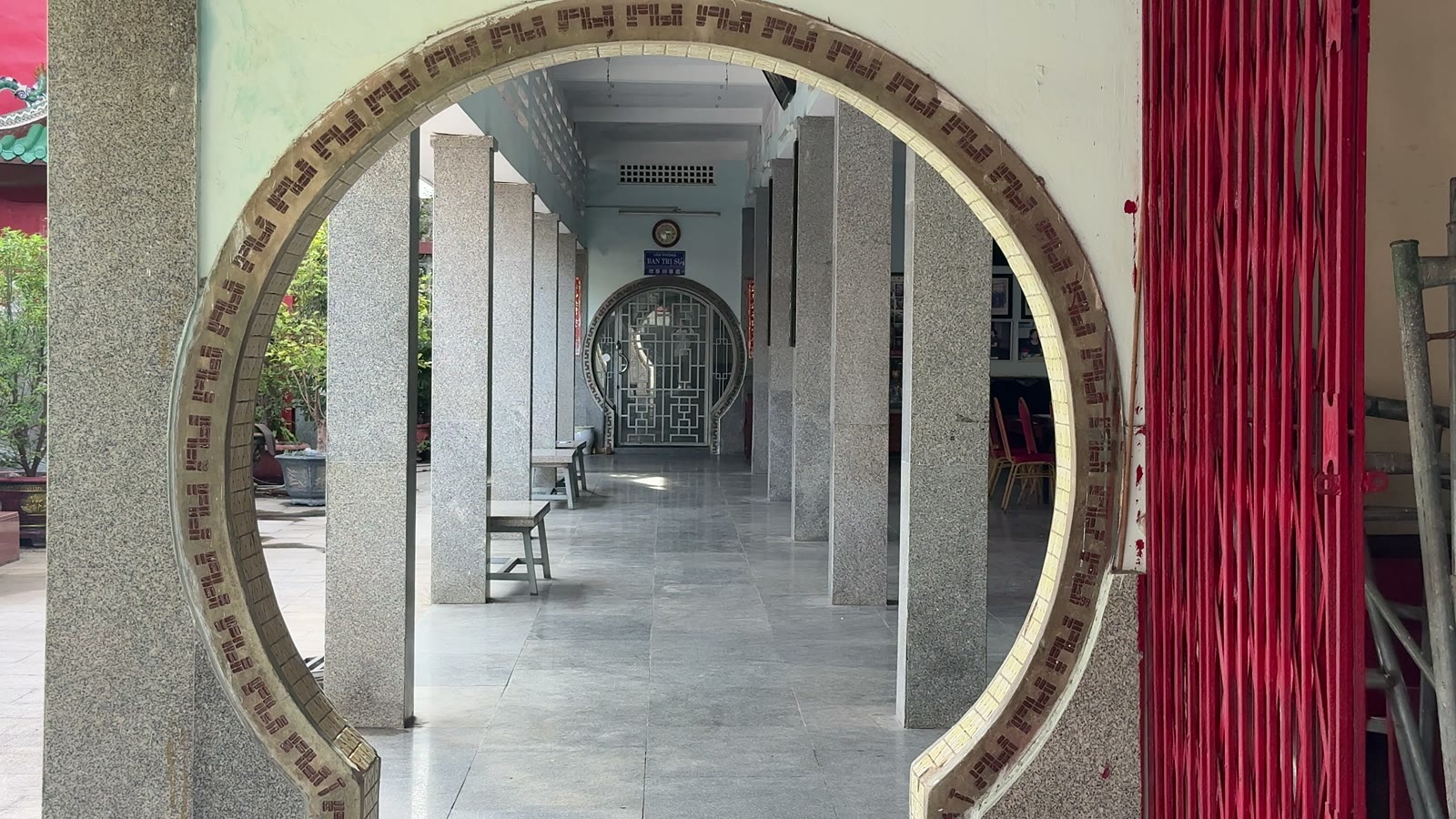
The Hainan festival: around the full moon of the 6th lunar month
Every year, around the full moon of the 6th lunar month, the Hainanese people of Da Nang gather here for the Hainan festival, the memorial day of the 108 ancestors. The main ceremony is on the 16th day, at 10 AM. In 2026 that was Wednesday, 29 July. The officiant reads the memorial text in the Hainanese dialect, wine is offered three times, and the bell and drum sound throughout.
Then comes the fun part: a lion dance, scholarships for the community’s children, a lucky draw and a big feast. Hainanese people are famous cooks. The menu is chicken, duck and goat, the same as any party, but they cook it so well that we always ate like kings at the temple.
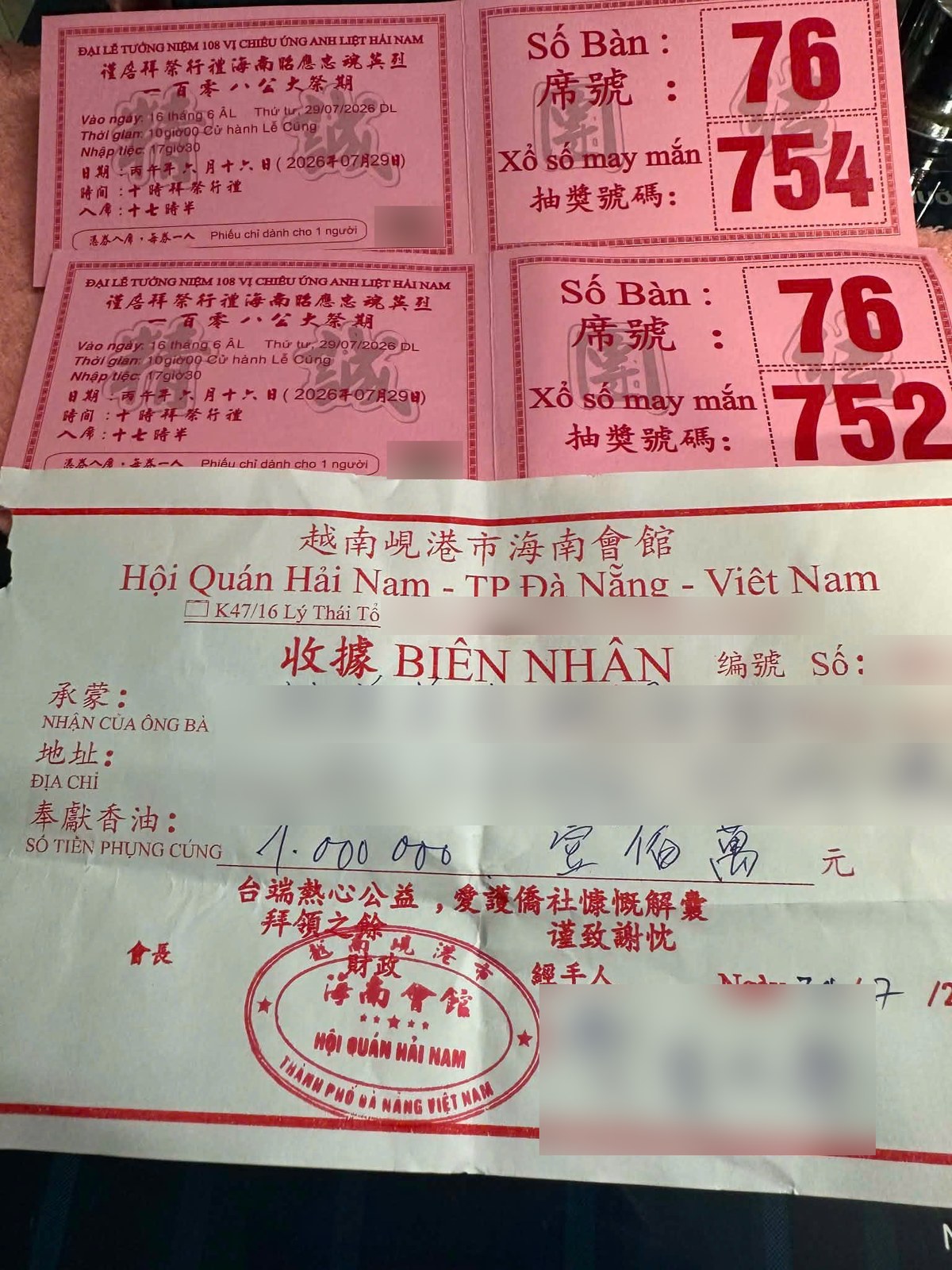
The feast is not a free-for-all. My mom still goes every year, and this is what she brought home from the 2026 festival: a pink ticket for each person, printed in Vietnamese and Chinese, with the date, the 10 AM ceremony and the 5:30 PM banquet. Each ticket has a table number and a lucky-draw number. The white slip is the hall’s receipt for her offering to the temple (“phung cung”), stamped by Hoi Quan Hai Nam.
Watch: drums and lion dances at the Hainan festival.
Festival dates at Chieu Ung Temple (lunar calendar)
| Lunar date | What happens |
|---|---|
| 5th day, 1st month | God of Wealth’s birthday |
| 9th day, 1st month | Earth Mother festival |
| 13th day, 1st month | Guan Yu’s feast day |
| 2nd day, 2nd month | Phuc Duc (God of the Land) birthday |
| Around the 15th–16th, 6th month | Hainan festival for the 108 ancestors |
| 7th day, 7th month | Lovers’ day, prayers to Nguyet Lao |
| 15th day, 8th month | Mid-Autumn, Nguyet Lao’s birthday |
| 18th day, 10th month | Earth Mother’s birthday |
How to visit
- Address: K47/19 Ly Thai To, Thanh Khe, Da Nang. It is down a lane off Ly Thai To street. Search “Chua Chieu Ung” on Google Maps.
- Getting there: a short Grab ride from the Han River area.
- Entry: there is no ticket. It is a working temple, so a small donation in the box is a kind thank-you.
- Dress: cover your shoulders and knees, and speak softly near the altars.
- Photos: fine in the courtyard. Ask before photographing people praying.
FAQ
Where is the love temple (Chua Se Duyen) in Da Nang?
It is Chieu Ung Temple at K47/19 Ly Thai To, Thanh Khe. Locals go there to pray to Nguyet Lao, the god of matchmaking.
Is Chieu Ung a Buddhist pagoda?
No. It is a Chinese community temple, the Hainan Assembly Hall, built by Da Nang’s Hainanese families and finished in 1970.
Who are the 108 people honoured here?
Hainanese people who died at sea in the 19th century. They were given the royal title Chieu Ung Anh Liet and are remembered every year at the Hainan festival in the 6th lunar month.
When is the best day to pray for love?
Valentine’s Day, the 7th day of the 7th lunar month and Mid-Autumn are the most popular days for Nguyet Lao. Any quiet morning works too.
Follow Visit Da Nang for daily Central Vietnam updates.